

 English
  Français
 Chunmee 9366 vs Chunmee 9380: Key Specification Differences Explained for B2B Buyers
A purchasing manager in Casablanca puts two green tea quotations side by side. Both come from the same Chinese supplier, both target the same retail blend, and the only visible difference is the code: Chunmee 9366 on one line, Chunmee 9380 on the other. The 9380 line prices lower, yet experienced blenders know the two grades will not behave the same way in a mint tea program.
Chunmee 9366 and Chunmee 9380 belong to the same pan-fired Chinese green tea family, but they are not interchangeable: 9366 is the tighter, finer, more uniformly twisted leaf chosen for premium appearance and a smoother cup, while 9380 is a broader, looser, more economical grade chosen for strength, volume, and cost control.
What the Codes 9366 and 9380 Actually Mean
The codes are export trade numbers that identify distinct leaf styles and quality tiers inside the Chunmee family, not two marketing names for one tea.
Both grades move through the same craft: plucking, pan-firing, rolling, drying, and careful sifting, with processing concentrated in green tea regions such as Anhui, Jiangxi, and Zhejiang provinces. The split between them happens late, at rolling and sorting. Batches destined for 9366 keep a slimmer, tighter twist and a higher proportion of even, uniform strips. Batches graded 9380 keep broader, flatter, more open strips and tolerate a wider particle range.
That is also why the 9 series works differently from the 41022 family, where one base tea is lettered AAA upward to Diamond. In the 9 series, the number itself carries the style, so a buyer who knows the code already knows the leaf geometry before opening a sample bag.
Specification Differences at a Glance
Dry-leaf geometry separates these two grades faster than any cupping session: twist, width, color depth, and uniformity all point in different directions.
| Attribute | Chunmee 9366 | Chunmee 9380 |
| Leaf shape | Tight, slender, well-curled strips | Broader, flatter, looser strips |
| Dry leaf color | Deep, glossy, blue-green cast | Yellow-green to matte green |
| Uniformity | High share of even grades after sifting | Wider particle range accepted |
| Liquor color | Bright, clear yellow-green | Deeper orange-yellow |
| Cup taste | Cleaner, smoother, gentle briskness | Stronger, bolder, more astringent |
| Typical role | Premium blend base or standalone pack | Body and volume in cost-driven blends |
| Contract price tier | Higher | Lower |
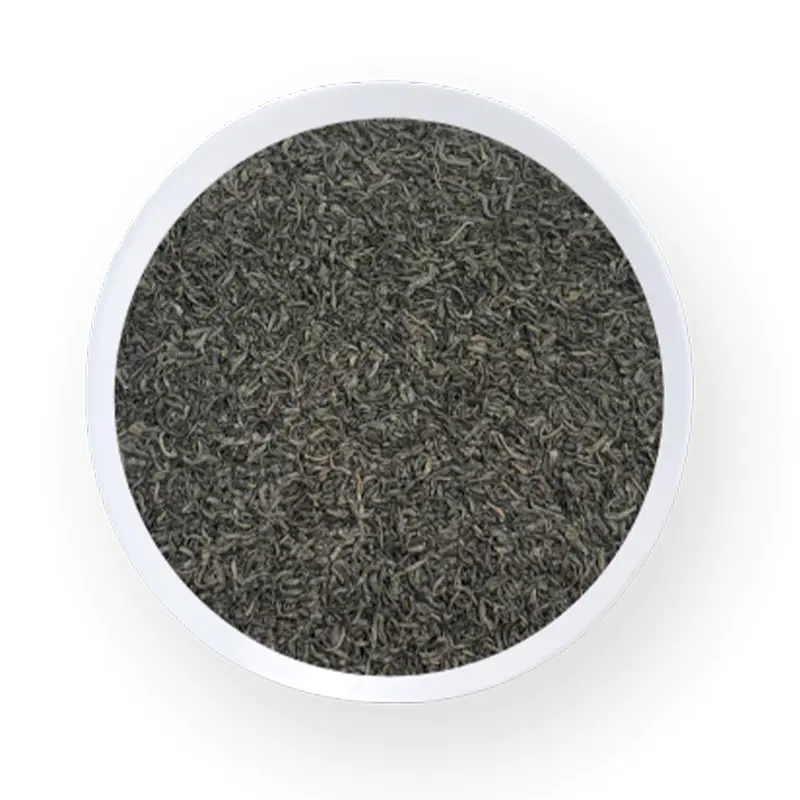
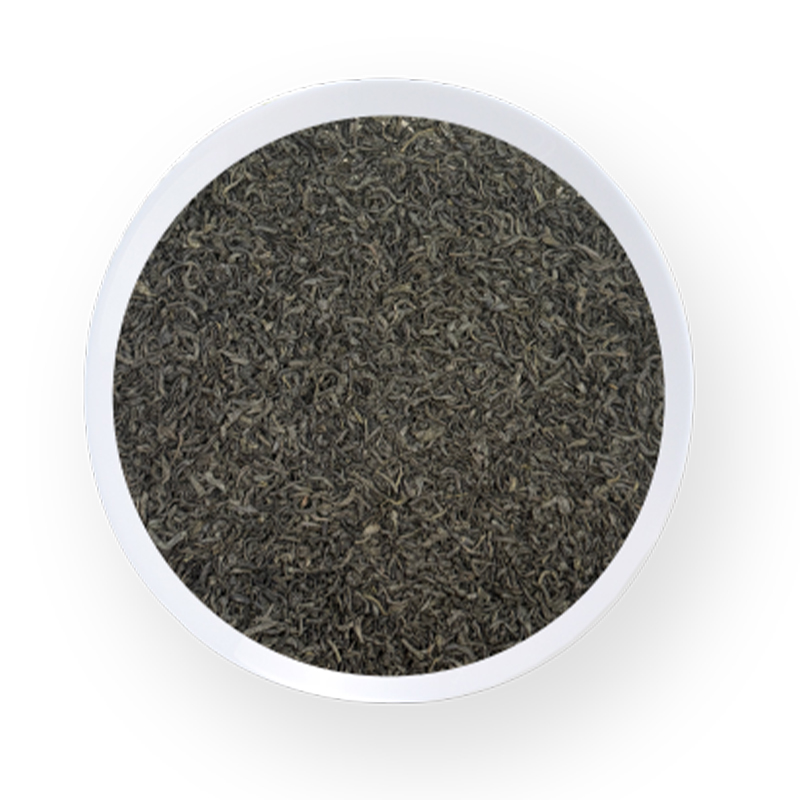
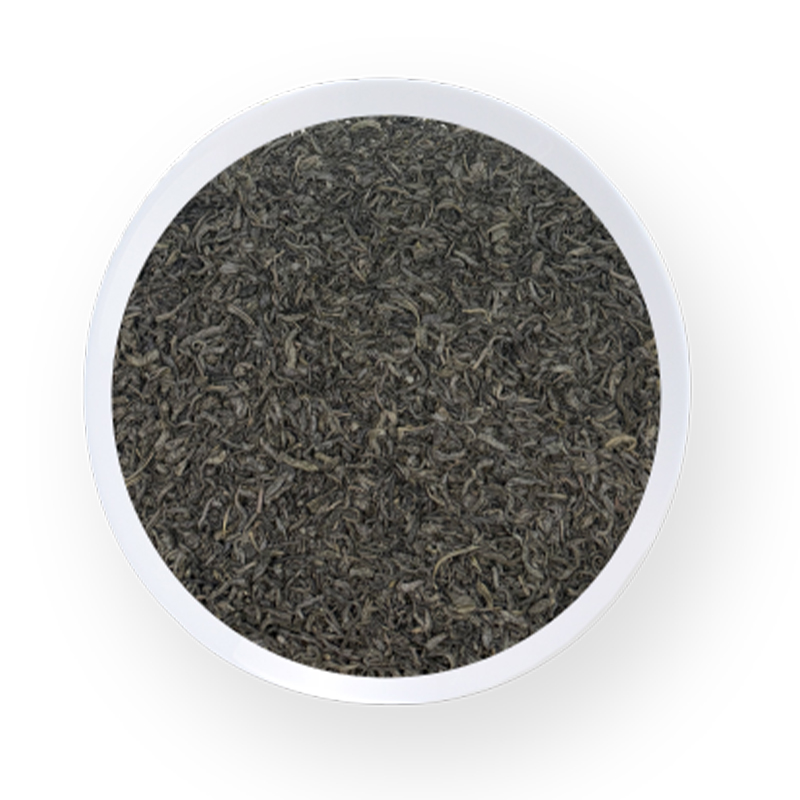
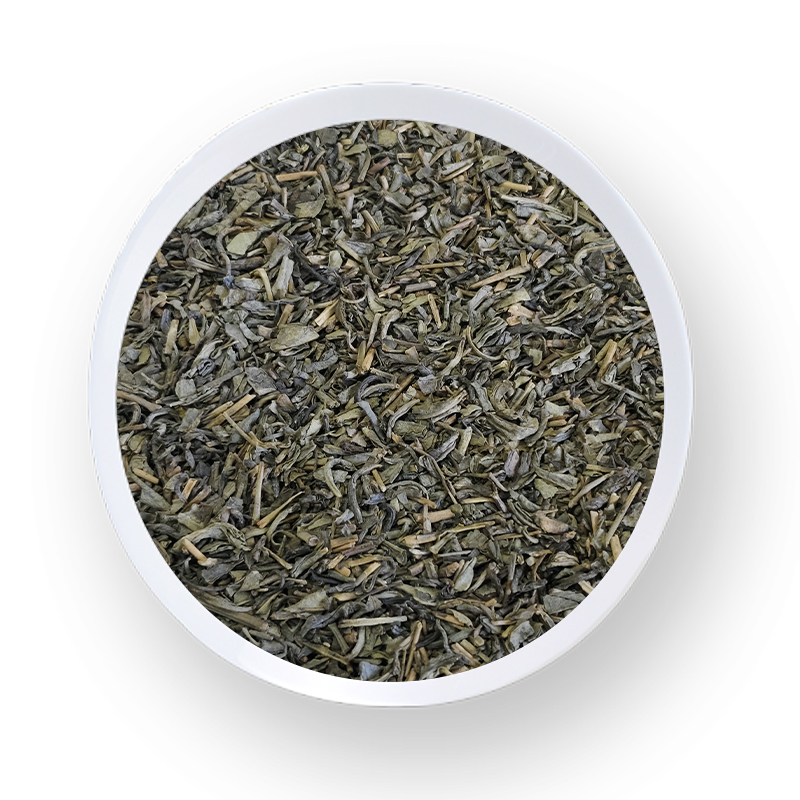 Chunmee 9366 Chinese Green TeaA commercial-grade Zhen Mei green tea with tightly curled, eyebrow-shaped leaves, exporting widely to North Africa and Central Asia. It suits buyers comparing leaf structure against grades like 9380 for a cleaner, smoother, brighter liquor.View Product →
How Leaf Structure Changes the Cup
Chunmee 9366 brews a cleaner, smoother, brighter cup, while Chunmee 9380 delivers a stronger, darker, more astringent liquor, and that difference is a direct consequence of leaf structure.
A tight, slender twist exposes less surface area and unrolls slowly, so extraction stays gradual and the cup stays smooth even at longer steeping. Broader, flatter 9380 leaf presents more open surfaces and a wider particle mix, so it extracts fast and pushes color and strength into the glass quickly. In the North African preparation built on spearmint and generous sugar, that fast, forceful extraction is exactly what the market wants, which is why 9380-heavy blends dominate volume programs in Morocco, Algeria, Mauritania, Mali, and Senegal.
Price, Packing, and Bulk Procurement
Chunmee 9380 almost always quotes below Chunmee 9366, but the figure that decides your margin is landed cost per ton of finished blend, not the price printed beside one grade.
The gap between the two grades moves with the crop year, with raw material costs in Anhui and neighboring provinces, and with demand cycles in West Africa. Packing is normally the same for both: foil-lined kraft paper sacks of 4 to 5 kg, packed into export cartons and marked per contract. Mixed loading is routine, so one 20-foot container can carry 9366, 9371, and 9380 in defined ratios; confirm the exact loading weight and lead time with your supplier before fixing the sales contract.
Scale matters at this tier. Hangzhou Baoda Tea Co., Ltd., a Chinese green tea manufacturer and exporter, runs a 40,000 square meter factory site in Huangshan, Anhui with 12,000 square meters of built production space and an annual capacity of 10,000 tons, supplying importers across Morocco, Algeria, Senegal, and several European markets.
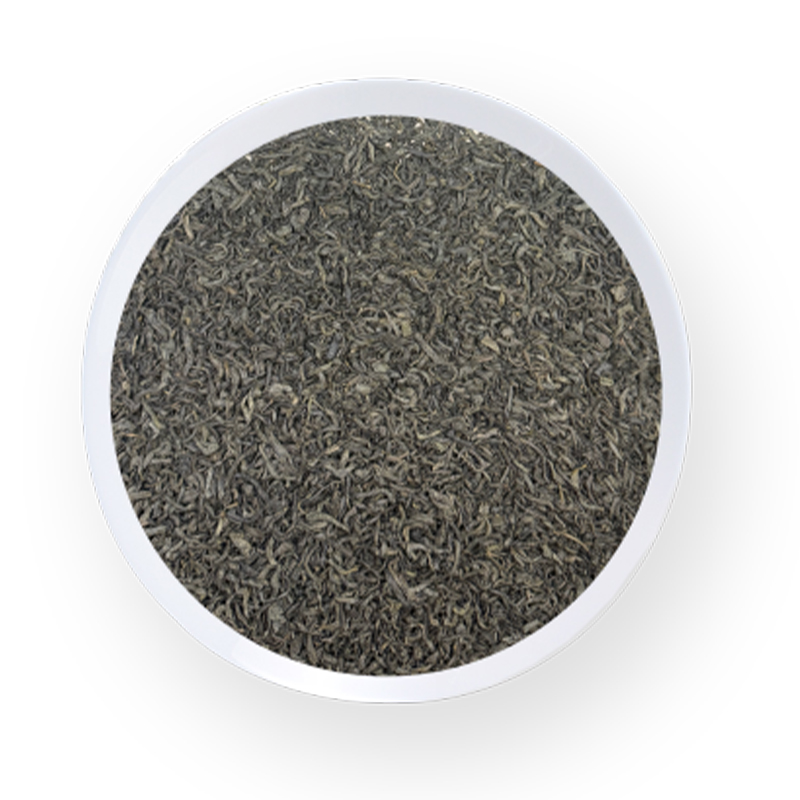
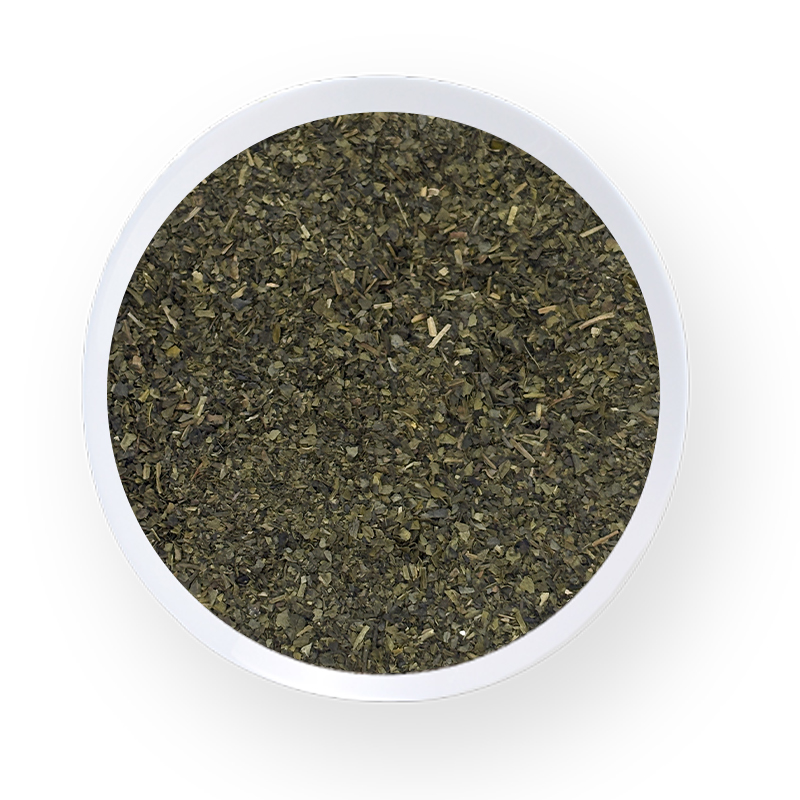 Chunmee 9380 Green Tea for ExportA bolder Chunmee grade with dark, tightly rolled leaves and a stronger, more astringent liquor. It fits volume-driven programs where strength and landed cost matter, backed by large-scale production from a Huangshan-based manufacturer.View Product →
Which Grade Fits Your Market
Choose Chunmee 9366 when your customers pay for leaf appearance and a smoother cup; choose Chunmee 9380 when your program lives on volume, strength, and a sharp landed cost.
Choose Chunmee 9366 if
- Your blend sells on visible leaf quality in retail packs
- You need a smoother, brighter cup at longer steeping
- Private-label programs demand a premium look in the pack
- Your price point leaves room for a finer base tea
Choose Chunmee 9380 if
- You build classic mint tea blends for West Africa
- Strength, color, and quick extraction drive repeat sales
- The formula blends 9380 with gunpowder 3505 for body
- Cost control per ton matters more than leaf looks
Many importers do not choose at all. They load 9366 and 9380 together and let the blend formula decide, or they step through Chunmee 9371, which sits between the two in both leaf style and price.
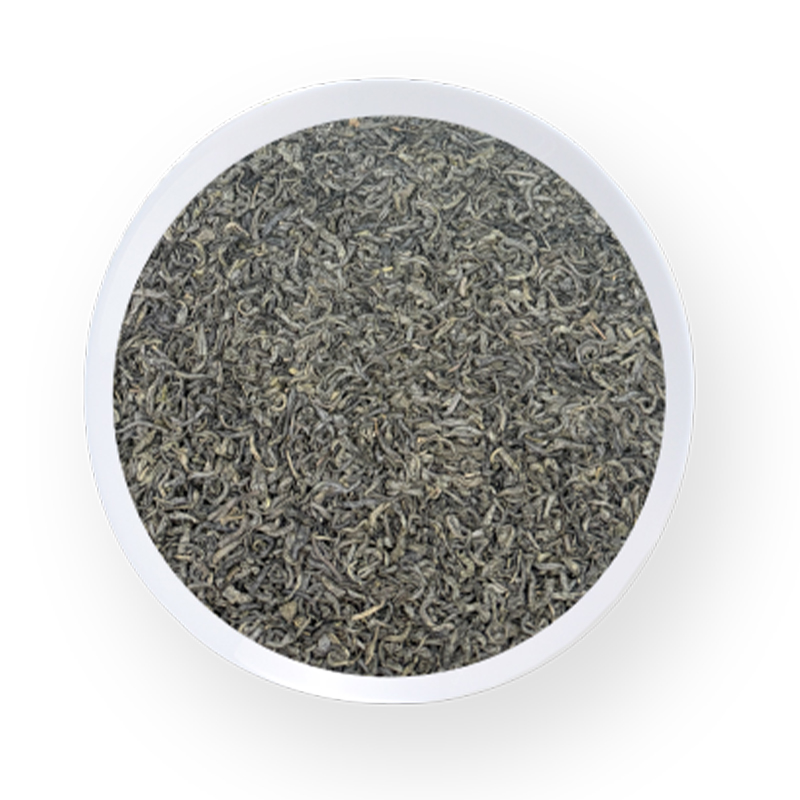
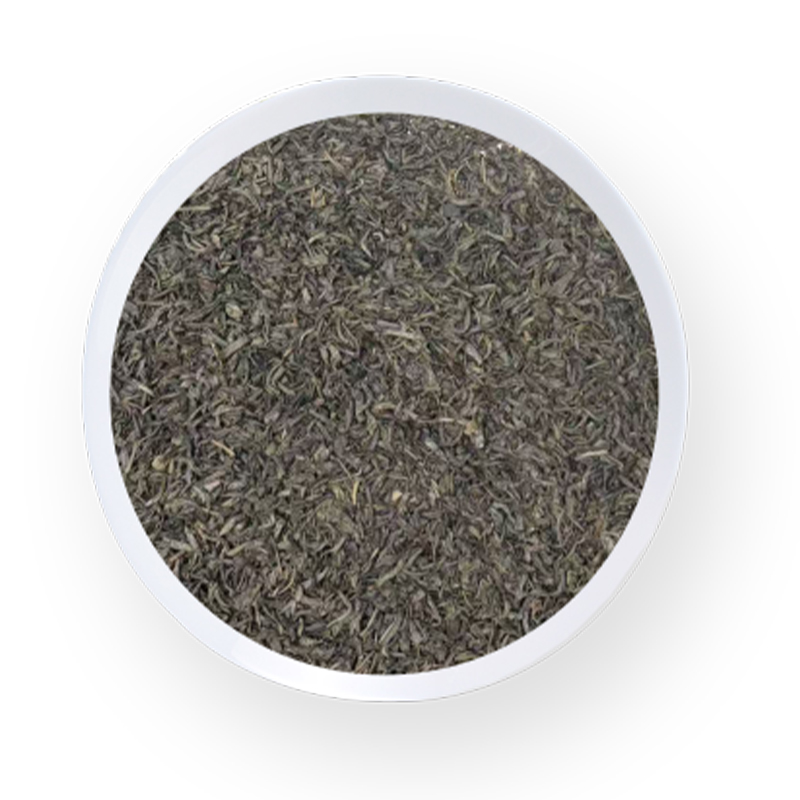 Chunmee 9371 Premium Grade Green TeaPositioned between 9366 and 9380 in leaf style and price, this premium Zhen Mei grade offers balanced flavor with bright golden-green liquor. It is a practical middle option for importers building blends or stepping up in quality.View Product →
For a wider procurement view, this overview of what to consider when choosing China green tea covers the criteria that apply to any grade.
Pre-Shipment Quality Checks That Prevent Disputes
A written specification, a sealed counter sample, and a pre-shipment inspection are the combination that keeps Chunmee 9366 and 9380 shipments out of trouble.
- Fix a contract moisture cap; export green tea commonly sits at 6.0 to 6.5 percent or below.
- Agree a sieve and density profile so "loose" versus "tight" leaf is measured, not debated.
- Check dry leaf color and aroma for evenness across the whole lot, not just the sample drawer.
- Cup the shipment lot against the sealed sample at the agreed tea-to-water ratio.
- Confirm destination compliance documents, such as EU residue limits for European ports or national standards elsewhere.
- Retain sealed samples of every lot until the contract claim window closes.
Frequently Asked Questions
Are Chunmee 9366 and Chunmee 9380 the same tea under different names?
No. Both are pan-fired Chunmee green teas, but 9366 carries a tighter, finer, more uniform twisted leaf, while 9380 carries a broader, flatter, looser leaf. They sit at different quality and price tiers and behave differently in the cup.
Which grade works better for Moroccan-style mint tea?
Chunmee 9380 is the workhorse there because it gives fast, strong, dark liquor that stands up to spearmint and sugar. Premium blends often lift smoothness and leaf appearance with a share of 9366 or 9371.
Can I load Chunmee 9366 and 9380 in the same container?
Yes. Mixed-grade loading in one 20-foot container is routine in this trade. Ask your supplier for separate carton marking per grade and a packing list that states each grade's quantity and ratio.
How do I verify the grade before the goods ship?
Approve a sealed counter sample, then run a pre-shipment check on moisture, sieve profile, dry leaf appearance, and a side-by-side cupping against that sample. Third-party or factory inspection reports should be named in the contract.
 We sincerely welcome customers from all over the world to visit us and seek common
development and create brilliant future.
We sincerely welcome customers from all over the world to visit us and seek common
development and create brilliant future.
Contact BAODA
 Our Phone
+86-15386682887
+86-13857173531
 E-mail
[email protected]
[email protected]
[email protected]
 Our Address
Room 1601, Building 2, New Town Times Square, 189 Fengqi East Road, Hangzhou, Zhejiang Province, China.
Inquiry Us Now
Copyright © Hangzhou Baoda Tea Co., Ltd. All Rights Reserved
Wholesale China Premium Green Tea Company
