

 English
 Français
Chunmee Tea Aroma Explained: Key Quality Evaluation Factors for Importers
Cut open the first foil-lined bag of a newly arrived Chunmee container and the aroma that escapes tells you more than the grade stamp on the carton. Buyers in Casablanca, Algiers and Antwerp perform the nose check before they lay a single leaf on the appraisal tray: if the dry leaf smells flat, sour or smoky, the lot is suspect even when the ticket says 41022. Chunmee tea aroma is a measurable quality signal, not a tasting note.
Chunmee is the classic pan-fired export green tea of China, grown in Zhejiang and Anhui and shipped to Africa and Europe under codes such as 4011, 41022, 9366, 9371 and 9380. This guide explains what creates the aroma, how to evaluate it in five minutes, and which factors make the characteristic notes fail before the tea reaches your warehouse.
Chunmee tea aroma is the volatile profile of a pan-fired Chinese green tea, judged across dry leaf, wet leaf and liquor on four attributes: intensity, cleanliness, characteristic note, and persistence. In export practice it is the first sensory gate applied to a new lot.
What Creates the Aroma in Chunmee Tea
Chunmee aroma depends on four factors: cultivar, fixation, drying and storage. The decisive step is pan fixation at 220-280°C, which stops enzymatic activity and creates the chestnut-like sweet notes that define well-made lots.
The raw material sets the ceiling. Spring-picked shoots of medium-leaf cultivars in Zhejiang and Anhui carry more volatile precursors than coarse summer leaf, which is why premium lots are bought on harvest window, not only on grade code. Buds and tender shoots bring clean, sweet top notes; older leaf adds grassiness.
Fixation decides how much potential survives. Fresh leaf passes through the 220-280°C range quickly enough to deactivate the oxidase enzymes, while the heat forms the pyrazine-type volatiles behind the roast-chestnut note. Under-fixed leaf keeps a raw grassy odor; over-fixed leaf turns sharp and burnt.
Two-stage drying at a hot-air inlet of 110-130°C brings the leaf to 5-7 percent moisture, stable enough to survive packing. Grading then sifts the leaf into the familiar Chunmee codes; the code predicts the leaf-to-bud ratio, and that ratio predicts where the lot sits on the grassy-to-chestnut spectrum.
Green tea sensory weighting, GB/T 23776-2018
How Export Grades Map to Aroma Character
In the Chunmee export range, grade codes are a reliable first guide to aroma style: higher A-count levels signal more bud content and cleaner, sweeter notes, while coarser codes such as 4011 lean vegetal and brothy.
Chinese export practice sorts Chunmee into numbered lots, with 4011, 41022, 9366, 9371 and 9380 among the most traded. Within 41022, suppliers split the same origin into stepped A levels, from AAA to AAAAAAAA, plus a Diamond tier; more A marks mean a higher proportion of fine bud leaf, and the aroma follows that hierarchy.
| Grade | Leaf structure | Dry-leaf nose | Liquor nose |
| 4011 | Coarse, open | Vegetal, fresh grass | Brothy, mild |
| 41022 AAA | Medium curl | Green bean, light toast | Clean, short |
| 41022 AAAAA | Fine curl, higher bud | Chestnut-like, sweet | Smooth, medium |
| 41022 Diamond | Uniform bud-rich curl | Pronounced chestnut, honey | Sweet, long finish |
| 9371 | Tight wiry curls | Toasty, nutty | Round, roasty |
| 9380 | Compact, high-fired | Deep roast, faint smoke | Bold, heavy |
These descriptors are trade shorthand, not a flavor law; crop year, altitude and harvest date move the profile within the same code. But the pattern holds: more A marks mean more bud, and more bud means less grassiness and more of the sweet, chestnut-type note buyers want in a well-selected 41022 lot.
A clean, persistent chestnut note in a premium 41022-family lot is the strongest positive aroma signal in the grade range. A grassy, raw nose in the same code means fixation was underdone, and no leaf sorting will correct it.
Pair the nose with the visual and physical quality indicators you would check on the appraisal tray before you sign a long-term supply agreement.
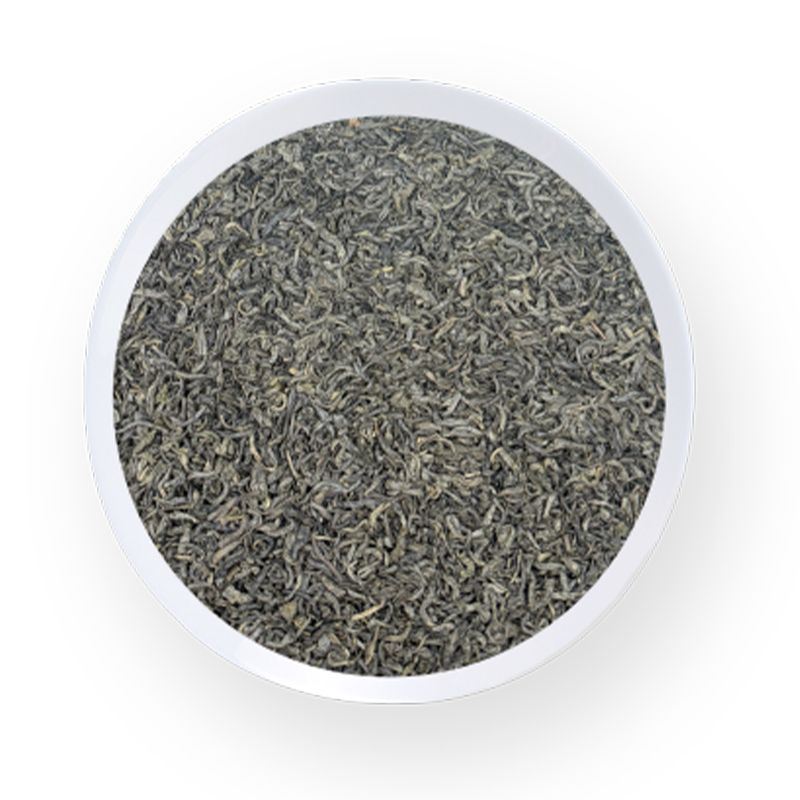 Chunmee 41022 AAAAA Mass-Market Green Tea for Aroma BenchmarkingThis export-grade Chunmee 41022 AAAAA features one bud and two leaves, thick leaf texture, and a deep yellow infusion with mellow taste. Its stable profile makes it a practical benchmark for the five-minute aroma assessment described here.View Product →
A Four-Step Aroma Evaluation Procedure
A reproducible Chunmee aroma assessment takes five minutes and four fixed steps: warm the cup, score the dry leaf, score the wet leaf, and read the liquor at two cooling points.
Use the format in GB/T 23776-2018 - 3 grams of leaf, 150 ml of freshly boiled water, a 5-minute infusion - to keep results comparable between lots.
- Warm a porcelain cup with hot water, empty it, and charge 3 grams of dry Chunmee.
- Cover and shake for three seconds, then open and sniff the dry leaf immediately.
- Pour in 150 ml of freshly boiled water, steep for 5 minutes, and pour the liquor into a separate bowl.
- Sniff the wet leaf after pouring, then read the liquor twice, near 50°C and near 35°C, to test persistence.
Buying-room rule: if the wet leaf smells sour, reject the lot regardless of the dry leaf. Wet-leaf sourness is almost never corrected by blending or re-drying.
Firing Parameters That Decide the Nose
Fixation temperature determines Chunmee aroma more than any other process variable: pan-wall heat in the 220-280°C band produces clean, sweet aromatics, under-fixation leaves a raw grassy odor, and over-fixation creates a sharp burnt note that no blending step will remove.
On the production line, the operator watches the wall temperature, adjusts the feed rate, and checks the leaf color as it moves from bright green to olive; leaf moisture drops from about 75 percent to 55-60 percent by the end of fixation.
Three process mistakes account for most aroma complaints in export shipments. Under-fixation leaves a grassy, unfinished note. Piling hot, moist leaf lets the batch develop a sour note within the hour. Over-fixation on an overheated drum scorches the edges, and the lot picks up a burnt odor.
- Sour note: wet leaf piled too long before firing
- Burnt note: fixation temperature too high or leaf held too long
- Grassy note: under-fixation leaves oxidase active
- Musty note: moisture above 7.0 percent in storage
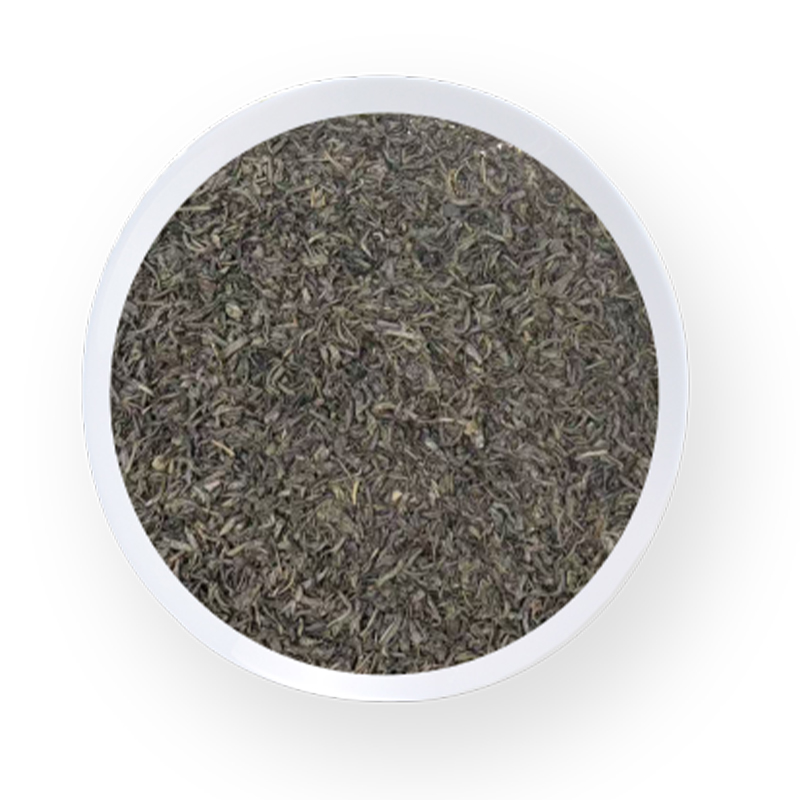 Chunmee 9371 Premium Eyebrow-Shaped Green Tea for Moisture Control ChecksChunmee 9371 is a premium eyebrow-shaped green tea with earthy, nutty notes and a golden-green liquor. Its consistent processing and defined aroma make it a useful reference when evaluating moisture-related defects in shipped lots.View Product →
Containers, Moisture and the Aroma Clock
After packing, moisture is the controlling variable: a Chunmee lot held below the 7.0 percent moisture ceiling set by the Chinese Chunmee standard GB/T 14456.3 keeps its intended aroma for 12 to 18 months, while a lot above the ceiling develops flat, musty notes within weeks in a container.
Export Chunmee is usually packed in foil-lined cartons or poly-lined sacks of 25 to 40 kilograms. The foil is the only defense between the aromatics and the humid air of a container crossing tropical latitudes to North Africa or sailing for weeks to northern Europe. Above 7.0 percent moisture the aromatics oxidize quickly into the flat note traders call container taste.
Temperature cycling is the second enemy: condensation on the top sacks creates musty pockets in an otherwise sound lot, which is why experienced importers sample at discharge on day one.
Working rule of the trade: every extra 1 percent of moisture above the 7.0 percent ceiling roughly halves the survival of the chestnut note; below the ceiling, plan for a 12-18-month aroma window.
Aroma Requirements Buyers Should Put in Writing
Importers who receive consistent aroma lot after lot specify five items in writing: a moisture ceiling, a no-taint clause, a sealed reference sample, a discharge sniff test, and an aroma-hold window on storage temperature.
The grade code alone describes leaf size and shape, not smell. Two extra sentences in the quality description remove the most common cause of claim disputes at destination.
- Moisture certificate from the factory laboratory, at or below 7.0 percent.
- Quality wording stating the lot is free from musty, sour, smoky and oily off-odors.
- A sealed pre-shipment sample of each lot, retained by both parties as the discharge reference.
- A discharge protocol that opens two or three bags and performs a wet-leaf sniff within 30 minutes of opening.
- An aroma-hold commitment: the lot keeps its characteristic note for 12 months after loading, stored below 25°C.
The buyer who writes aroma into the contract instead of trusting the grade stamp removes the weakest link in the claim chain: the code describes the leaf's shape, while the contract describes the leaf's smell.
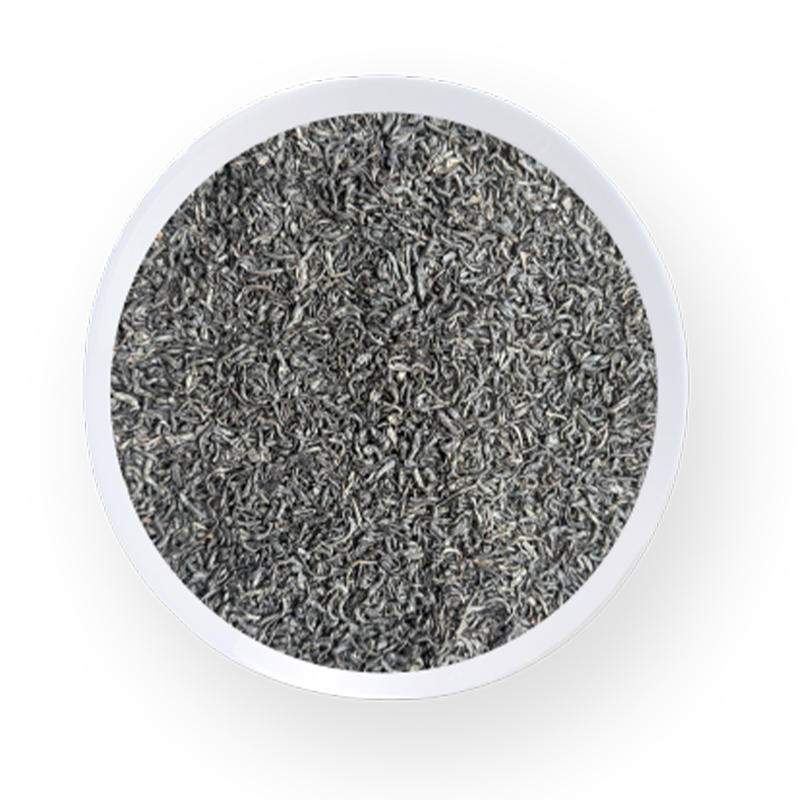 Chunmee 41022 Diamond Certified Organic Huangshan Green TeaChunmee 41022 Diamond is a premium Huangshan green tea with tight emerald leaves and a bright golden infusion. It holds organic and low-residue certifications, making it a candidate when you want to specify aroma standards contractually without ambiguity.View Product →
Aroma Questions From Chunmee Buyers
Why does a high-grade 41022 lot sometimes smell grassy?
Grassiness is a processing signature, not a grade defect. When the pan temperature falls below the practical 220°C minimum, enzymes survive and the dry leaf keeps a raw, grassy odor. Verify with a wet-leaf sniff: a properly fixed wet leaf smells clean, never like cut grass.
What causes the chestnut note in fine Chunmee lots?
The roast-chestnut character comes from pyrazine-type volatiles formed in the upper part of the 220-280°C fixation band. Bud-rich leaf with lower moisture carries it more cleanly, which is why it appears most often in the upper A levels of the 41022 family and in Diamond-tier lots.
Which water temperature is correct for judging Chunmee aroma?
For evaluation, use freshly boiled water, about 100°C at sea level, with 3 grams of leaf and a 5-minute infusion, as GB/T 23776-2018 prescribes for Chinese green tea. A drinking temperature of 75-85°C suppresses part of the volatiles you need to judge.
How long does Chunmee aroma survive in transit and storage?
Below the 7.0 percent moisture ceiling, a well-packed lot keeps its note for 12 to 18 months from the loading date. Above the ceiling the decline shows in weeks: first the chestnut note flattens, then papery and musty notes appear, and re-drying cannot bring the original profile back.
Bottom line: the grade code tells you what the leaf looks like; moisture, firing discipline and pack condition tell you what it will smell like in your market.
Chunmee aroma is the earliest and most honest quality signal a buyer can read. Sourcing teams that need current-crop samples with documented firing and moisture data can work directly with Hangzhou Baoda Tea Co., Ltd., a specialist green tea exporter with its own finishing plant in Huangshan. When the grade code and the moisture certificate point in the same direction, the lot still carries its chestnut note after thirty days at sea.

 We sincerely welcome customers from all over the world to visit us and seek common
development and create brilliant future.
Contact BAODA
 Our Phone
+86-15386682887
+86-13857173531
 E-mail
[email protected]
[email protected]
[email protected]
 Our Address
Room 1601, Building 2, New Town Times Square, 189 Fengqi East Road, Hangzhou, Zhejiang Province, China.
Inquiry Us Now
Copyright © Hangzhou Baoda Tea Co., Ltd. All Rights Reserved
Wholesale China Premium Green Tea Company
