

 English
 Français
Understanding Chunmee 41022 Quality Standards: Key Parameters for Commercial Supply
Every export lot of Chunmee 41022 is graded before it is sealed into a container, and the difference between one grade letter and the next can change the negotiated price by several hundred U.S. dollars per metric ton. Buyers from Casablanca, Algiers, and Paris regularly re-inspect lots on arrival, and their claims almost always reference the same short list of technical parameters. Chunmee 41022 is not a single fixed product. It is a family of specifications defined by leaf size, moisture, appearance, and tolerance limits, and a commercial buyer who understands those limits can negotiate with far more confidence.
This guide explains the quality standards that matter in commercial supply, how Hangzhou Baoda Tea Co., Ltd. applies them in its Huangshan processing facility, and what an importer should verify before signing a contract.
What the Chunmee 41022 Code Means
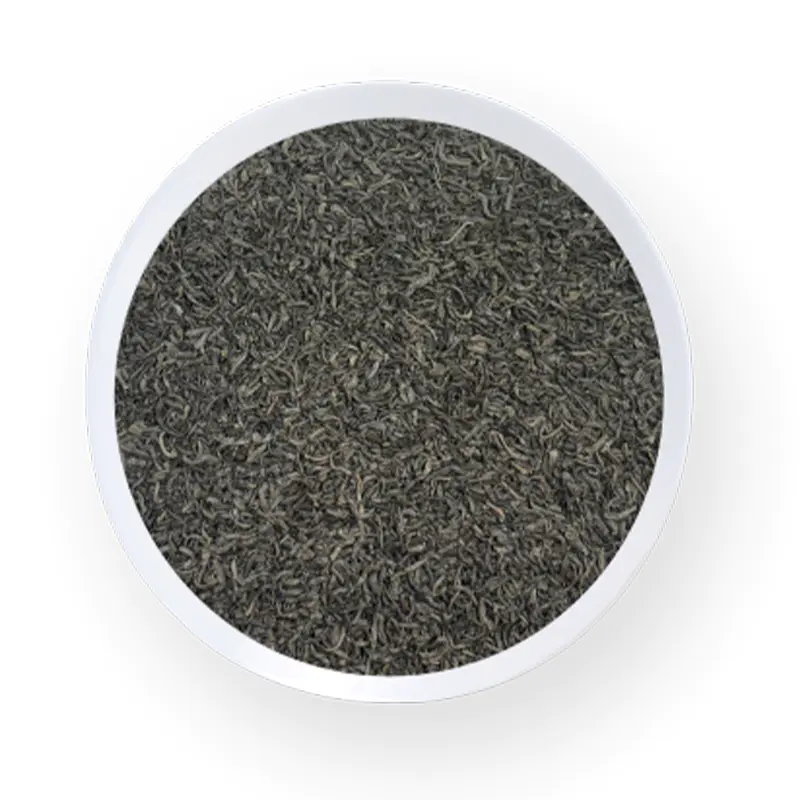
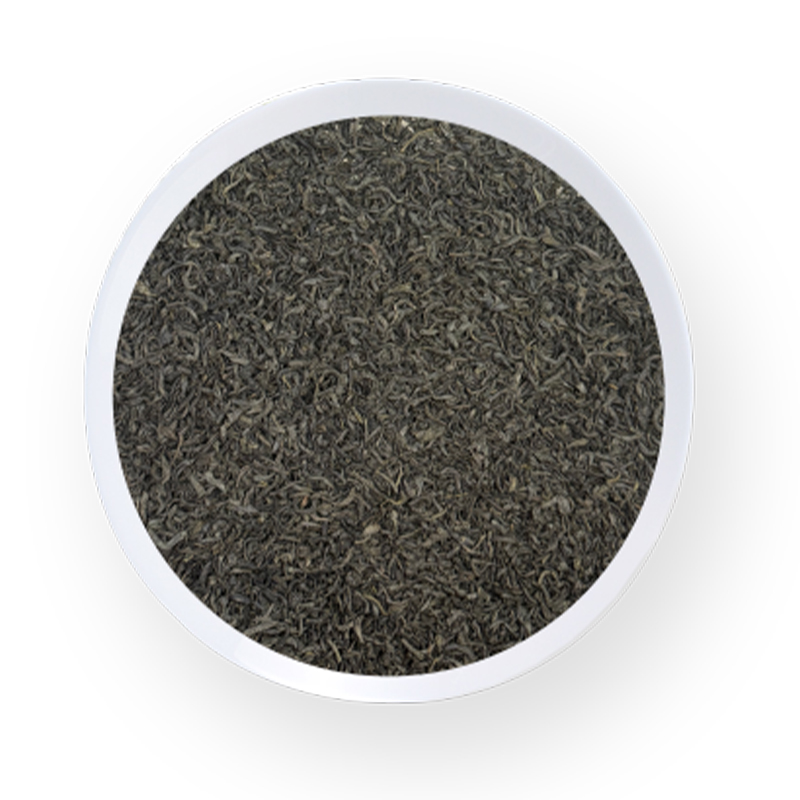
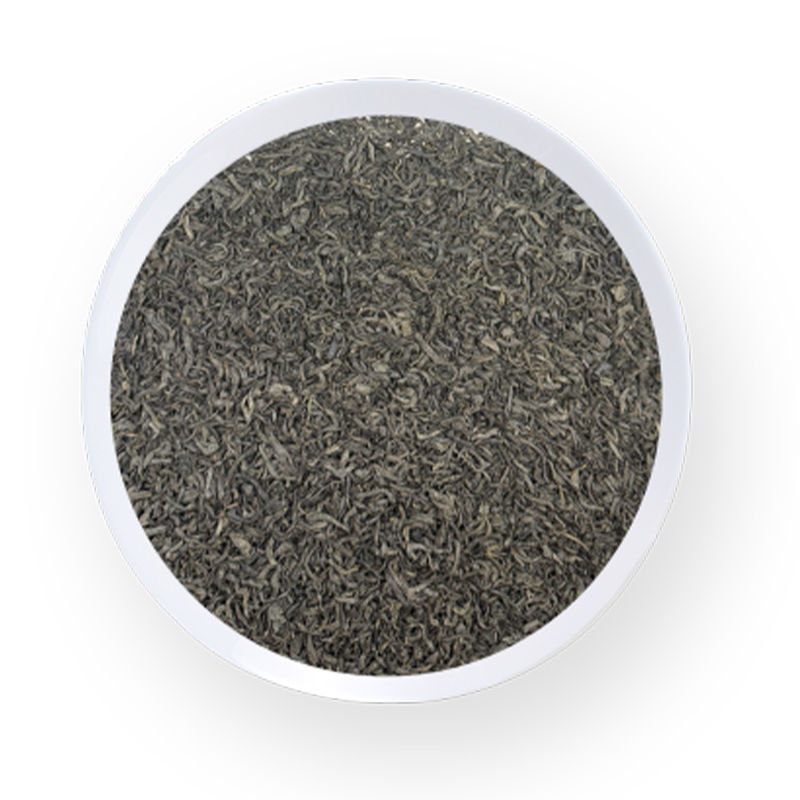
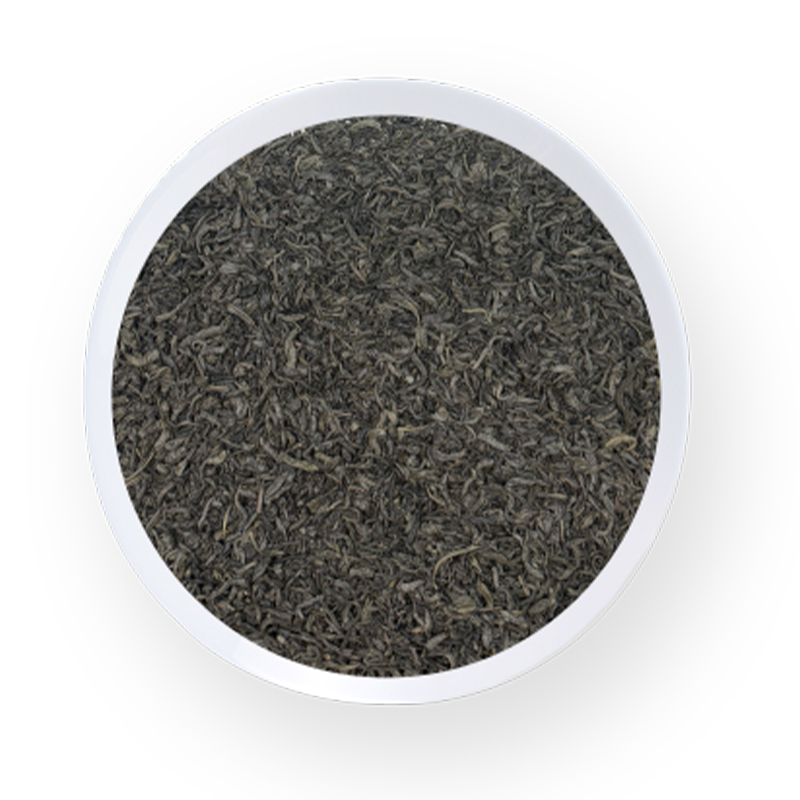
Chunmee 41022 is a standardized grade of pan-fired Chinese green tea with a thin, curled leaf shape, produced mainly in Anhui, Zhejiang, and Jiangxi provinces for bulk export. The English name "chunmee" comes from the Chinese term for "precious eyebrow," a reference to the slender, slightly twisted leaf form left after rolling and firing. The 41022 code identifies the sieve aperture class used when the fired leaf is sifted, so the code defines leaf dimension rather than quality. Quality is communicated separately by the appended grade letter, from AAA up to Diamond.
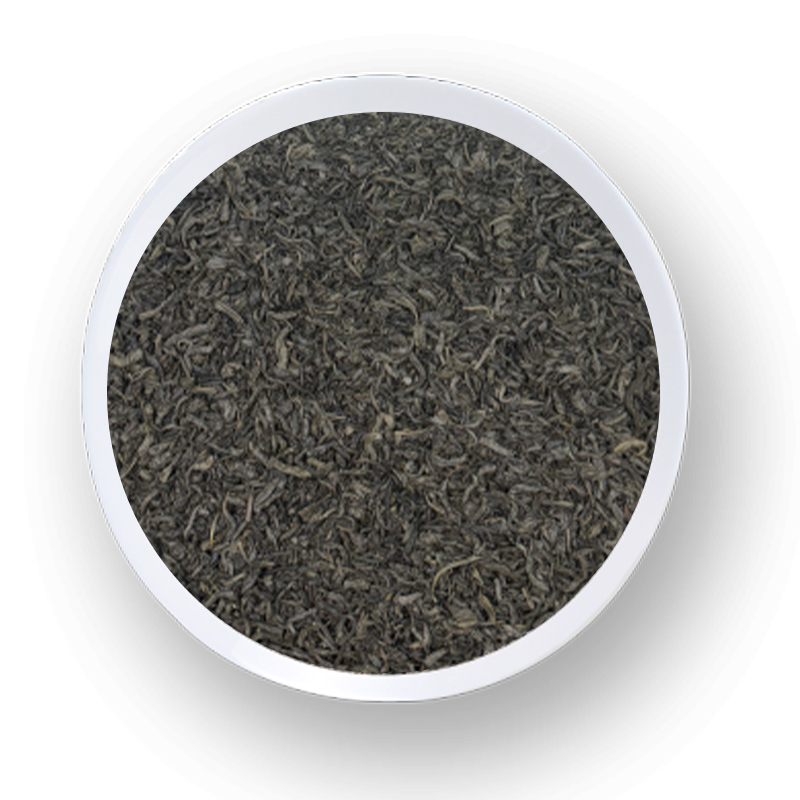 Chunmee 41022 AAA Green Tea for Bulk and Industrial UseThis standardized grade offers consistent leaf size and reduced stems, making it a practical choice for automated packing and applications where low turbidity and clean brewing matter.View Product →
In everyday trade, 41022 is the medium-fine workhorse grade of the chunmee category. It brews a clean, bright yellow-green infusion with a roasted, slightly nutty note, and it stands up well to the mint-and-sugar preparation common in North Africa as well as straight brewing across Europe. Importers value it because the leaf grade is repeatable: the same code from the same factory means the same brewing behavior in the next container.
Key Quality Parameters for Export Contracts
Four parameters determine whether a Chunmee 41022 lot meets a commercial contract: moisture content, leaf size uniformity, appearance, and clean content. Export contracts in this category are written around measurable numbers, not tasting notes, and each parameter is translated into one or more specification lines.
| Parameter | Typical commercial specification | Why it matters |
| Moisture content | Max 6.5 percent at loading; 7.0 percent absolute warranty | Above 7.0 percent, mold and stale flavor risk rises sharply during sea freight |
| Leaf size uniformity | 41022 sieve class; at least 85 percent within the declared cut | Mixed leaf sizes make brewing time and flavor extraction inconsistent |
| Broken leaf | Max 5 percent for AAA; max 3 percent for AAAAA and above | High broken content creates dust and cloudy liquor in the cup |
| Stem and foreign matter | Max 0.5 percent | Visible stems trigger immediate acceptance claims in European markets |
| Total ash | Max 7.0 percent on dry weight | Regulatory and food-safety ceiling in most buyer markets |
| Aroma and infusion | Bright yellow-green; clean roasted note; no stale or smoky off-notes | Sensory failure cannot be corrected later by the importer |
These limits are not arbitrary. North African markets consume green tea in very large daily volume, and European buyers re-package bulk lots into branded packs. Both use cases punish inconsistent leaf and off-smells, so the specification limits above are the minimum a serious exporter should guarantee.
From AAA to Diamond: How the Grade Ladder Works
The A-count attached to Chunmee 41022 is a quality ladder: each additional A tightens the tolerance for broken leaf, stem content, and surface dust, while Diamond is the cleanest and most uniform lot a factory can produce. All of these grades come from the same firing and rolling process. The difference is in grading discipline.
A factory passes each batch through sieve cuts, color sorters, and hand-picking stations, then decides how much broken and imperfect leaf to leave in. That decision sets the grade letter and the price. The comparison below shows how two opposite ends of the range differ.
AAA: the commercial workhorse
- Up to 5 percent broken leaf
- Good curl, some fine particles in the sample
- Bright infusion, occasional cloudiness
- Used for bulk resale and tea-bag blending
Diamond: the premium cut
- Max 0.5 percent broken leaf
- Near-perfect uniformity, glossy dark green surface
- Crystal-bright infusion
- Used for retail packs and high-end buyers
Expressed as the maximum percentage of broken leaf allowed in a graded lot; typical export contract figures.
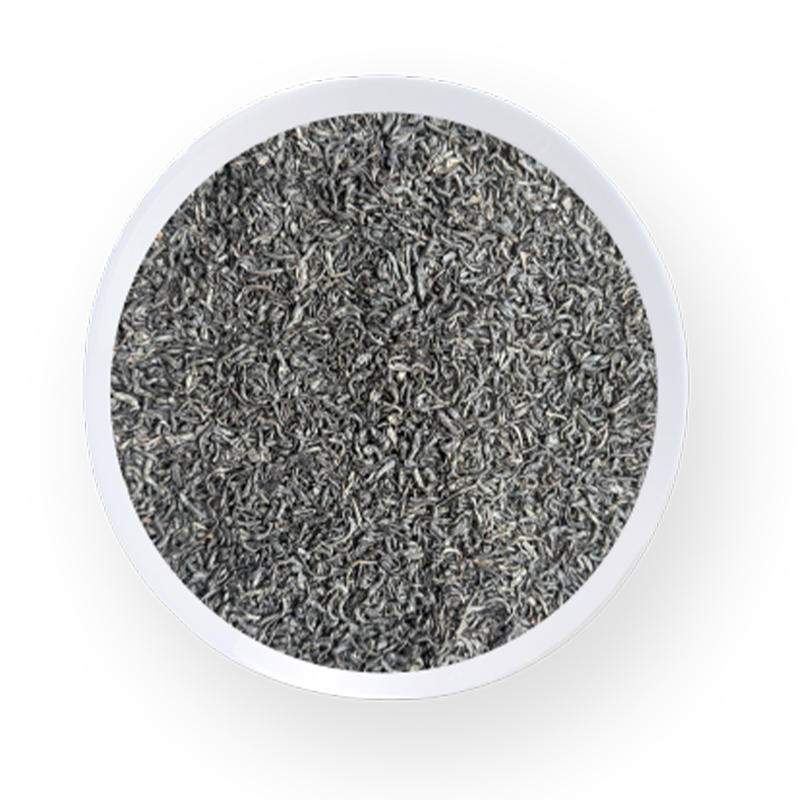 Chunmee 41022 Diamond Premium Green Tea from HuangshanSourced from Huangshan and certified organic, this grade is valued for its bright, clear liquor and lasting flavor, appealing to buyers seeking a recognized premium export standard.View Product →
Processing and Factory Controls That Protect the Grade
Chunmee 41022 quality is decided on the factory floor: leaf sorting, pan-firing temperature, and final grading discipline determine whether a batch holds its declared grade when it is re-inspected at arrival. Because the grade letter is a tolerance promise, the process has to be designed to protect it.
- Incoming leaf inspection: fresh leaf is checked for moisture, evenness, and oxidation state.
- Pan-firing: enzymes are stopped rapidly at high temperature, and the characteristic roasted note develops here.
- Rolling and shaping: the leaf is twisted into the thin, eyebrow-like curl.
- Two-stage drying: moisture is pulled below 6.5 percent in stages to avoid case-hardening.
- Sieving to the 41022 cut: dry leaf is separated by sieve aperture, and off-size leaf is removed.
- Color sorting and hand-picking: stems, yellow leaf, and foreign matter are extracted.
- Final QC and archive sampling: a sealed sample from each lot is kept for claim resolution.
What a Buyer Should Verify Before Signing
A reliable Chunmee 41022 supply contract controls the variables that a single sample cannot show: grade stability across shipments, container packing, and documentation. These six checks should appear somewhere in every import buyer's procedure.
- Request the lot-specific quality-control report, not a general brochure.
- Confirm that the grade letter refers to the same sieve class in every shipment.
- Set moisture at 6.5 percent maximum at loading and 7.0 percent as an absolute warranty.
- Check container liners and palletization; a moisture barrier and clean pallets are non-negotiable.
- Agree on a third-party pre-shipment inspection and a re-inspection clause.
- Keep a sealed archive sample of at least 500 grams for every lot.
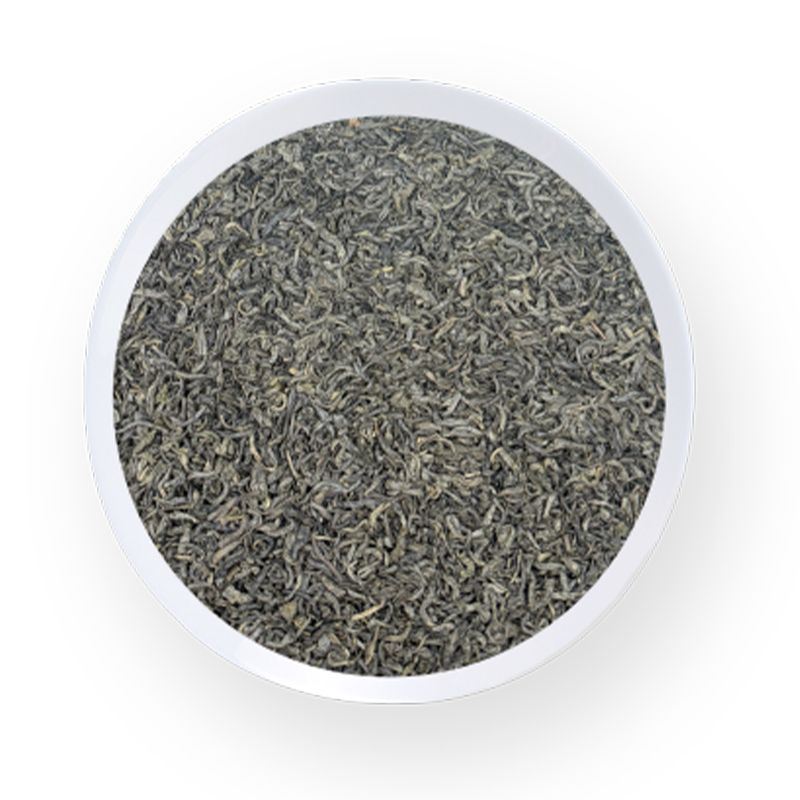 Chunmee 41022 AAAAA Green Tea for Mass Market and Regional BlendsPositioned for high-volume markets, this grade balances strong brewing resistance and mellow taste, making it suitable for regional customization across Africa and Central Asia.View Product →
For a step-by-step procedure on comparing offers from different exporters, our guide on choosing Chunmee 41022 walks through the questions to ask and the documents to request before a trial order.
Frequently Asked Questions
Four questions decide most Chunmee 41022 contract discussions, and the answers below reflect how Chinese export processors actually grade and ship these lots.
Does a higher A-grade mean the tea tastes better?
Not automatically. The A-count measures leaf cleanliness and uniformity, not flavor intensity. A well-fired AAA lot can taste nearly identical to a Diamond lot from the same batch; the Diamond will simply look cleaner in the dry leaf and in the cup.
What moisture level is safe for long sea shipments?
Contract at 6.5 percent maximum at loading, with 7.0 percent as the absolute ceiling warranty. Above 7.0 percent, the risk of mold and stale notes increases quickly, especially on routes through warm climate zones.
Is Chunmee 41022 used for mint tea blending?
Yes. Chunmee 41022 is a common base for North African mint tea, where the robust, slightly roasted leaf holds its character during long boiling with fresh mint and sugar. European buyers also use it for straight packaged green tea.
How is the 41022 code assigned in the factory?
The code comes from the traditional Chinese export grading system for chunmee. Fired and dried leaf is passed through a series of sieves, and the code corresponds to the aperture class that captures the leaf. The same code from different suppliers should mean a comparable leaf size, while the A-count communicates quality tolerance.

 We sincerely welcome customers from all over the world to visit us and seek common
development and create brilliant future.
Contact BAODA
 Our Phone
+86-15386682887
+86-13857173531
 E-mail
[email protected]
[email protected]
[email protected]
 Our Address
Room 1601, Building 2, New Town Times Square, 189 Fengqi East Road, Hangzhou, Zhejiang Province, China.
Inquiry Us Now
Copyright © Hangzhou Baoda Tea Co., Ltd. All Rights Reserved
Wholesale China Premium Green Tea Company
