

 English
 Français
Chunmee Tea Quality Inspection: The Key Checks to Run Before Bulk Orders
A photograph of dry leaf cannot show moisture content, and a clean cup cannot show whether the cartons behind it sat on a dry warehouse floor. That gap is where bulk Chunmee disputes begin: a 500 g sample is approved, the container sails, and the argument opens at the destination port over a lot that was never measured against a written specification.
The sequence that keeps a purchase defensible is fixed: pin the grade to a sealed physical sample, write moisture and ash limits into the contract, cup a standard infusion, verify the sieve profile and foreign-matter count, then tie every result to a lot number before the deposit leaves your account. Each check costs little. Skipping one does not.
Chunmee quality inspection is the documented comparison of a lot against an agreed specification: grade sample, moisture and ash limits, sensory profile, sieve fraction, residue status and packaging condition. It is completed before payment and repeated on the arrival sample, with every result recorded against a lot number.
Pin the Grade to a Sealed Sample, Not an Adjective
Grade labels such as Chunmee 41022 AAA, AAAA or Diamond describe a position inside one exporter's own sorting range, so no international table fixes what AAA means from factory to factory.
That matters at order stage. A buyer who approves AAA from one plant and reorders AAA from another has approved two different products. The practical fix is a sealed retained sample of 200 g to 500 g drawn from the actual production lot, signed and dated by both sides, and photographed beside a ruler and a colour reference so leaf length and shade are documented rather than described in words.
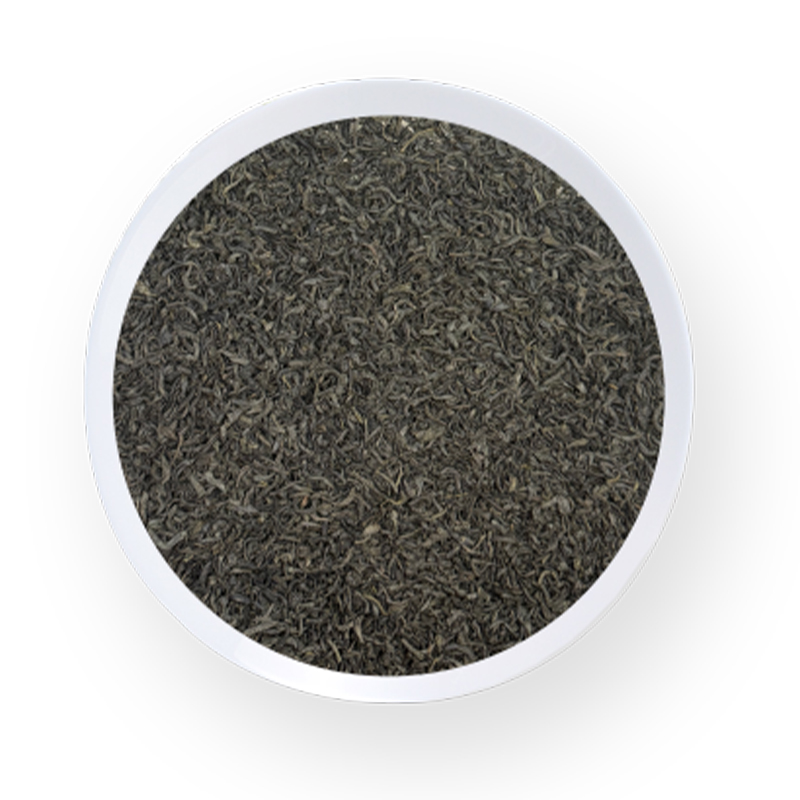
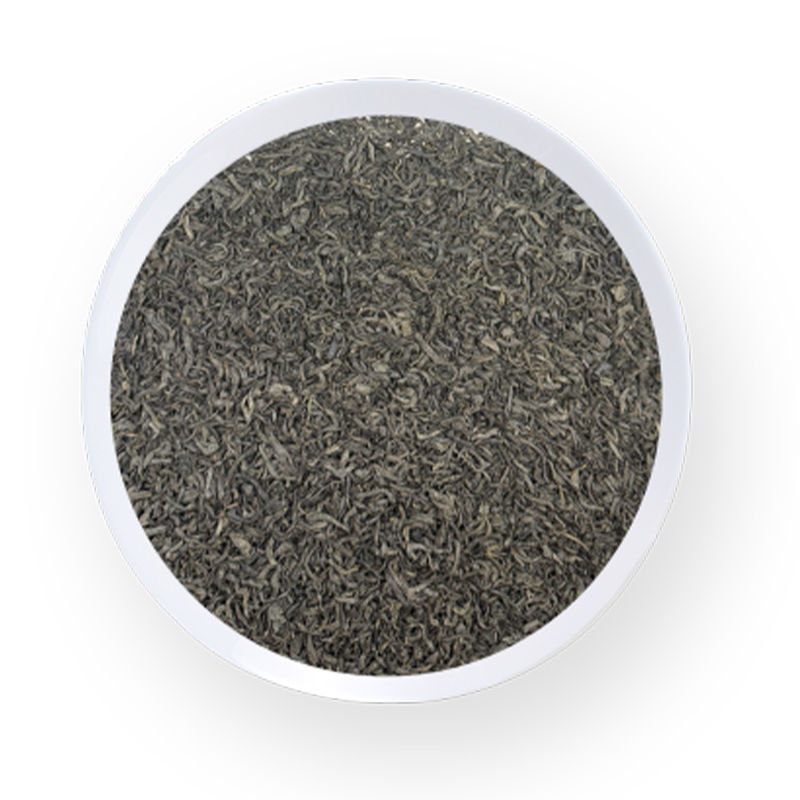
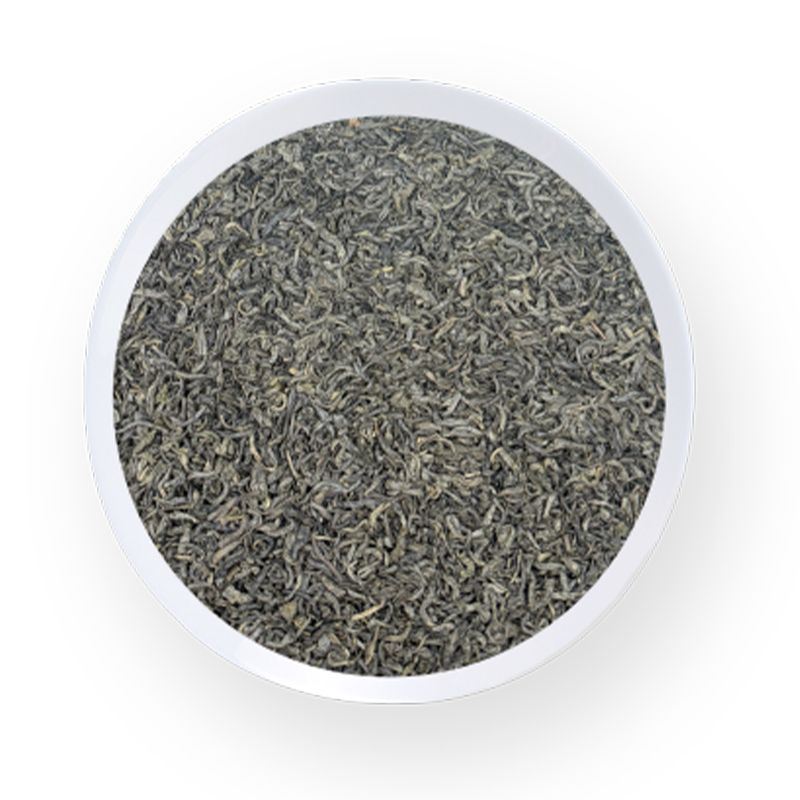
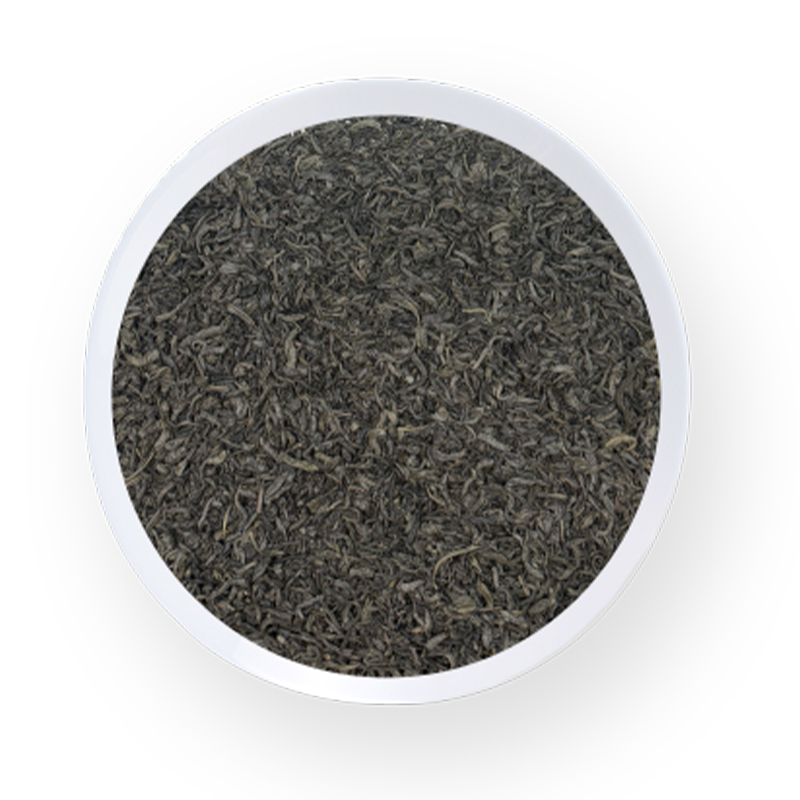
Judge the dry leaf on four visible points: how tightly the eyebrow curl is rolled, how even the particle length is, how much tip is present, and how much dust falls through when the sample is shaken on a white sheet. Within the 41022 grade range, higher tiers generally show a tighter roll, a more even particle size and a deeper green; those differences are real, but they are relative to one supplier's range, not absolute.
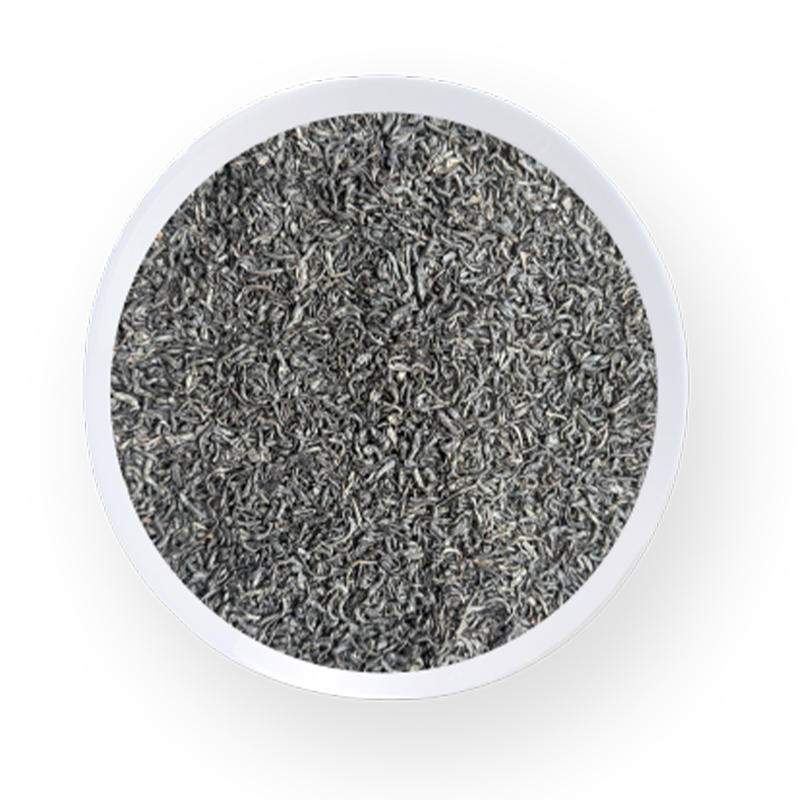 Chunmee 41022 Diamond Premium Green TeaPremium 41022 grade suited to buyer comparisons of tighter roll and even particle size; check sample and specification sheet before bulk orders.View Product →
Ask for the specification sheet to travel with the sample, listing the tea number, the grade tier, the packed date and the packing format. If the sheet and the sample disagree, the sample wins, because the sample is the only object both parties can smell and brew.
The Six Checks That Decide a Bulk Order
Six checks separate a sample that cups well from a lot that clears customs: moisture, total ash, liquor quality, sieve profile, foreign matter and residue status.
| Check | Method or reference | Limit to fix in the contract | What it prevents |
| Moisture | ISO 1573, loss in mass on drying | 7.0% or lower | Mould, caking and a stale liquor after sea freight |
| Total ash | ISO 1575 | 6.5% or lower | Mineral dirt and incomplete leaf cleaning |
| Liquor quality | 3 g leaf, 150 ml freshly boiled water, 5 minutes | Bright yellow-green, mellow, no smoke or sourness | Over-firing and old stock passed off as new season |
| Sieve profile | Stacked sieves from 8 to 40 mesh | Dust and fannings within an agreed percentage | Cup strength shifts between shipments |
| Foreign matter | Visual sort plus metal detection record | No sticks, stones, hair or plastic | Port rejection and retail complaints |
| Residues | Accredited laboratory against destination limits | Pass per EU Regulation (EC) No 396/2005 where relevant | Refused entry at the destination port |
Fix each limit before the sample is drawn. A check with no contractual limit is a conversation, not a specification, and conversations do not survive a two-month shipping delay.
Moisture and Storage History Decide Most Chunmee Claims
Moisture above the contract ceiling is the most frequent cause of a rejected green tea lot, because Chunmee is unfermented and surplus water keeps driving oxidation and mould through a four to six week sea voyage.
Storage history explains most of the readings that surprise buyers. Ask for the packing date, the warehouse type, whether cartons were stacked on pallets rather than on the floor, and loading photographs that show the container floor and any desiccant used. Tea packed at 6.5% in a dry warehouse can arrive higher if stuffing happened during a humid week.
Moisture is not a fixed property of a lot; it is a snapshot taken at one temperature and one humidity. Treat any reading within 0.5 percentage points of the ceiling as a flag rather than a pass, and record the instrument, method and date beside every number so the arrival test can be compared on equal terms.
Cup the Tea the Same Way Every Time
A repeatable infusion of 3 g of leaf in 150 ml of freshly boiled water for 5 minutes, the green tea method described in GB/T 23776, turns "good flavour" into a result a second taster can reproduce.
Score four fields on a single form so two shipments can be compared months apart:
- Dry leaf aroma: fresh chestnut, no smoke and no mustiness
- Liquor colour: bright yellow-green and clear, not dull or brown
- Taste: mellow with mild sweetness, no sharp astringency or sourness
- Infused leaf: even colour and soft texture, no scorched edges
Each defect points to a cause. Smoke indicates over-firing, a dull yellow liquor with a flat taste points to age or damp storage, and sourness usually follows moisture. Within one factory's range, expect a premium Chunmee grade to show more tip and a thicker, brighter liquor than the entry tier; if the cup is indistinguishable, the grade premium is not being delivered.
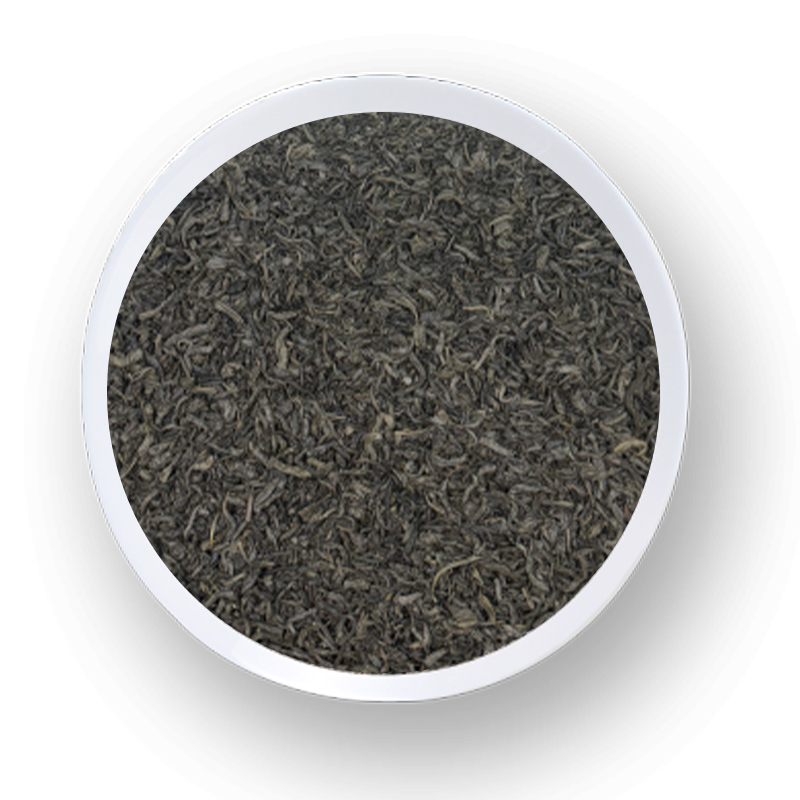 Chunmee 41022 AAA Wholesale Green TeaAAA 41022 grade for buyers checking premium tip and brighter liquor; fixed-pattern sampling ties each result to a lot number.View Product →
Sample the Lot and Lock the Result to a Number
A sample pulled from the top carton of a stack proves nothing about the other four hundred, so sampling follows a fixed pattern and every result carries a lot number.
- Divide the lot using ISO 1839 sampling logic: take increments from a defined proportion of packages across the stack, not from the top layer alone.
- Reduce the combined increments by quartering until you hold roughly 500 g, then seal three portions and label each with lot number, grade, packing date and moisture reading.
- Test in parallel. The supplier's laboratory and a laboratory you nominate run the same sealed sample, and a working tolerance of 0.3 percentage points on moisture is a sensible trigger for a third test.
- Retain one sealed sample until the lot is accepted at destination, and keep it for at least six months after arrival alongside the report and loading photographs.
- Record container loading, including seal number, pallet condition and a dry container floor, because those photographs settle arguments that a cup cannot.
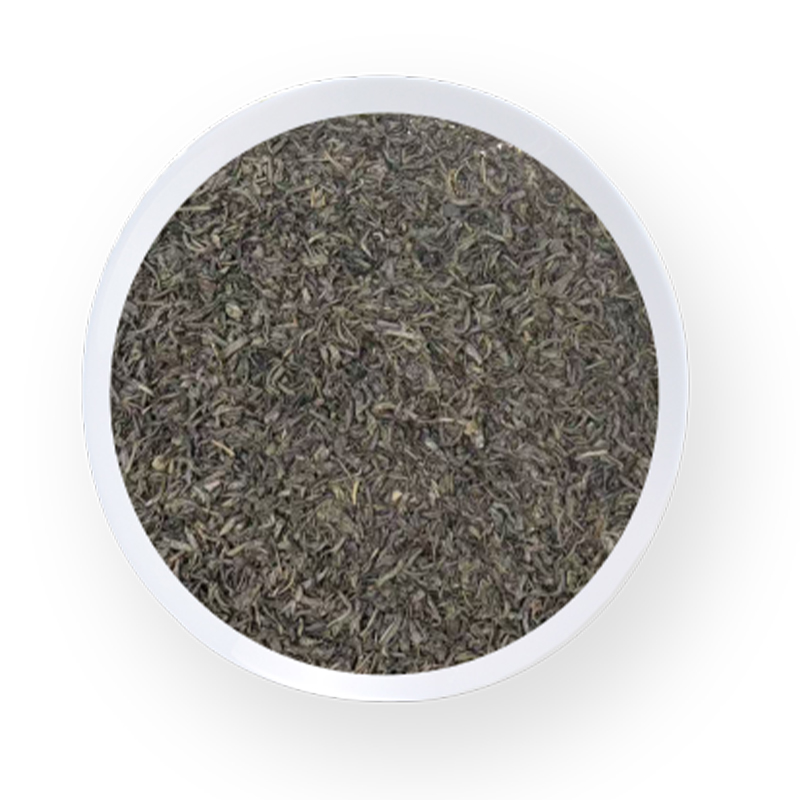 Chunmee 9371 Commercial Grade Green TeaCommercial 9371 grade below 41022, suited to tea-bag and mint-tea blending; keep a separate retained sample for each leaf style.View Product →
A sample approval confirms
- The leaf appearance matches an agreed physical reference
- The cup was clean on the day it was brewed
- One carton was drawn from the production lot
Lot verification confirms
- Moisture, ash and sieve profile across the shipment
- Storage and stuffing conditions before departure
- Documents that will clear the destination port
Orders covering more than one leaf style need one retained sample per grade, not a single blended reference. Comparing two tea numbers against a shared sample is how grade mix-ups reach the packing line unnoticed.
Documents and Packaging Checks That Stop a Container
A lot that passes the laboratory can still be held at the port by a missing phytosanitary certificate, a net weight that does not match the packing list, or a liner that is not food grade.
- Certificate of analysis citing method references ISO 1573 and ISO 1575, with the lot number printed on it
- Pesticide residue report from an accredited laboratory, checked against destination limits
- Phytosanitary certificate and certificate of origin, matched to the buyer name on the contract
- Packing list with net and gross weight per carton and the total for the container
- ISPM 15 mark on any wooden pallet or chest used in the shipment
On the packaging side, check liner gauge and seam integrity on a cut-open carton, weigh twenty cartons to confirm tare consistency, and approve label artwork before printing, not after. A carton that loses 200 g of net weight across five hundred units is a contractual shortfall even when the tea itself is sound.
Sign-off sequence before the deposit
- Sealed grade sample signed and dated by both parties
- Laboratory report with method references and a lot number
- Written acceptance tolerance for moisture and ash in the contract
- Loading photographs with seal number and dry container floor
Questions Buyers Ask Before a First Container
How large should a pre-order Chunmee sample be?
Ask for three sealed samples of 200 g to 500 g drawn from different cartons of the production lot, and keep one unopened. A single hand-picked sample from the sample room shows what the factory can produce, not what the lot in front of you contains.
Which tests matter most for a European destination?
Moisture by ISO 1573, total ash by ISO 1575 and a pesticide residue screen from an accredited laboratory checked against the maximum residue levels in EU Regulation (EC) No 396/2005. For African destinations, confirm residue and packaging requirements with the importer, because national rules differ between markets.
Can a high-moisture lot be re-fired and shipped?
Re-firing above roughly 100 degrees Celsius removes water but also drives off the aromatics that define Chunmee, and the leaf darkens in the process. A lot at 8% moisture is a rejection or a price renegotiation, not a repair job.
How long should retained samples be kept?
Keep one sealed sample for the full contract term and at least six months after arrival, stored with the laboratory report and the loading photographs. If a dispute reaches arbitration, that sealed sample is the only physical evidence of what both parties agreed to.
 We sincerely welcome customers from all over the world to visit us and seek common
development and create brilliant future.
Contact BAODA
 Our Phone
+86-15386682887
+86-13857173531
 E-mail
[email protected]
[email protected]
[email protected]
 Our Address
Room 1601, Building 2, New Town Times Square, 189 Fengqi East Road, Hangzhou, Zhejiang Province, China.
Inquiry Us Now
Copyright © Hangzhou Baoda Tea Co., Ltd. All Rights Reserved
Wholesale China Premium Green Tea Company
