

 English
 Français
Chunmee 41022 AAAAA: Key Quality and Grade Requirements for Tea Buyers
As a Chinese tea manufacturer and exporter with a 40,000-square-meter processing plant in Huangshan, Anhui, and an annual capacity of 10,000 tons, Hangzhou Baoda Tea Co., Ltd. ships this grade in whole-container lots to importers across Africa and Europe. Buyers who understand the code behind the label source more consistently and pay for exactly what they get.
What the 41022 Code and AAAAA Label Tell You
The 41022 number is a five-digit trade code that places the tea in the Chunmee family and defines the leaf specification; AAAAA is the grade assigned after sorting, not a flavor promise or a single-origin guarantee.
The first digit classifies the leaf style as Chunmee. The second digit narrows the leaf-size band, and the final three digits describe the processing and refinement profile. Across the export market, 41022 is treated as a large-leaf Chunmee base that can be finished from AAA up to eight-A and Diamond quality. Buyers who see 41022 on a specification sheet know they are dealing with the classic eyebrow-shaped green tea, not a gunpowder pellet or a specialty leaf.
Every A added to the grade label stands for one more stage of sorting discipline. A five-A lot must show tighter leaf-length distribution, a cleaner color tone and fewer broken pieces than a three-A or four-A lot. Broken leaf is not only a visual problem; the dust and fines it creates brew faster and turn the cup bitter, which is why importers of premium retail tea insist on higher A counts.
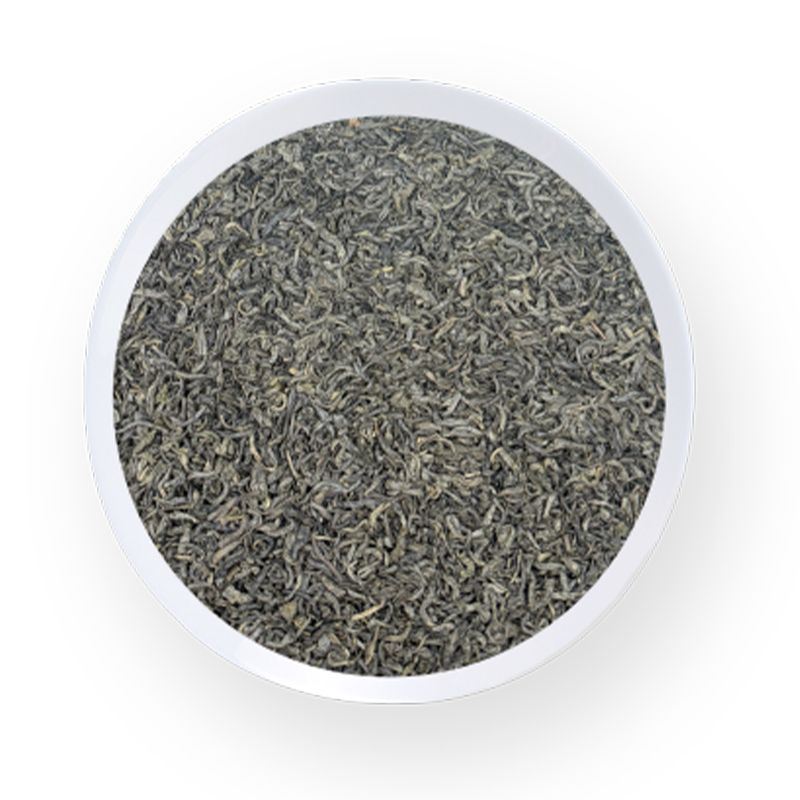 Chunmee 41022 AAAAA Green Tea with Five-A Sorting GradeThis highest sorting tier among the standard Chunmee grades offers tighter leaf length distribution and fewer broken pieces, producing a cleaner, less bitter cup that suits importers requiring premium retail quality.View Product →
Buyers who want to apply these principles quickly can work through the five practical quality checks for China green tea described in our buying guide.
A genuine five-A grade means the finished lot holds roughly 1 to 2 percent broken content by weight, with leaf length kept inside a narrow window. If a supplier cannot state these numbers, treat the grade claim as marketing.
Core Quality Requirements for Chunmee 41022 AAAAA
A Chunmee 41022 AAAAA lot must pass inspection on four attributes: dry leaf appearance, aroma, liquor quality and infused leaf behavior. Each attribute has an objective threshold, and a single failed check is enough to reject the lot.
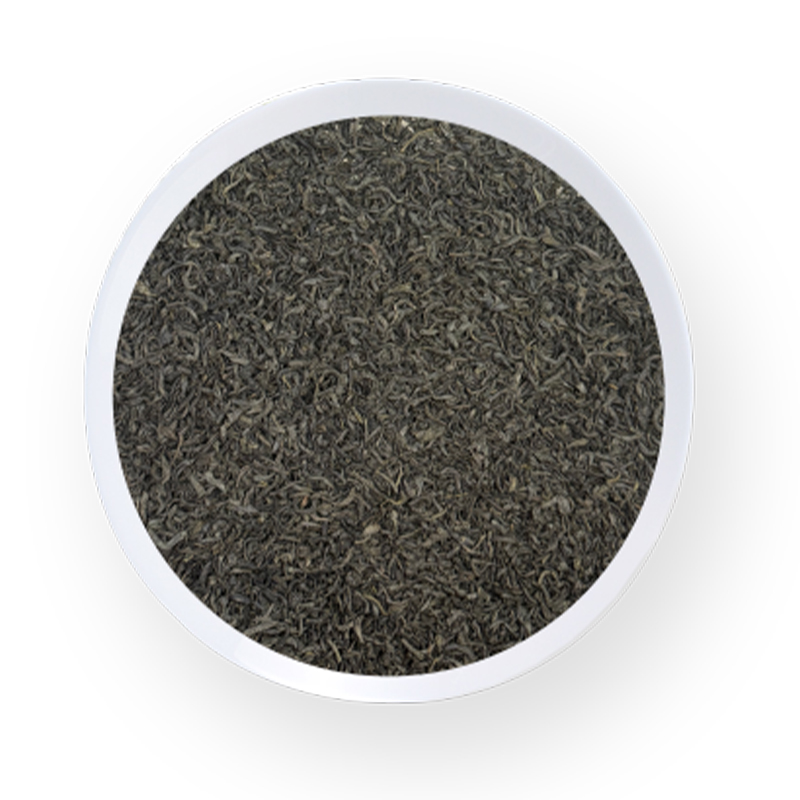
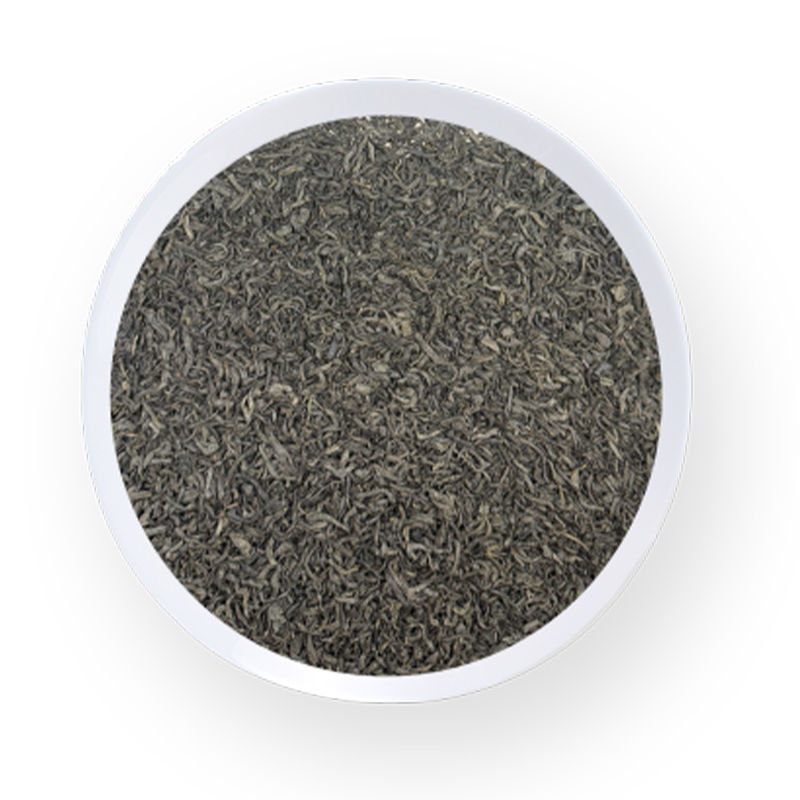
- Dry leaf: deep green with natural luster; tightly rolled slender strands; no red or yellow edges; no visible stems or dust.
- Aroma: clean and gently vegetal with a light roasted note; no stale, smoky, musty or fishy off-notes.
- Liquor: bright yellow-green and transparent after a 5-gram, 150-milliliter brew for 3 minutes at 75 to 80 degrees C.
- Infused leaf: soft, evenly opened and green after steeping; no brown tips or reddish edges.
| Attribute | AAAAA acceptance | Rejectable defect |
| Moisture | 6.5 percent maximum | 7 percent and above, risking mold at sea |
| Broken leaf | 1-2 percent by weight | Fines above 3 percent |
| Leaf length | 10-18 mm dominant | Wide scatter of short and long leaf |
| Color | Deep green, uniform | Dull, yellowish or grey tone |
| Stems and dust | Visually absent | Visible stems or cloudy liquor |
Color uniformity is the quickest proxy for sorting discipline. If the dry leaf shows mixed greens and brown tips, the AAAAA claim has already failed the visual test.
Where the Grade Line Moves: AAAA, AAAAA and the Tiers Above
Moving from AAAA to AAAAA tightens the sorting specification; moving from AAAAA to AAAAAA or Diamond continues that tightening toward zero tolerance for defects. The taste difference is small, but the price gap reflects added labor and lower yield.
Chunmee 41022 AAAA
- Broken content around 3-5 percent
- Even green with a slightly mixed tone
- Best for blends and mid-price retail
Chunmee 41022 AAAAA
- Broken content around 1-2 percent
- Deep green, highly uniform color
- Best for branded retail packs
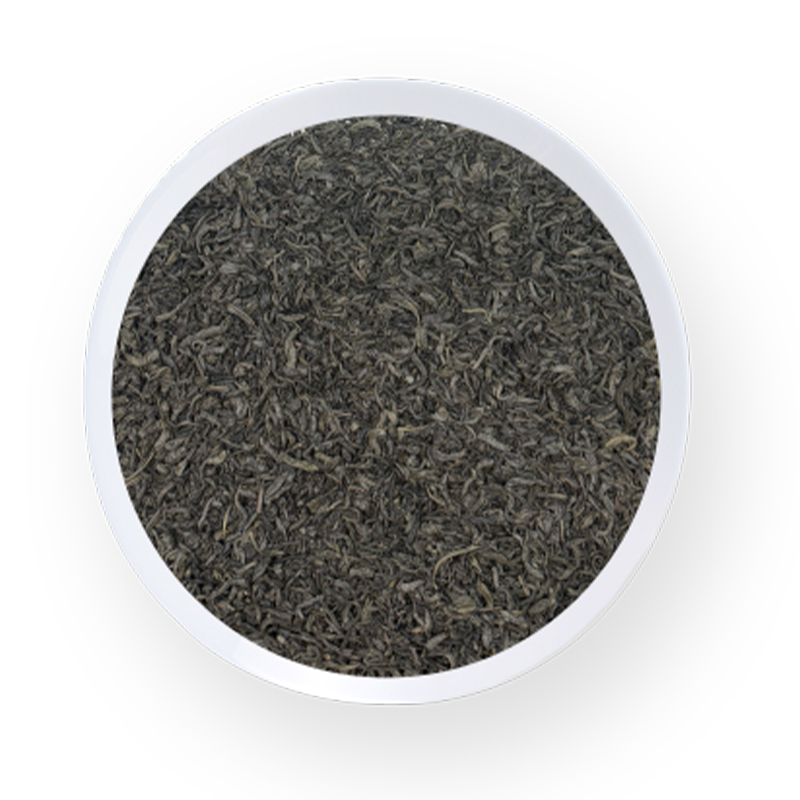 Chunmee 41022 AAAA Economy Green Tea for BlendingWith a higher share of mature leaves and a bolder, mildly astringent taste, this four-A grade works as a cost-efficient option for budget-focused buyers or for blending into products that do not demand top-tier appearance.View Product →
| Grade | Typical broken content | Best market use |
| AAA | 5-7 percent | Economy blends |
| AAAA | 3-5 percent | Mid-price retail and blends |
| AAAAA | 1-2 percent | Premium retail packs |
| AAAAAA | Under 1 percent | Premium and gift packaging |
| Diamond | Near zero | High-end appearance buyers |
Buy the step that fits your market. A five-A lot costs more per kilo than a four-A lot, but less than a six-A lot, and the difference is sorting labor and yield loss, not the raw leaf quality.
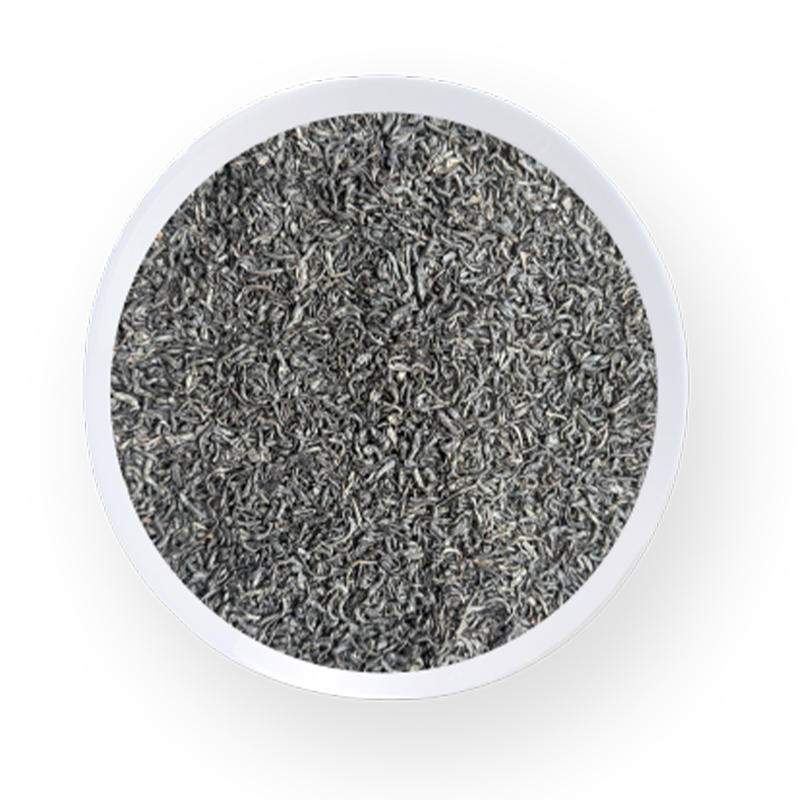 Chunmee 41022 Diamond Premium Green Tea with CertificationsMarketed as the finest Chunmee grade, this Diamond selection features uniform emerald leaves and a bright golden infusion, backed by organic and safety certifications that make it a reliable choice for European and global markets.View Product →
Processing and Supply Factors That Decide Whether AAAAA Holds
A five-A grade survives only when the processing line has enough sorting capacity and the batch control behind it is strict; crop season and container logistics can move the finished grade up or down before it reaches the buyer.
Chunmee grading is a factory-side operation. To hold a five-A spec across multiple containers, the plant must combine color sorters, gravity separators and hand-picking tables. The sorting line removes yellow leaf, stems and broken fragments, and the A count rises with every pass. High volume helps: a large plant has more material to blend, and blending is what keeps the grade constant when a spring crop differs from a summer crop.
- Sorting precision: multi-channel color sorters plus a manual re-check are the minimum for a stable AAAAA run.
- Batch blending: merging small production lots evens out color and leaf size before packing.
- Crop timing: spring leaf is brighter and tighter; summer and autumn leaf is coarser and loses luster.
- Sea freight control: container humidity can push moisture above 6.5 percent and ruin the appearance in transit.
Grade stability is a capability question as much as a sorting question. The Huangshan, Anhui plant operated by Hangzhou Baoda Tea Co., Ltd. has 12,000 square meters of workshop space and a 10,000-ton annual capacity, enough to run long blending lines that hold a five-A spec from one container to the next.
Ask for the lot number and the sorting line used. A serious producer can name both; a supplier trading on labels alone cannot.
How to Verify Chunmee 41022 AAAAA on the Buy Side
Verification starts with a sealed sample from the exact production lot, then moves to a sieve test, a brew test and a moisture check. None of these steps takes more than an hour, and together they filter out most grade inflation.
- Request a sealed pre-shipment sample cut from the production lot, not a reference sample from a catalog or display shelf.
- Run a 100-gram sieve test on a 2-millimeter mesh. A five-A lot should hold fines below 1.5 percent.
- Brew 5 grams in 150 milliliters of water at 75 to 80 degrees C for 3 minutes. The liquor should be bright yellow-green with no cloudiness.
- Check moisture with a handheld meter. Reject the lot if the reading is above 6.5 percent or above your agreed threshold.
- Put grade-drift terms into the contract: arbitration on appearance, and a price adjustment formula for broken content above the agreed ceiling.
The cheapest protection is a sample that matches the container. If the sample and the shipped lot differ in leaf color or broken content, the rest of the paperwork means very little.
Frequently Asked Questions About Chunmee 41022 AAAAA
What does 41022 AAAAA mean in Chunmee tea grading?
It identifies a Chunmee green tea with a large-leaf trade specification, sorted to a five-A appearance grade. In practice that means deep green, tightly rolled leaves, roughly 1 to 2 percent broken content, and a high degree of leaf-length and color uniformity.
Is Chunmee 41022 AAAAA the highest grade available?
No. Suppliers commonly offer AAAAAA, AAAAAAA, AAAAAAAA and a Diamond tier above it. AAAAA is a strong premium commercial grade, but it is not the ceiling of the range.
What is the difference between AAAA and AAAAA?
The difference is sorting strictness. AAAA typically allows 3 to 5 percent broken content and a slightly mixed color; AAAAA lowers broken content to about 1 to 2 percent and demands tighter leaf length and color, which is why it costs more per kilo.
How do I confirm the grade when buying from a distant supplier?
Work with a sealed lot sample, run the sieve and brew tests described here, verify moisture, and include grade-drift clauses in the purchase contract. If the supplier hesitates to provide a lot sample, treat that as a warning.
 We sincerely welcome customers from all over the world to visit us and seek common
development and create brilliant future.
Contact BAODA
 Our Phone
+86-15386682887
+86-13857173531
 E-mail
[email protected]
[email protected]
[email protected]
 Our Address
Room 1601, Building 2, New Town Times Square, 189 Fengqi East Road, Hangzhou, Zhejiang Province, China.
Inquiry Us Now
Copyright © Hangzhou Baoda Tea Co., Ltd. All Rights Reserved
Wholesale China Premium Green Tea Company
