

 English
 Français
Chunmee Tea Moisture Content: Key Quality Requirements for Export Buyers
Two Chunmee lots can leave the same factory on the same day, one at 4.8% moisture and one at 7.1%, packed in identical 50 kg sacks with identical grade suffixes on the invoice. In the first brew they are hard to separate. After four weeks in a container on a West African quay, they are different products.
Moisture content is the line on a Chunmee certificate of analysis that most often turns into a price deduction, a re-drying cost or a rejected container. It is also the one specification a buyer can influence at every stage: at the drying drum, at the packing table and at the moment of loading.
What Chunmee Tea Moisture Content Actually Measures
Chunmee moisture content is the mass of water in the leaf expressed as a percentage of total mass; export green tea is traded in a 4% to 6% m/m working range, with 8% m/m as the ceiling in ISO 11287:2011.
The measurement, defined. Chunmee tea moisture content is the loss in mass recorded when a ground sample is dried at 103 °C under ISO 1573:1980, expressed as a percentage of the sample's original mass. The result includes a small fraction of volatile leaf constituents, so the test is formally a loss-in-mass determination rather than a measurement of water alone.
That technical detail decides arguments. A buyer and a supplier can test the same sack and report figures 0.4 points apart simply because one lab ground the sample and the other did not. Whole leaf traps moisture inside the stem and the leaf rib, and a coarse sample dries unevenly.
Tea is also hygroscopic. A sack sitting in a humid warehouse moves toward the humidity of the room, not toward the number printed on the certificate. Moisture content therefore describes a lot at the moment of testing, and the job of packing and shipping is to keep it there.
The Three Numbers That Govern a Chunmee Order
Three figures decide a moisture clause: 8% m/m as the ISO 11287:2011 conformity ceiling, 6% m/m as the buyer ceiling that appears in most import specifications, and 5% m/m as the loading target for long-transit and premium-grade shipments.
Only the first of those is a published standard. The other two are commercial terms, and they are the ones that get enforced at the destination port. The Chunmee 41022 grade series shows why this matters: every grade from AAA to AAAAAAAA shares one tea number, and buyers separate them by leaf style, liquor and moisture rather than by chemistry.
| Specification point | Moisture (% m/m) | Set by | Consequence if exceeded |
| ISO 11287:2011 basic requirement | 8.0 maximum | Standard | Product is non-conforming in a quality dispute |
| Import purchase specification | 6.0 maximum | Buyer | Price deduction, re-drying cost or rejection at destination |
| Long-transit and tropical shipments | 5.0 to 5.5 target | Shipper | Condensation, caking and mould inside the container |
| Premium and high-grade lots | 4.5 to 5.5 | Buyer and trade practice | Flat aroma, dull liquor, shortened shelf life |
| Retail-ready foil-laminated packs | 5.0 maximum | Brand owner | The declared shelf life cannot be met |
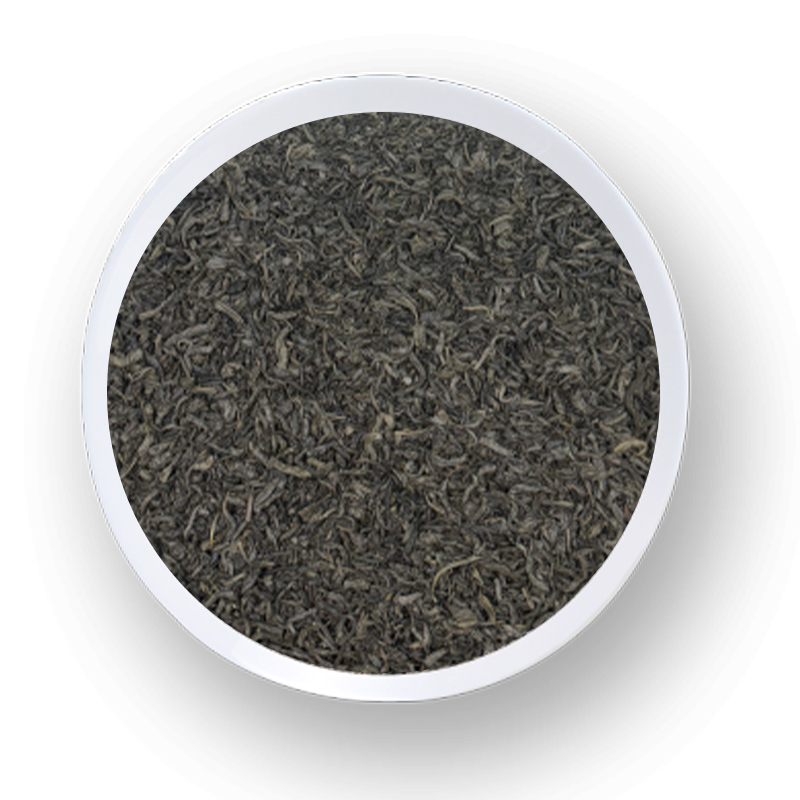 Chunmee 41022 AAA Green TeaThis 41022 grade uses extra grading passes to reduce stems and improve uniformity, with a 6.0% moisture cap suited to blending and tea bag filling.View Product →
Why the Practical Line Sits at 6%, Not 8%
A lot at 7.5% moisture conforms to ISO 11287:2011 and is still a poor shipment, because above roughly 6.5% at loading, hydrolysis and non-enzymatic browning move faster than the aroma the grade was bought for can survive.
Made green tea is an unfermented product, and the compounds that define it remain chemically reactive after firing: catechins, chlorophyll and L-ascorbic acid. Water is the reagent that keeps those reactions running. At 4% to 6% the residual water is tightly bound to the leaf matrix and reaction rates stay slow. Between 6% and 8% they accelerate, and the first visible symptom is colour. The liquor shifts from green to yellow, the dry leaf loses its bloom, and the chestnut note that defines Chunmee flattens into something papery.
Microbiology sets the hard edge. Xerophilic moulds of the Aspergillus and Eurotium groups can develop once water activity passes about 0.65, and a sealed container travelling through the tropics generates exactly the conditions needed to reach it: hot days, cool nights, condensation forming on the steel roof and dripping onto the top tier of bags.
At 5% or below at loading
- Catechins and chlorophyll stay largely intact through a normal export shelf life
- Leaf pours free from the sack with no caking
- An arrival retest usually lands within half a point of the certificate
- Qualifies for premium-grade and brand-owner programmes
At 7% or above at loading
- Hydrolysis splits aroma precursors; the chestnut note turns flat and papery
- Non-enzymatic browning dulls the liquor from green to yellow-brown
- Water activity above 0.65 allows xerophilic moulds to develop
- Caking and a musty note appear within one tropical transit
Moisture does not damage Chunmee at the moment it enters the leaf. It damages the tea over the following weeks, at a rate set by the water still inside the sack when it was closed.
How to Test Moisture So the Result Holds Up
Test Chunmee by ISO 1573:1980, loss in mass at 103 °C on a sample ground from a composite drawn under ISO 1839, and treat any rapid meter reading as an in-process check until it has been calibrated against that reference method.
- Draw a composite sample from at least five positions in the lot, following ISO 1839, and seal it immediately.
- Grind the sample so the leaf rib and stem are opened; whole-leaf samples read high and repeat poorly.
- Weigh a test portion into a dish that has been dried and cooled in a desiccator.
- Dry at 103 °C to constant mass, cool in a desiccator, then weigh without exposing the dish to room air.
- Run duplicates and report the mean; a wide spread between duplicates points to a sampling fault rather than a tea fault.
A halogen moisture analyser is useful at the drying drum because it returns a reading in minutes, but the result depends on the drying programme, sample size and grind. It is only meaningful when it has been regressed against ISO 1573 results for the same leaf style, and near-infrared instruments carry the same condition.
Keep a retained sample of every lot for 12 months and retest it alongside the arrival sample. It is the only evidence that settles whether moisture rose in the factory or in the container.
Packaging and Container Controls That Protect the Specification
A 5% lot arrives at 5.2% or at 7%, and the difference is set by the pack and the container rather than by the tea: a moisture barrier plus a dry box is what holds the figure.
- Use multiwall kraft sacks with a food-grade polyethylene liner of 0.05 mm or thicker; for premium lots such as premium Chunmee, specify foil-laminated liners.
- Cool the tea to ambient before packing. Bags filled above roughly 35 °C trap warm, moist air against the leaf and condense it as the sack cools.
- Inspect the container before loading: dry floor, no holes, no residue and no odour from a previous cargo.
- Load on dunnage, keep bags off the container floor and away from the roof where condensation collects.
- Size desiccants to the cargo and the route, and record the quantity on the loading report.
- Sample and test the finished lot immediately before loading, not at the start of the production run.
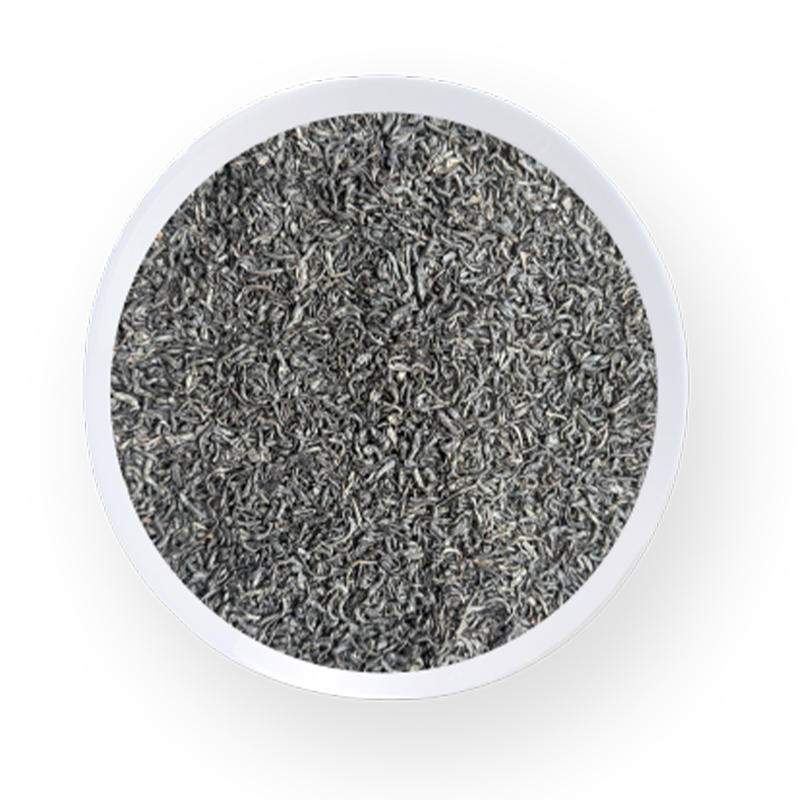 Chunmee 41022 Diamond Organic Green TeaDiamond 41022 adds electrostatic dust removal for clearer liquor and carries EU organic certification, making moisture-controlled private-label packing especially relevant.View Product →
What to Put in the Purchase Order
Write the moisture clause as a testable number plus a method, or it will not settle anything: a limit without ISO 1573 named on the certificate is an opinion rather than a specification.
- A maximum moisture figure with the test method cited in the same sentence.
- A sampling plan and a lot definition, so both sides test the same population.
- A pre-shipment certificate of analysis for every lot, not one per contract.
- A retained sample held for 12 months and available to a third party.
- An arrival retest window, typically 14 days from discharge, and the lab that will arbitrate.
- A deduction or rejection threshold with a hard number, agreed before the container is loaded.
For buyers sourcing traditional lots such as 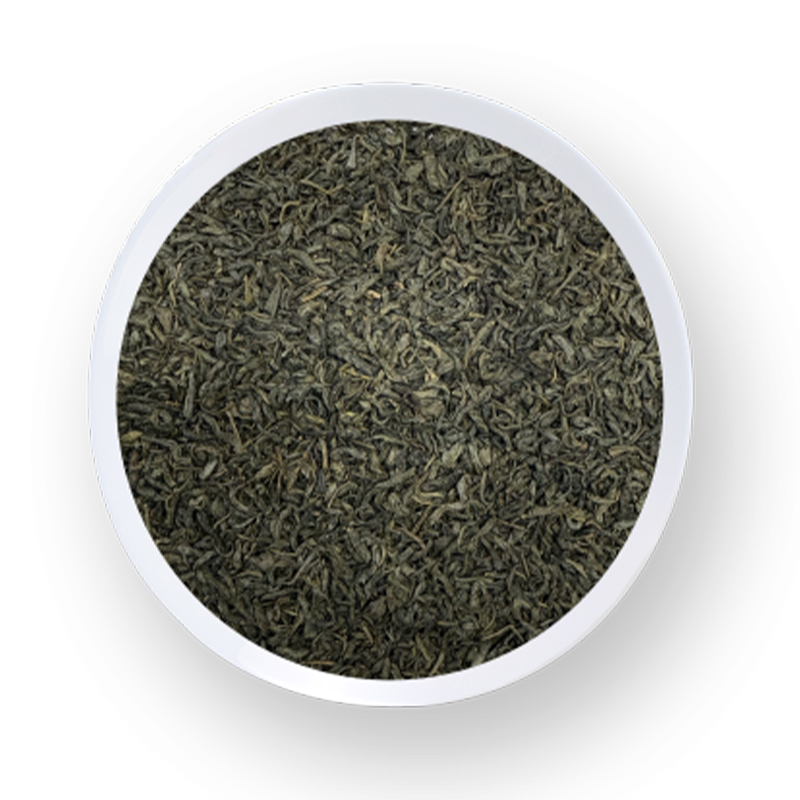 Chunmee 4011 Zhen Mei Export Green TeaA traditional export grade for African and Middle Eastern buyers, with a 6.5% moisture ceiling and traceable batches for tea bag and instant tea use.View Product →Chunmee 4011, the same clause structure applies; the grade changes the target figure, not the logic. A supplier that routinely ships at 4.5% to 5.5% and documents the method on every certificate is telling you more about its process control than any brochure claim about factory equipment.
Direct Answers to Common Buyer Questions
What moisture content should export Chunmee have?
Export Chunmee should sit between 4% and 6% m/m, with 5% to 5.5% as the loading target for long-transit shipments and 6% as the ceiling most import specifications write. ISO 11287:2011 sets the conformity ceiling at 8% m/m, which is a legal floor rather than a commercial target.
Does moisture content rise during ocean freight?
Yes. Tea is hygroscopic and a sealed container is not a dry box: condensation on the steel roof can drip onto the top tier of bags, and the leaf moves toward the humidity around it. A polyethylene liner slows the exchange but does not stop it over a 30 to 40 day voyage, so retest within 14 days of arrival against the retained pre-shipment sample.
Which method should the certificate of analysis cite?
ISO 1573:1980, loss in mass at 103 °C on a ground sample drawn under ISO 1839. A certificate that reports a moisture figure without naming the method cannot settle a dispute, and a rapid meter reading should be reported as an in-process check only.
What happens when an arrival retest exceeds the contract limit?
Most contracts resolve it with a price deduction rather than a rejection, because re-drying green tea rewrites its flavour. The practical protection is a clause that fixes the limit, the method, the sampling plan and the deduction scale before the container is loaded.
 We sincerely welcome customers from all over the world to visit us and seek common
development and create brilliant future.
Contact BAODA
 Our Phone
+86-15386682887
+86-13857173531
 E-mail
[email protected]
[email protected]
[email protected]
 Our Address
Room 1601, Building 2, New Town Times Square, 189 Fengqi East Road, Hangzhou, Zhejiang Province, China.
Inquiry Us Now
Copyright © Hangzhou Baoda Tea Co., Ltd. All Rights Reserved
Wholesale China Premium Green Tea Company
