

 English
  Français
 Chun Mee Organic Green Tea: Origin, Flavor Profile, Health Benefits, and Brewing Guide
Chun Mee Organic Green Tea is one of China's most exported green teas — a hand-shaped, eyebrow-curved leaf prized for its plum-like tartness, clean finish, and exceptional shelf stability. Grown without synthetic pesticides or fertilizers, certified organic Chun Mee delivers a consistently clean cup that meets the strictest residue standards demanded by European Union, North American, and Middle Eastern importers.
Why Choose Organic Chun Mee Over Conventional?
Organic certification is not a marketing label for Chun Mee — it is a measurable quality differentiator that directly affects residue test results, market access, and buyer premiums. The EU's Maximum Residue Level (MRL) regulations have tightened steadily since 2014, and conventional teas regularly face border rejections that certified organic lots avoid entirely.
- Zero synthetic pesticide residues — passes EU MRL, USDA NOP, and JAS standards
- Certified by third-party bodies (CERES, Ecocert, or USDA) with annual audits
- Commands 15–35% price premium in European and North American wholesale markets
- Cleaner flavor profile — no chemical aftertaste masking the natural plum character
- Eligible for organic retail channels and premium private-label programs
- Subject to MRL testing at every import point — rejection risk if limits are exceeded
- No third-party audit trail — buyers rely solely on supplier-provided test reports
- Lower unit price but narrower market access — excluded from organic retail tiers
- Adequate for commodity bulk buyers and markets with lower residue thresholds
- Requires more thorough buyer due diligence on origin and farming practices
Which Grade of Chun Mee Should You Source?
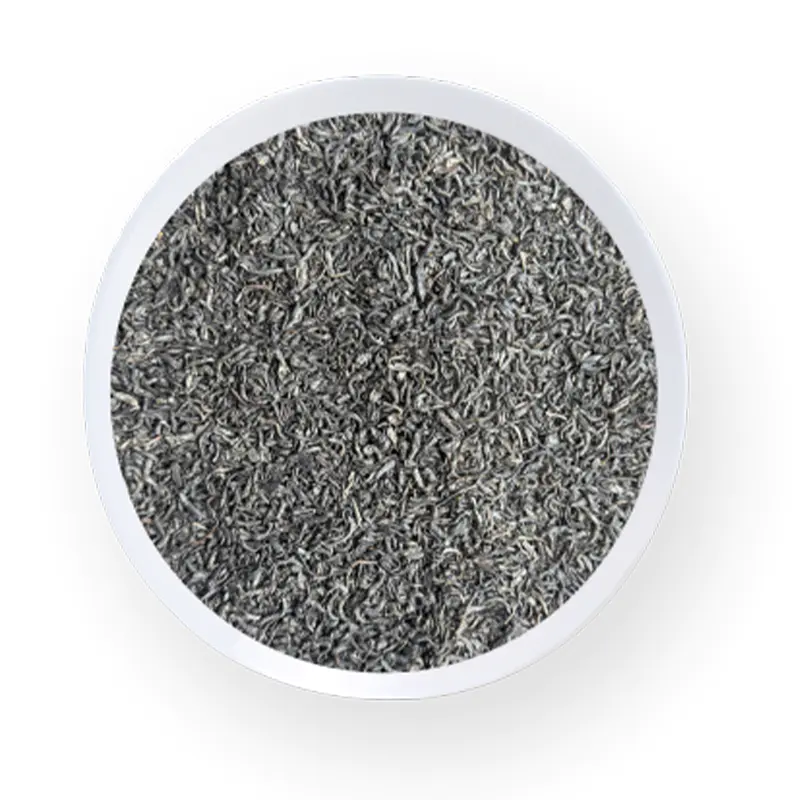
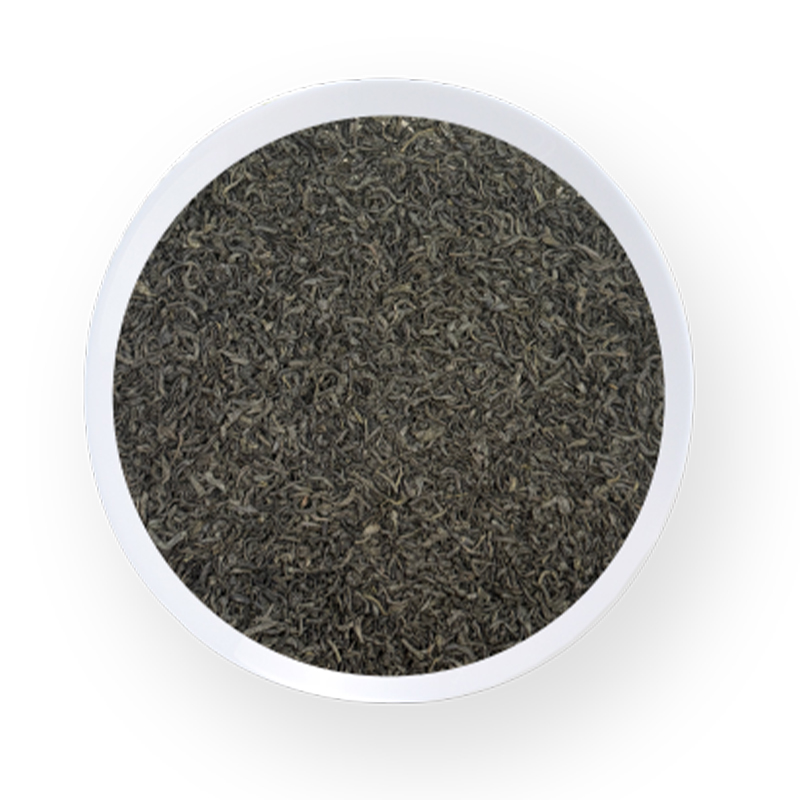
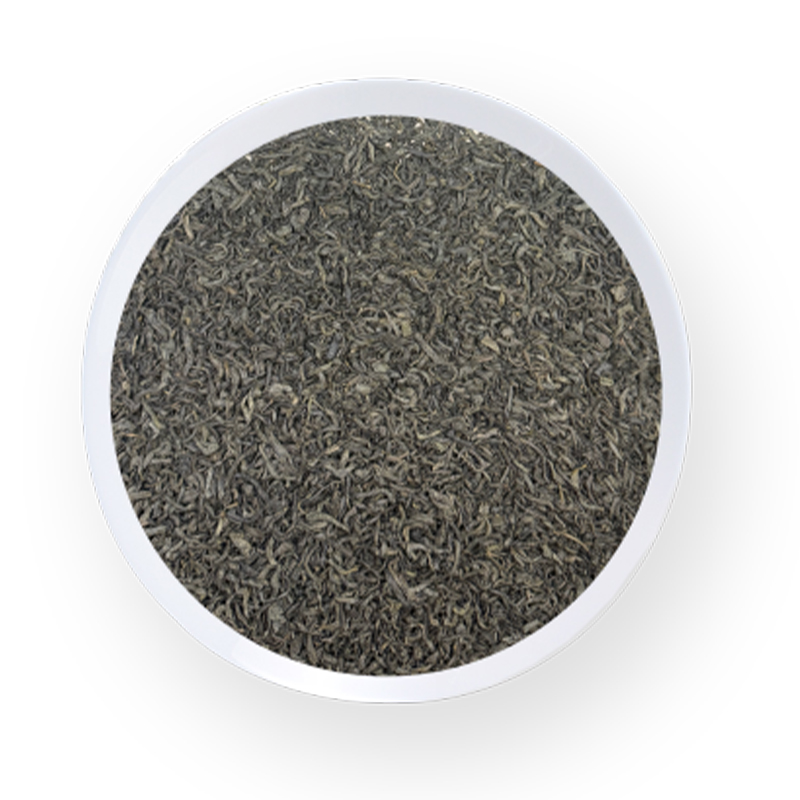
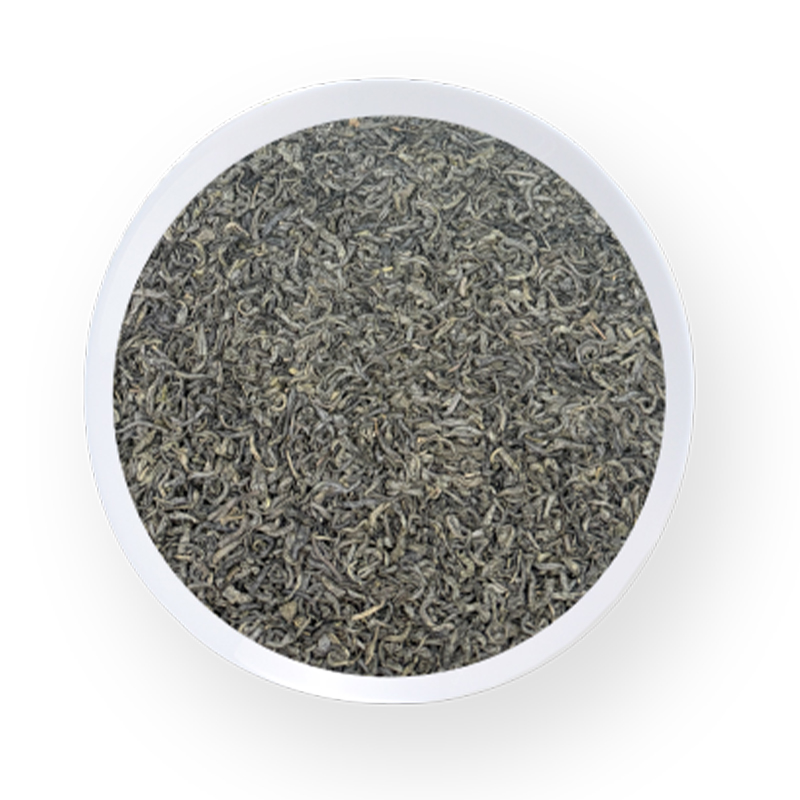
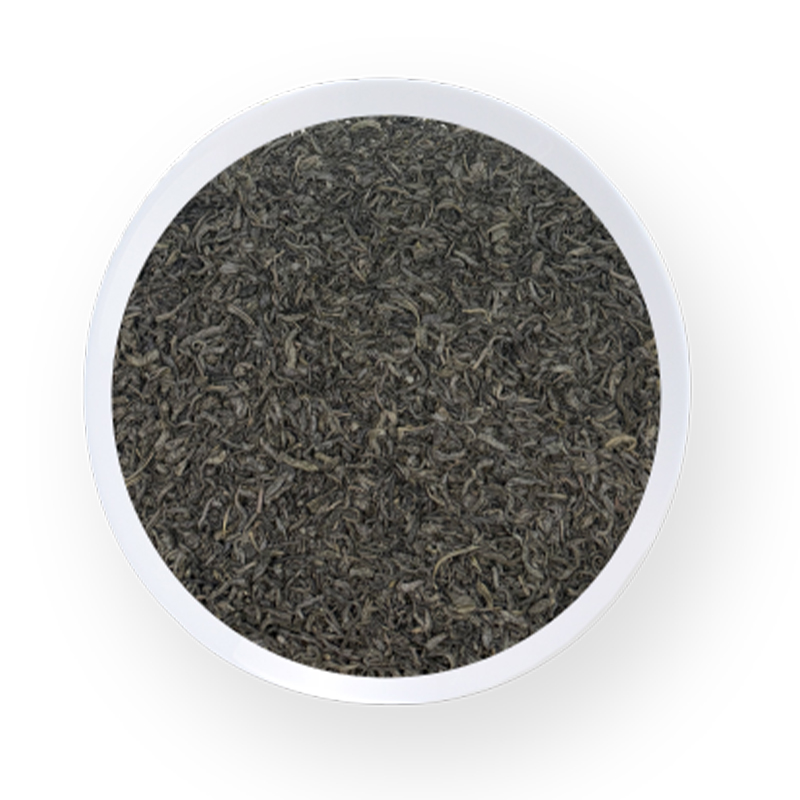
Chun Mee is graded by leaf uniformity, tip content, color consistency, and the tightness of the rolled eyebrow shape. Higher grades produce a brighter liquor, a more pronounced tartness, and a longer infusion count — all critical for premium retail and foodservice buyers.
| Grade | Leaf Profile | Liquor Color | Best Application | Typical MOQ |
| 9366 (Premium) | Tight, uniform curl — high tip content, bright olive-green | Clear yellow-green | Specialty retail, premium private label | 500 kg |
| 9380 | Good uniformity, moderate tip content | Yellow-green | Branded retail, foodservice blends | 1,000 kg |
| 9371 | Slightly larger leaf, lower tip ratio | Golden yellow | Mid-market teabag blends | 2,000 kg |
| 9368 (Standard) | Mixed sizing, functional curl | Deep yellow | Commodity bulk, hospitality | 5,000 kg |
For markets in Morocco, Algeria, and West Africa — where Chun Mee accounts for over 60% of green tea consumption — grade 9371 or 9368 dominates volume purchasing. European specialty importers consistently specify grade 9366 or 9380 with organic certification and a Certificate of Analysis confirming pesticide residues below 0.01 mg/kg.
How Is Chun Mee Processed? From Leaf to Export
Chun Mee processing follows a pan-fired (non-oxidized) method that distinguishes it from steamed Japanese greens. The pan-firing step is what locks in the characteristic slight tartness and gives the leaf its shelf life advantage over more delicate green teas.
Picked at one bud and two leaves in spring and autumn flushes. Organic plots maintain strict isolation distances from conventional fields to prevent spray drift contamination.
Leaves are spread in thin layers and air-withered for 4–6 hours to reduce moisture content from approximately 75% to 65%, softening them for rolling without tearing.
Leaves are tumbled in woks or rotary drums at 260–300 degrees Celsius for 3–5 minutes. This step deactivates oxidizing enzymes, halts fermentation, and sets the green color permanently.
Warm leaves are rolled under pressure into the distinctive curved eyebrow shape. The rolling also ruptures cell walls slightly, releasing flavor compounds that develop during final drying.
A two-stage drying process reduces final moisture to below 6% — the threshold for safe long-distance shipping. Leaves are then graded by size through oscillating sieves and hand-sorted for color uniformity.
Finished lots are blended to meet grade specifications, then packed in foil-lined bags or plywood chests with moisture-barrier liners. Export packs ship in 20-foot containers at controlled ambient temperature.
What Makes Chun Mee Tea Export Quality?
Export-quality Chun Mee Organic Green Tea must satisfy a layered set of physical, chemical, and documentation standards before it clears customs in any major importing country. Meeting these standards is not optional — it is the baseline for market entry.
Beyond laboratory compliance, export buyers evaluate three additional quality signals: cup consistency across production batches (verified by comparative cupping), lead-time reliability, and country-of-origin traceability. Reputable suppliers provide garden-level or cooperative-level traceability documentation, not just a country certificate.
Frequently Asked Questions
What is the shelf life of export-packed Chun Mee Organic Green Tea?
When packed in foil-lined, nitrogen-flushed bags with moisture below 6%, Chun Mee has a verified shelf life of 24 months from the packing date. Its pan-fired processing and low moisture content give it significantly better shelf stability than steamed green teas such as Sencha or Gyokuro, making it well-suited to long shipping routes and markets with slower retail turnover.
Is organic Chun Mee available year-round, or only after certain harvests?
Certified organic Chun Mee Organic Green Tea is harvested in two main flushes — spring (April to May) and autumn (September to October). With proper cold-storage inventory management, suppliers can ship year-round. Spring flush material is considered higher quality; autumn flush is more economical and suited to blending and commodity applications.
What certifications should an export-grade organic Chun Mee supplier hold?
At minimum, look for EU Organic Regulation (EC) 834/2007 certification for European buyers, USDA NOP for North American buyers, and Chinese GB/T 19630 organic certification as the domestic baseline. Many suppliers also hold ISO 22000 (food safety management) and Rainforest Alliance certification for markets that require broader sustainability credentials beyond organic alone.
How is Chun Mee different from Gunpowder green tea?
Both are pan-fired Chinese green teas, but they differ in leaf shape, flavor, and grade structure. Chun Mee leaves are rolled into a curved eyebrow shape and produce a lighter, more delicate liquor with a mild tartness. Gunpowder leaves are rolled into tight round pellets and brew a bolder, smokier cup. Chun Mee is preferred in West African and North African markets; Gunpowder dominates Moroccan mint tea culture but competes with Chun Mee across the Sahel region.
 We sincerely welcome customers from all over the world to visit us and seek common
development and create brilliant future.
We sincerely welcome customers from all over the world to visit us and seek common
development and create brilliant future.
Contact BAODA
 Our Phone
+86-15386682887
+86-13857173531
 E-mail
[email protected]
[email protected]
[email protected]
 Our Address
Room 1601, Building 2, New Town Times Square, 189 Fengqi East Road, Hangzhou, Zhejiang Province, China.
Inquiry Us Now
Copyright © Hangzhou Baoda Tea Co., Ltd. All Rights Reserved
Wholesale China Premium Green Tea Company
