

 English
 Français
Chunmee 9380: Key Specifications and Quality Requirements for Importers
Bulk tea importers in North Africa and Europe know the drill: the sample that left Huangshan last month should not taste different when the bags are cut open in Casablanca. Hangzhou Baoda Tea Co., Ltd., a Chinese green tea manufacturer and exporter with a 40,000 sqm factory in Huangshan and 10,000 tons of annual capacity, fields such calls every season. The grade that handles this pressure most predictably is Chunmee 9380. This page breaks down what the export tea number 9380 means, the leaf and chemistry standards behind it, and the quality checkpoints that decide whether a shipment clears import.
What Is Chunmee 9380?
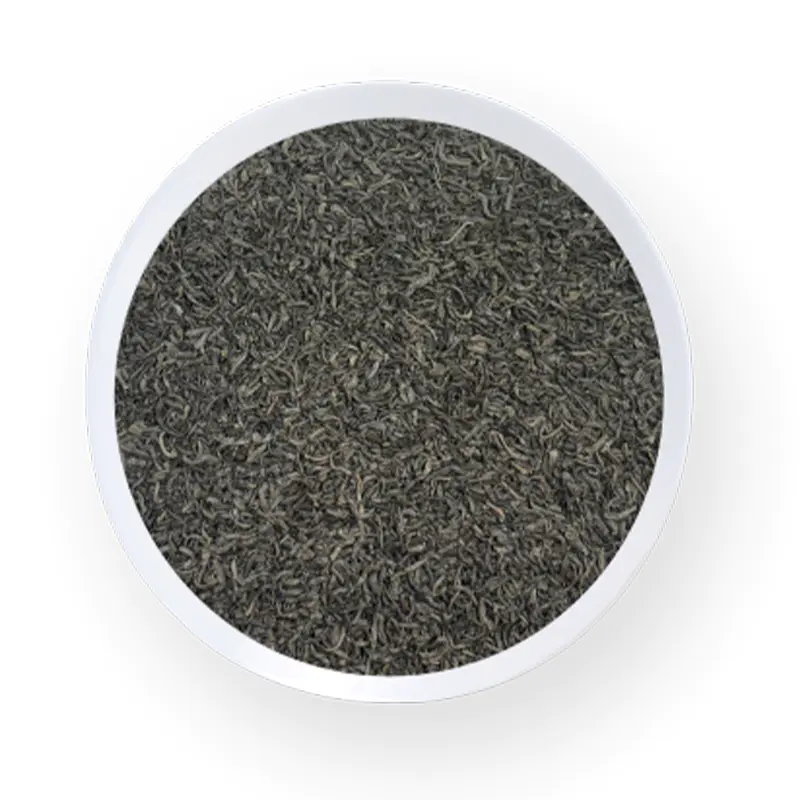
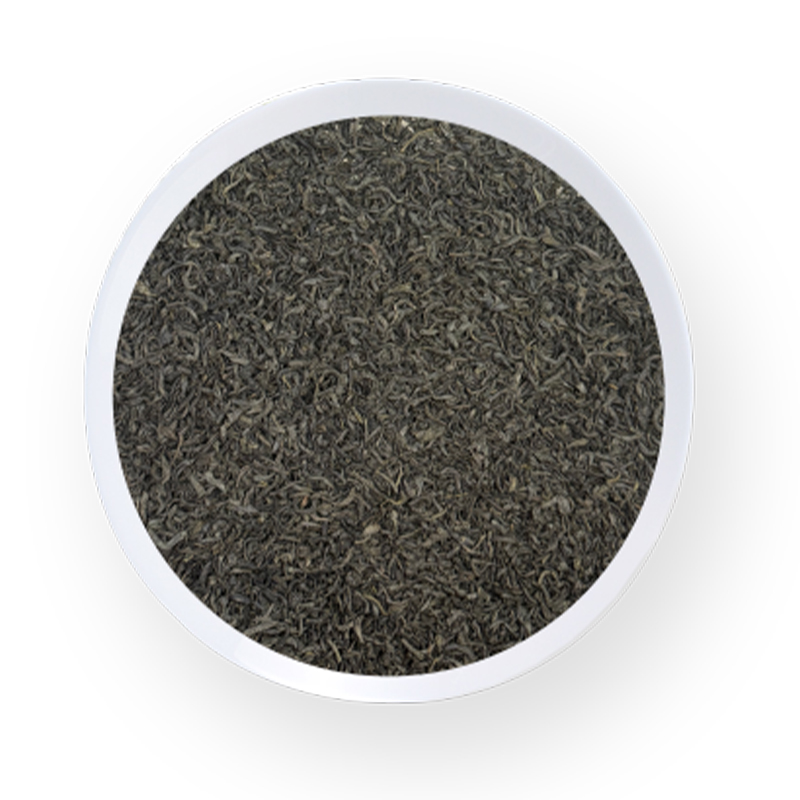
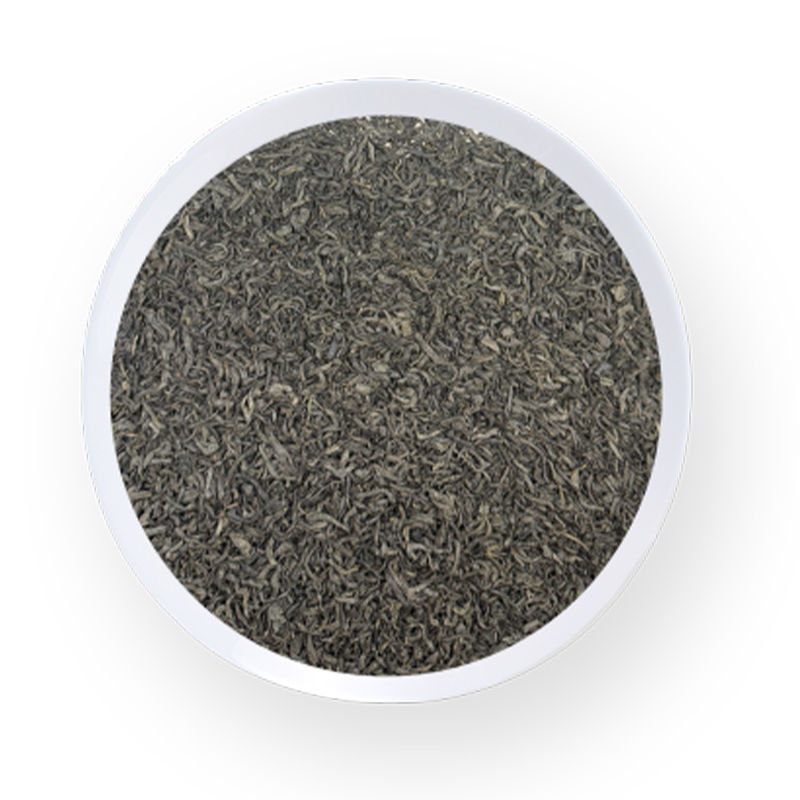
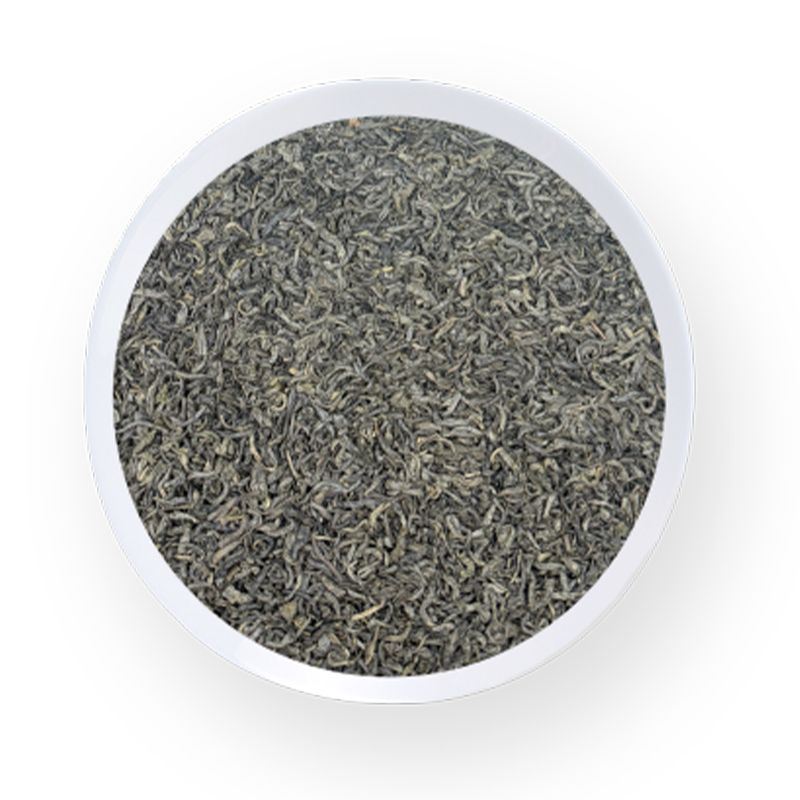
Chunmee 9380 is a bulk export grade of Chinese green tea made from long, gently curled leaves and identified by the export tea number 9380. The grade sits near the middle of the chunmee ladder in leaf breadth but delivers a bold brew that North African blenders rely on.
The word Chunmee means "precious eyebrows" and describes the slender, eyebrow-shaped leaves that remain after pan-firing. A tea number is not a quality mark; it is a standardized style code that Chinese exporters use to signal a specific leaf size, plucking standard, and processing profile. The 9380 code corresponds to a grade with broader leaves than 9371 or 9366, a deeper green color, and a slightly more astringent cup.
| Export No. | Leaf Character | Typical Brew | Main Use |
| 9366 | Fine young leaves | Bright, delicate | Retail bottled green tea |
| 9371 | Medium rolled leaves | Balanced, fresh | Retail tins and premium blends |
| 9380 | Broad mature leaves | Dark, strong | Mint tea and mass-market blends |
Leaf and Grade Specifications
A Chunmee 9380 lot meets specification when moisture is 7.0% or below, total ash is 7.0% or below, and water extract is 32.0% or above. These three numbers are the foundation of any chunmee quality protocol and appear on almost every export contract.
Beyond chemistry, the physical leaf must show a uniform deep green color, no visible red or yellow shoots, and a clean roasted or jasmine-like aroma. The plucking standard for 9380 is a two-leaf-and-bud or slightly coarser standard, so a small amount of broken leaf is normal. What matters is that the sieve separation produces a consistent cut across the whole lot.
| Parameter | Limit | Test Standard |
| Moisture | Not more than 7.0% | ISO 1572 |
| Total ash | Not more than 7.0% | ISO 1575 |
| Water extract | Not less than 32.0% | ISO 9768 |
| Lead (Pb) | Not more than 5.0 mg/kg | EU 1881/2006 |
Quality Requirements for Import
The main import risks for Chunmee 9380 are pesticide residues, heavy metals, and moisture, all of which must be verified before shipment. Buyers in the EU and Morocco will accept a lot only if the laboratory certificate matches the agreed maximum residue limits.
Hangzhou Baoda Tea Co., Ltd. runs factory-side testing on the key parameters listed below and can supply third-party inspection reports such as SGS for each container. The quality timeline that follows shows the sequence we run from raw leaf to sealed container.
| Parameter | Acceptance Limit | Result |
| Pesticide residue | EU MRLs as per Reg. (EC) No 396/2005 | Pass / Fail |
| Cadmium (Cd) | Not more than 0.5 mg/kg | Pass / Fail |
| Lead (Pb) | Not more than 5.0 mg/kg | Pass / Fail |
| Microbiological | Negative for Salmonella and E. coli | Pass / Fail |
How 9380 Compares to 9371 and 9366
Chunmee 9380 sits lower than 9371 and 9366 in leaf fineness and price, but it produces the strongest brew. The trade-off is straightforward: where 9366 gives a delicate cup and 9371 a balanced one, 9380 delivers a dark, full-bodied liquor that stands up to mint and sugar.
If you sell in a market where green tea is brewed with fresh mint and generous sugar, the boldness of 9380 is an asset. If you want a lighter, sweeter cup for retail iced tea or bottled beverages, then 9366 or 9371 is a better fit.
Chunmee 9366
- Fine young leaves
- Bright liquor, delicate flavor
- Higher price per kg
- Best for premium retail
Chunmee 9371
- Medium rolled leaves
- Balanced, fresh cup
- Mid price range
- Best for retail tins and blends
Typical passing rate through a 14-mesh sieve by chunmee grade
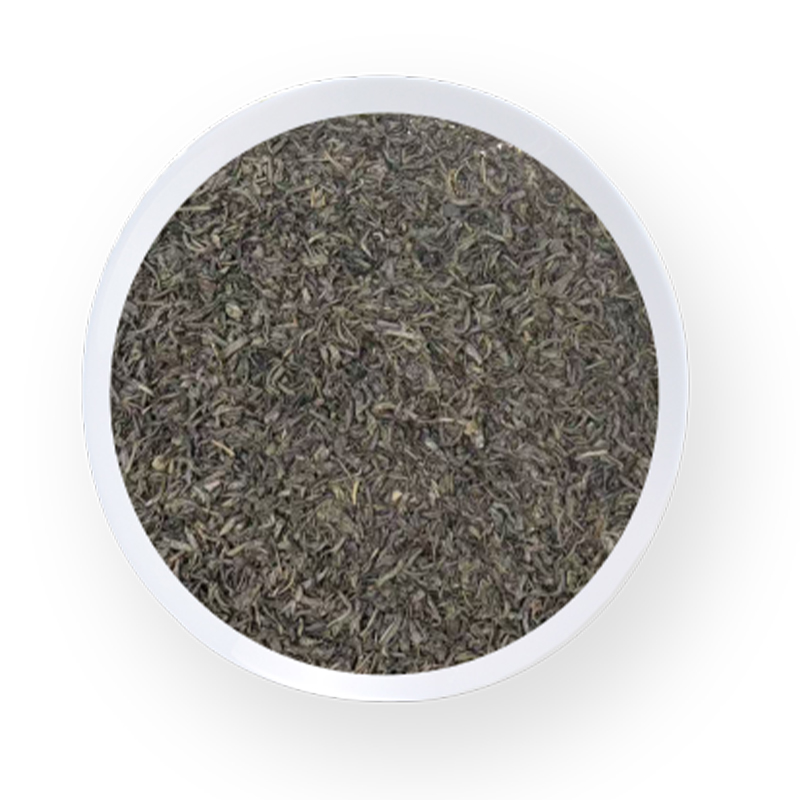 Premium Chunmee Green Tea Grade 9371Chunmee 9371 offers fine, evenly curled leaves with a rich, nutty flavor. This premium grade is ideal for traditional mint tea blends and is exported mainly to North Africa and Central Asia.View Product →
Sourcing Considerations for Bulk Buyers
When buying Chunmee 9380, the supplier's processing control, lot consistency, and container sealing are more decisive than the tea number alone. A grade name does not protect you from a poorly aged lot or a container loaded in rain.
Use written sourcing criteria to shortlist suppliers: ask for a physical sample from the current production season, request a full laboratory report with the quotation, and confirm how the lot will be packed for the maritime route. For a 10,000-ton producer like Hangzhou Baoda Tea Co., Ltd., these checks are part of the standard export procedure.
- Season of production - spring and early summer leaves give the freshest aroma.
- Sieve uniformity - ask for a 14-mesh passing percentage before ordering.
- Moisture at loading - target 6.5% to 7.0% in the container.
- Packaging - use odor-free laminated bags with a protective inner liner.
- Third-party inspection - insist on an SGS or equivalent report before shipment.
For a broader list of green tea sourcing criteria, read the green tea sourcing criteria guide on our blog.
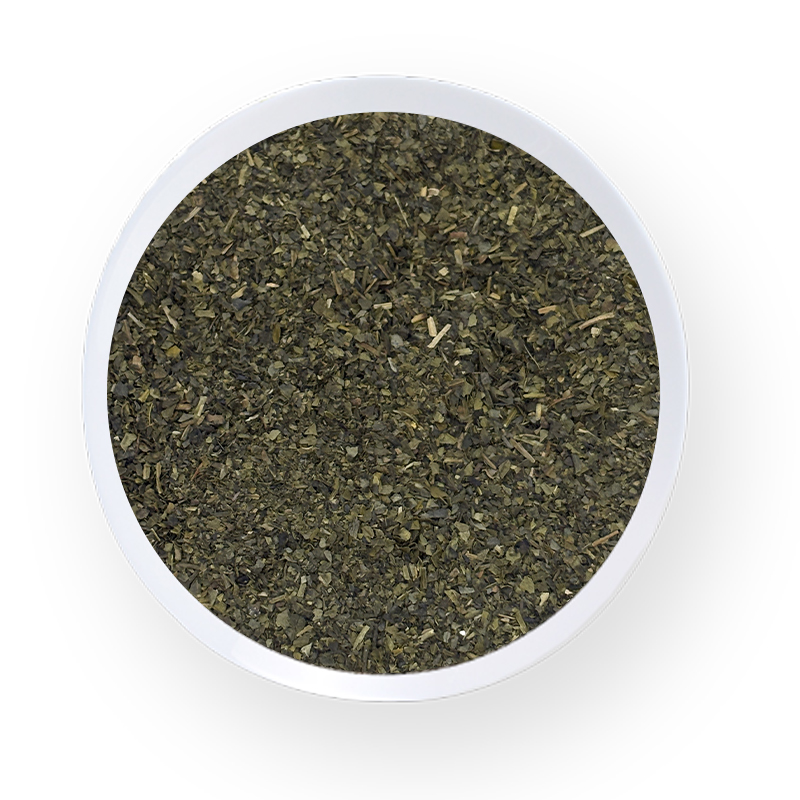 Chunmee 9380 Green Tea for High-Volume BlendsChunmee 9380 features slightly larger leaves and a darker liquor at a lower price point. It suits high-volume blends where a bold cup is desired, while still providing authentic green tea character.View Product →
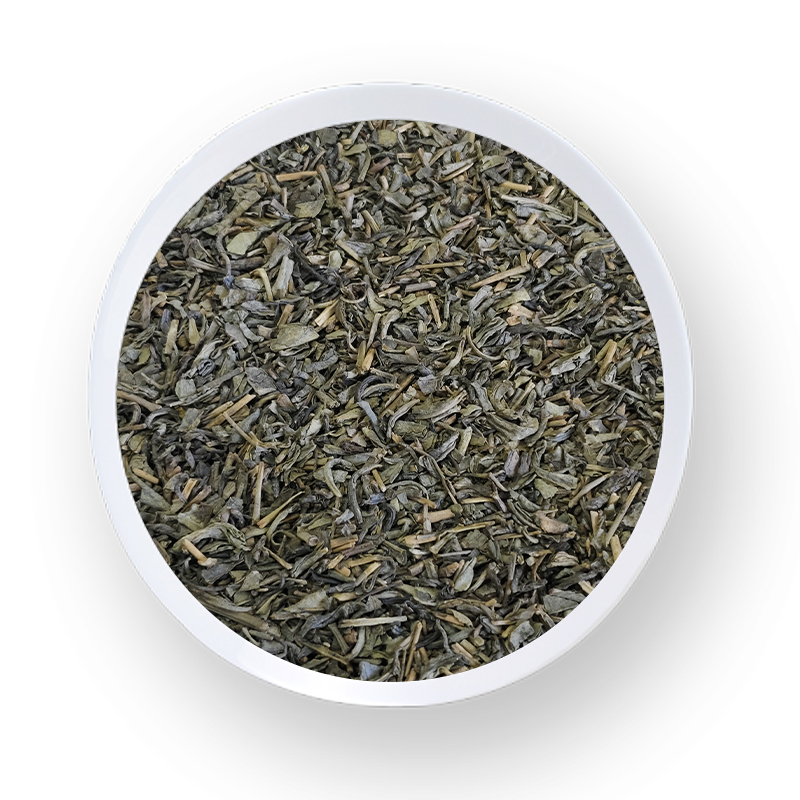 Chunmee 9366 Green Tea for Commercial ExportChunmee 9366 is a mid-to-high grade green tea with a fresh, spicy aroma and sweet taste. It is commonly exported to North African and Central Asian markets for use in traditional mint tea blends.View Product →
FAQ
What is the difference between Chunmee 9380 and 9371?
Chunmee 9380 has broader and slightly more mature leaves, a darker liquor, and a lower price than 9371. The 9380 grade is usually chosen for high-volume blends, while 9371 is chosen when a finer leaf and a lighter cup are required.
Which countries buy Chunmee 9380?
The main markets are Morocco, Algeria, Mauritania, Senegal, and other West African countries, plus France and Spain in Europe. The grade is especially popular for Moroccan-style mint tea, where the strong liquor stands up to added sugar and fresh mint.
What moisture level is acceptable for Chunmee 9380?
The acceptable moisture level is 7.0 percent or less, and 6.5 percent is the preferred target at the time of container stuffing. Levels above 7.5 percent increase the risk of flavor loss and mold during shipping.
How long does Chunmee 9380 stay fresh?
When stored away from sunlight, heat, and moisture, Chunmee 9380 retains its fresh aroma for 12 to 18 months from the production date. After that, the liquor may darken and the aroma can become flat.

 We sincerely welcome customers from all over the world to visit us and seek common
development and create brilliant future.
Contact BAODA
 Our Phone
+86-15386682887
+86-13857173531
 E-mail
[email protected]
[email protected]
[email protected]
 Our Address
Room 1601, Building 2, New Town Times Square, 189 Fengqi East Road, Hangzhou, Zhejiang Province, China.
Inquiry Us Now
Copyright © Hangzhou Baoda Tea Co., Ltd. All Rights Reserved
Wholesale China Premium Green Tea Company
