

 English
  Français
 How to Choose Loose Jasmine Green Tea for Aroma Quality, Brewing Methods and Premium Tea Experience
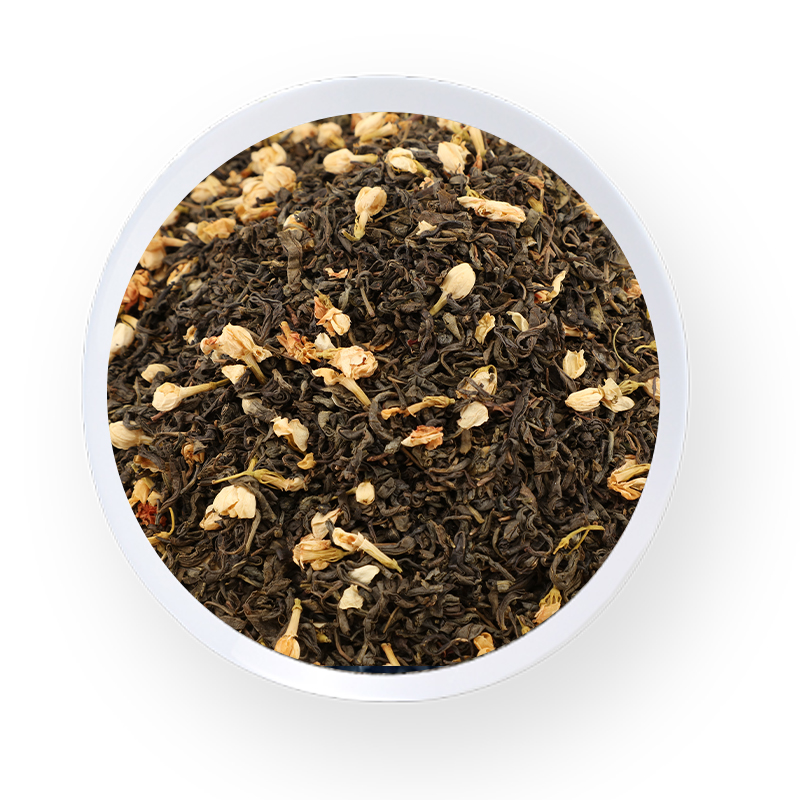
Loose jasmine green tea is made by scenting fresh green tea leaves with real jasmine blossoms until the leaf itself carries the flower's fragrance. Unlike a bagged tea sprayed with flavoring, the aroma here comes from a slow, repeated contact process between leaf and flower, which is why the scent and taste of a well-made batch feel layered rather than flat.
Jasmine scented green tea is a green tea base that has absorbed floral oils from fresh jasmine blossoms through a multi-night scenting process, rather than through any added flavoring agent.
What is loose jasmine green tea and how is it different from regular green tea?
Loose jasmine green tea starts as an ordinary green tea leaf, but it does not stay that way. A loose leaf jasmine tea definition always includes one key step that plain green tea never goes through: scented tea production. Fresh jasmine blossoms are layered with the dried green tea base after harvest, and the tea absorbs the flower's natural oils overnight before the spent blossoms are removed.
Traditional Chinese jasmine tea has followed roughly this same floral aroma tea processing method for centuries, and it remains the defining difference between a jasmine tea and a plain green tea. Regular green tea carries only the character of the leaf itself, while jasmine tea carries both the leaf character and a floral layer added afterward through repeated contact with real blossoms.
What are the main types of loose jasmine green tea?
Not all jasmine tea looks or brews the same way, since the leaf shape and grade behind the scenting process vary widely. Jasmine green tea buds use only the youngest tip leaves, prized for a delicate, slightly sweet base. Jasmine pearl tea rolls whole young leaves into small hand-tied balls that slowly unfurl during brewing. Loose leaf scented tea in its more everyday form uses standard flat green tea leaves as the scenting base. A high mountain green tea base, grown at elevation, is sometimes used for a more pronounced natural sweetness before scenting even begins. Organic jasmine tea leaves are grown and scented without synthetic pesticide inputs, appealing to buyers who want the floral profile with a cleaner growing record.
| Type | Leaf Form | Typical Character |
| Jasmine green tea buds | Young tip leaves only | Delicate, lightly sweet |
| Jasmine pearl tea | Hand-rolled whole leaf balls | Slow-unfurling, concentrated aroma |
| Loose leaf scented tea | Standard flat green leaves | Everyday floral balance |
| High mountain base | Elevation-grown leaf | Natural sweetness before scenting |
| Organic jasmine leaves | Varies by grade | Same floral profile, cleaner inputs |
Where is loose jasmine green tea commonly consumed?
Jasmine tea moves easily between casual and formal settings because its floral note works well both as an everyday drink and as a presentation piece. Daily home tea drinking is the most common setting, where a small portion of loose leaf is steeped repeatedly through the day. Traditional tea ceremony settings use jasmine tea as one of the scented tea categories poured for guests, often alongside food. Wellness and relaxation beverages built around jasmine tea lean on its light, calming aroma as part of an evening routine. Restaurant tea service frequently defaults to jasmine tea as a standard pour alongside a meal. Gift tea packaging sets built around jasmine tea are common during holidays, since the tea travels well and keeps its scent inside a sealed container.
What performance properties should loose jasmine green tea provide?
A well-made batch is judged on how the floral and leaf characteristics balance against each other in the cup. A strong floral fragrance should be noticeable in the dry leaf and carry through into the steeped liquor without overwhelming the tea underneath it. A smooth tea taste profile means the green tea base itself is not harsh or overly grassy once the floral layer is added. Fresh green leaf quality shows up as a clean, bright color in the dry leaf rather than dull or brittle pieces. Low bitterness infusion depends on both leaf quality and correct brewing temperature. Long lasting aroma retention is what separates a well-scented batch from one that fades after a single steep.
- 01
Floral fragrance
Present in both dry leaf and steeped liquor
- 02
Smooth taste
Green tea base free of harsh, grassy notes
- 03
Fresh leaf quality
Clean, bright color in the dry leaf
- 04
Low bitterness
Balanced by correct brewing temperature
- 05
Aroma retention
Scent holds up across repeated steeps
How is loose jasmine green tea manufactured?
Making jasmine tea is less about adding flavor and more about repeated, patient contact between leaf and flower. The tea leaf picking process starts the cycle, usually with young leaves harvested in spring. The jasmine flower scenting process follows once the green tea base has been dried and the jasmine blossoms have opened in the evening, when their fragrance is strongest. Multiple layering fragrance absorption then takes place, with the tea leaves and fresh blossoms mixed together overnight so the leaf absorbs the floral oils, a step often repeated several times with fresh blossoms each round. A drying and fixation process follows each scenting round to remove excess moisture the leaf picked up from the flowers. Tea blending and finishing closes the process, where batches are sorted by grade and any leftover spent blossoms are sifted out.
How does loose jasmine green tea compare with tea bags and flavored teas?
The loose leaf vs tea bag comparison usually comes down to leaf size and how much room the leaf has to expand. A natural scent vs artificial flavoring comparison is just as important for jasmine tea specifically, since many bagged versions rely on added flavoring oil rather than an actual scenting process. Brewing quality difference follows from both of these factors, and tea leaf expansion infusion during steeping is a large part of why whole or lightly broken leaves release flavor more gradually than the crushed leaf typically found in bags. A premium tea grading system also tends to reserve its higher grades for loose leaf jasmine tea rather than bagged versions.
Loose Leaf Jasmine Tea
- Whole or lightly broken leaves with room to expand
- Aroma from an actual scenting process
- Can typically be steeped multiple times
Tea Bags / Flavored Tea
- Crushed leaf fragments with limited expansion room
- Aroma often from added flavoring oil
- Usually intended for a single steep
What are the limitations of loose jasmine green tea?
Jasmine tea has a few practical drawbacks worth knowing before buying in bulk. Aroma fading over time is the most common complaint, since the floral layer is more volatile than the leaf itself and weakens with each month of storage. Storage sensitivity moisture is a related issue, as jasmine tea absorbs ambient moisture and odors easily if kept in a loosely sealed container. Inconsistent scent levels can appear between batches, especially with lower-grade tea where the scenting process was shorter or used fewer rounds. Brewing temperature sensitivity means water that is too hot can scald the leaf and pull out bitterness before the floral note has a chance to come through. A premium price vs tea bags gap is also common, since the scenting process itself adds labor and time that bagged, flavored teas skip entirely.
Jasmine tea is defined as much by how it is stored after purchase as by how it was scented before it left the farm.
What is the future trend of jasmine green tea products?
Organic tea farming trends are shaping how jasmine tea is grown, with more buyers asking about the growing conditions behind both the tea base and the jasmine blossoms used to scent it. Low pesticide tea production is closely tied to this shift, since jasmine flowers are scented in direct contact with the leaf and any residue concerns apply to both plants at once. Premium artisan tea branding continues to separate small-batch, multiple-scenting jasmine tea from mass-produced, single-pass versions. Eco friendly packaging tea industry practices are becoming more common as sealed, moisture-resistant packaging replaces looser paper wrapping to protect aroma retention. Wellness tea beverage market growth is also pulling more attention toward jasmine tea specifically, given its established place as a calming, low-intervention beverage choice.
FAQ
What is loose jasmine green tea?
It is green tea leaf that has been scented with fresh jasmine blossoms through repeated overnight contact, rather than tea flavored with added oils.
How do you brew jasmine green tea?
Most loose jasmine green tea brews well with water just below boiling, steeped briefly to avoid pulling out bitterness while still releasing the floral aroma.
Is jasmine green tea healthy?
It shares the same general leaf composition as green tea, with the added floral layer coming from the jasmine scenting process rather than any separate ingredient.
Does jasmine tea have caffeine?
Yes, since the base leaf is green tea, jasmine tea contains the caffeine naturally present in green tea leaves.
How long does jasmine tea last?
Its floral aroma is the first thing to fade, typically noticeable within several months, while the leaf itself keeps longer if stored in a sealed, moisture-free container.
What is the best jasmine green tea?
The best choice generally comes down to fresh leaf quality, a clear floral aroma in both the dry leaf and the brewed cup, and a scenting process that used multiple rounds of fresh blossoms.
 We sincerely welcome customers from all over the world to visit us and seek common
development and create brilliant future.
We sincerely welcome customers from all over the world to visit us and seek common
development and create brilliant future.
Contact BAODA
 Our Phone
+86-15386682887
+86-13857173531
 E-mail
[email protected]
[email protected]
[email protected]
 Our Address
Room 1601, Building 2, New Town Times Square, 189 Fengqi East Road, Hangzhou, Zhejiang Province, China.
Inquiry Us Now
Copyright © Hangzhou Baoda Tea Co., Ltd. All Rights Reserved
Wholesale China Premium Green Tea Company
