

 English
  Français
 Organic Green Tea Powder: A Complete Bulk Sourcing Guide for B2B Buyers
Powdered green tea is often bought on spec sheet alone, and that is exactly where many bulk importers get burned. A buyer who orders "organic green tea powder" without checking particle size, base tea grade, or moisture content can end up with a container that only works for low-cost blends. Hangzhou Baoda Tea Co., Ltd. produces powder and leaf green tea at our Huangshan factory, giving us direct control over milling, mesh size, and quality inspection from fresh leaf to finished shipment.
What Is Organic Green Tea Powder?
Organic green tea powder is a finely milled form of Camellia sinensis leaves grown without synthetic pesticides or chemical fertilizers, heat-fixed during processing, and ground to a specific particle size for culinary or beverage use.
The powder form differs from loose leaf in one important way: the product specification is defined by the mesh number and the base leaf grade, not by leaf appearance. A 100-mesh organic green tea powder ground from gunpowder 3505 A has a different flavor and cost structure than the same mesh powder ground from chunmee 41022 AAA. For a deeper look at how the growing region shapes the final product, see our article on chunmee organic green tea origin and flavor profile.
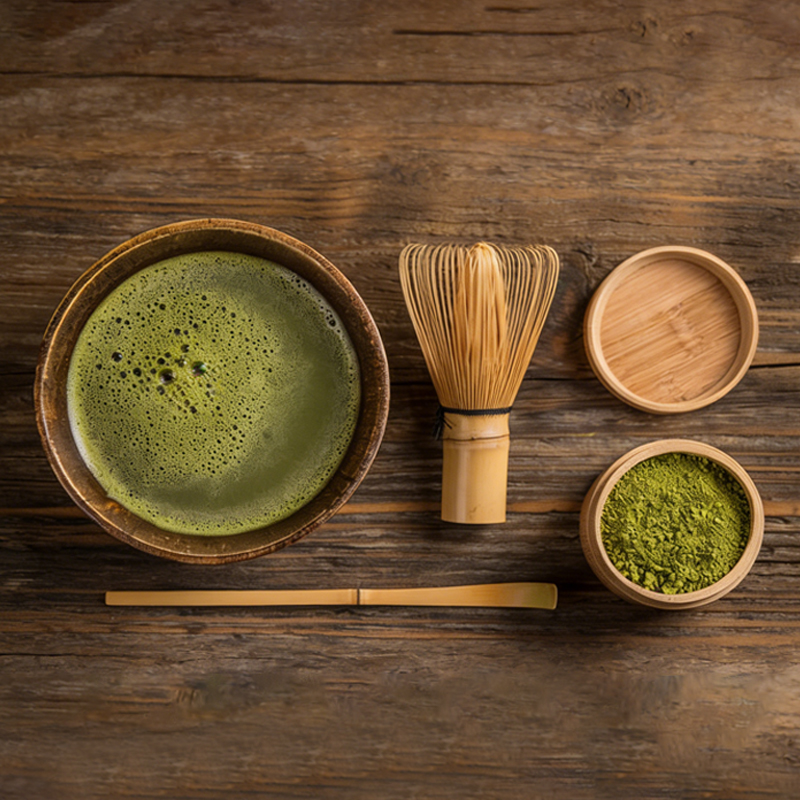 Organic Green Tea Powder for Matcha and Culinary UseThis finely ground green tea powder is made from whole leaves, offering a concentrated source of antioxidants. Its vibrant color and smooth flavor make it suitable for traditional preparation or cooking.View Product →
The specification you should reference when sourcing organic green tea powder: fineness of 80-200 mesh, moisture below 3%, and a base leaf grade stated in the purchase contract.
Grades and Particle Sizes in Bulk Organic Green Tea Powder
Green tea powder is not a single grade, and the particle size distribution tells you more about the price than the organic label does.
| Mesh Size | Common Use | What the Buyer Should Know |
| 40-60 | Instant tea, marinades, low-cost blends | Coarser particles, faster settling, lighter color |
| 80-120 | Bakery, functional drinks, confectionery | Balanced flavor release, mid-range price point |
| 200+ | High-end foodservice, ceremonial use, luxury drinks | Ultra-fine texture, brighter green color, premium cost |
Most commercial organic green tea powder is milled from organic green tea grades such as gunpowder 3505 AAA or chunmee 9371. The leaf is not necessarily shade-grown; it is simply processed and ground into the target mesh size. An organic gunpowder or chunmee base yields a functional powder with a recognizable green tea character that importers can rely on for repeat production runs.
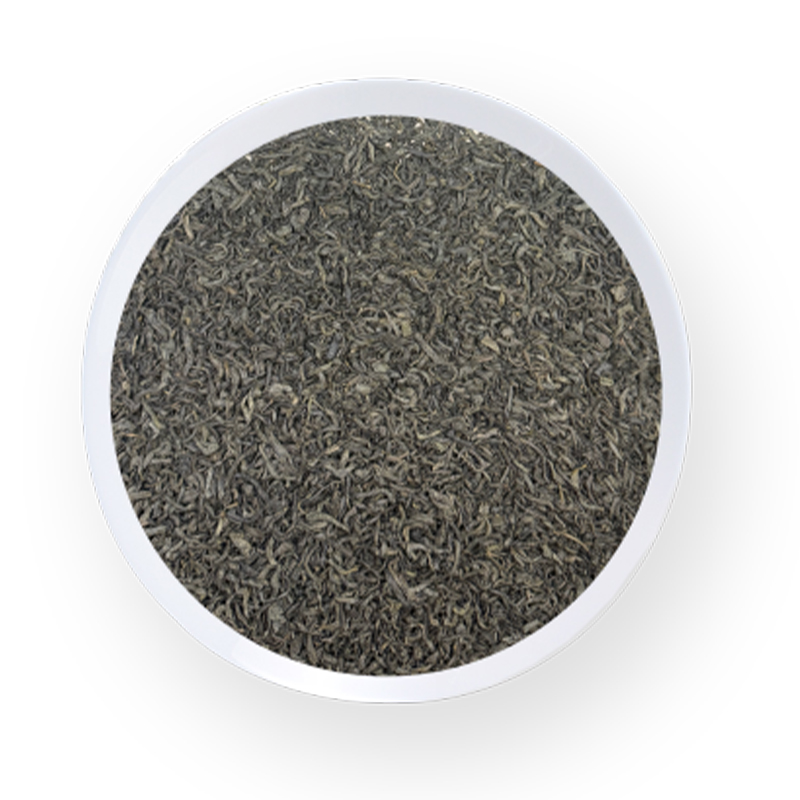
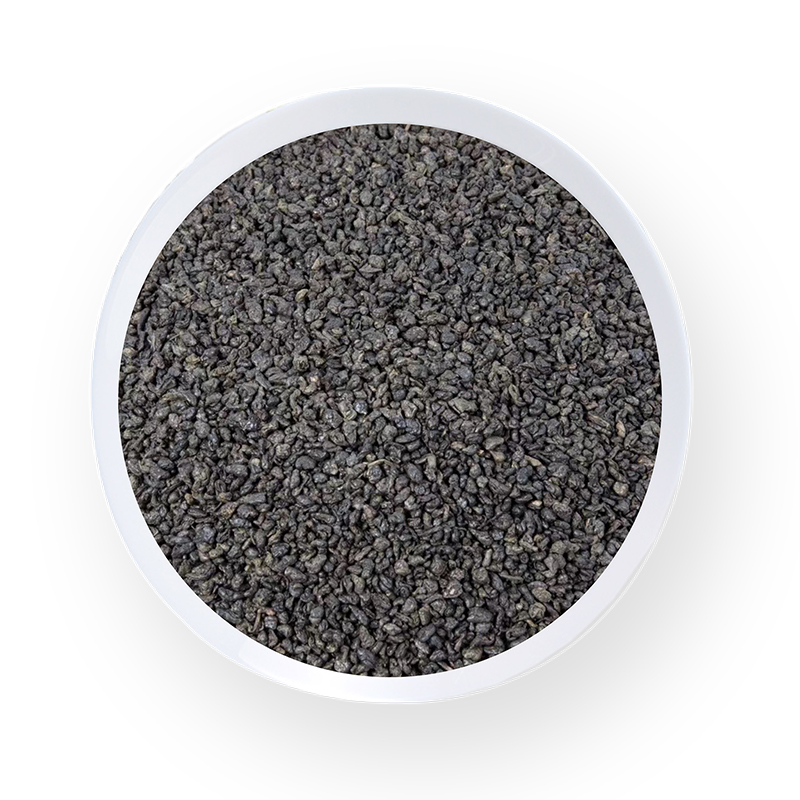 Premium Gunpowder 3505 AAA Green Tea PelletsA high-grade gunpowder tea with tightly rolled pellets and a rich, complex flavor. Its uniform quality and strong character make it a reliable base for organic green tea powder production.View Product →
If the base tea grade is not stated in the organic certificate and the spec sheet, a buyer cannot verify the flavor profile before ordering. Always request a sample with the specific base leaf grade listed.
Certifications That Matter for Organic Green Tea Powder
An organic claim on a tea product means nothing in a port inspection unless the certificate comes from a recognized certifying body and matches the shipped lot number.
- EU Organic Rule: the most common certificate for organic tea entering European Union markets.
- USDA NOP: the standard for organic claims in the United States and many North American buyers.
- JAS Organic: required for organic tea sold in Japanese foodservice and retail channels.
- HACCP: a food safety framework verified by third-party auditors, often requested alongside organic certificates.
Between these standards, EU Organic and USDA NOP are the two most frequently requested by bulk buyers in Africa and Europe, the markets Hangzhou Baoda Tea Co., Ltd. serves with its green tea export program. A supplier that presents both certificates for the same product line is typically prepared for the documentation checks that occur at European customs.
Request the certificate's scope to confirm it covers green tea powder production, not merely loose-leaf tea packing. Scope mismatch is a common reason for container rejection in Europe.
How to Select a Reliable Organic Green Tea Powder Supplier
The most reliable way to judge an organic green tea powder supplier is to verify the processing route and the mill location before negotiation starts.
Factory-Direct Supplier
- Control over raw leaf sourcing and input blends
- More stable pricing across large container orders
- Direct access to the QA team and processing records
- Lower minimum order thresholds for new buyers
Trading Company
- Wider product menu from multiple origins
- Faster ability to switch between sourcing partners
- No visibility into actual milling conditions
- Higher unit cost and less price assurance
For a container-scale order, a factory-direct supplier usually offers better pricing consistency because the raw material cost is stable and the milling process is in-house. For a complete checklist of what to verify when sourcing from China, see our guide on how to source Chinese tea with proper freshness and packaging.
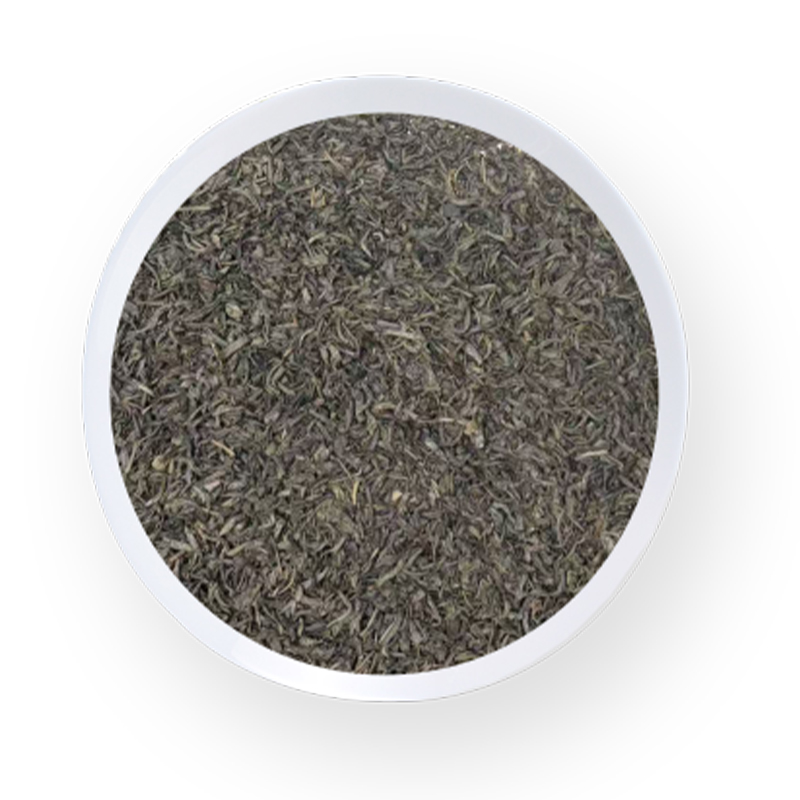 Chunmee 9371 Green Tea with Eyebrow-Shaped LeavesThis commercial-grade green tea features a distinct eyebrow shape and a nutty, slightly smoky taste. Widely used in mint tea blends, it offers consistent quality for bulk sourcing.View Product →
Storage and Packaging Considerations for Importers
Green tea powder begins losing quality the moment it absorbs airborne moisture, so packaging is your first line of defense on the ocean transit route.
- Moisture: keep relative humidity below 40% inside the container.
- Temperature: store at or below 22°C to slow oxidation.
- Light: use opaque foil-lined packaging to protect the chlorophyll.
- Oxygen: nitrogen-flush or vacuum-pack to remove oxygen from the headspace.
FAQ
What is the difference between matcha and organic green tea powder?
Matcha is a specific type of green tea powder made from shade-grown leaves, with the entire leaf processed into a uniform fine powder. Organic green tea powder is a broader category that includes any finely milled organic green tea, often made from gunpowder or chunmee leaf grades for a different flavor profile and lower cost.
What mesh size should I specify for an organic green tea powder beverage?
For most beverage formulations, an 80-120 mesh powder provides the best balance of suspension, color, and cost. A coarser grind below 60 mesh will settle quickly in a finished drink and should be avoided for bottling or ready-to-drink products.
Does organic certification affect the flavor of green tea powder?
Organic certification does not change flavor. Flavor is determined by the leaf variety, the growing region, and the heat fixation process. Organic certification is an agricultural standard that verifies input and cultivation methods, not a flavor quality guarantee.
What is the typical minimum order quantity for bulk organic green tea powder?
Minimums vary by supplier and configuration. Hangzhou Baoda Tea Co., Ltd. typically accepts factory-direct powder orders from one metric ton, with sample quantities available for evaluation before a container order is placed. The Huangshan facility has a 10,000-tonne annual capacity that supports large-scale export orders.
Whether you are sourcing organic green tea powder for beverages, bakery, or private-label retail, the binding factors are always the same: mesh size, base leaf grade, organic certificate scope, and packaging integrity.
 We sincerely welcome customers from all over the world to visit us and seek common
development and create brilliant future.
We sincerely welcome customers from all over the world to visit us and seek common
development and create brilliant future.
Contact BAODA
 Our Phone
+86-15386682887
+86-13857173531
 E-mail
[email protected]
[email protected]
[email protected]
 Our Address
Room 1601, Building 2, New Town Times Square, 189 Fengqi East Road, Hangzhou, Zhejiang Province, China.
Inquiry Us Now
Copyright © Hangzhou Baoda Tea Co., Ltd. All Rights Reserved
Wholesale China Premium Green Tea Company
