

 English
  Français
 Organic White Tea Sourcing Guide: Grades, Benefits, and Bulk Buying Tips
When you source organic white tea in bulk, the first real question is not about price. It is about oxidative stability, leaf grade, and whether the farm can prove its organic claim with credible certification. As Hangzhou Baoda Tea Co., Ltd., a Chinese tea exporter with a 12,000 square-meter factory in Huangshan, we have watched unsuspecting buyers pay premium prices for conventional leaves finished with a white tea label.
The market for organic white tea is small but fiercely loyal. Many European and African buyers start with green tea, then discover that a single container of Silver Needle or White Peony can anchor a whole premium line. The problem is that white tea quality varies widely, and organic certification alone does not guarantee a consistent taste profile.
What Is Organic White Tea?
Organic white tea is a minimally processed tea made from the buds and young leaves of Camellia sinensis, grown without synthetic pesticides or synthetic fertilizers.
White tea is the least oxidized tea type in the world, with a typical oxidation of 5 to 10 percent. This means the leaf remains close to its fresh state, preserving a high concentration of catechins, amino acids, and L-theanine. The word organic refers to a cultivation system that bans synthetic chemical inputs and requires an annual third-party audit of soil, water, and pest control methods.
Definition: Organic white tea is a premium tea category that springs from the same species as green tea but undergoes almost no processing after harvest. The buds are wither-dried in the sun or under controlled airflow, and never rolled, pan-fired, or fermented. Organic certification adds a regulated, chemical-free cultivation standard to this ancient process.
Antioxidant Capacity Comparison
Relative catechin content per 100 g of dry leaf
Why Organic White Tea Matters for Importers and Brands
For an importer or private-label brand, organic white tea offers a clear path to higher margins, provided the supply chain is transparent.
Chinese white tea comes primarily from Fujian and specific mountainous areas of Anhui. Because the harvest window is short and the labor is intense, the yield per hectare is only a fraction of green tea. This scarcity combined with the growing demand from health-conscious consumers pushes the price of organic white tea 20 to 30 percent above conventional grades, and sometimes more for Silver Needle. Our own production facility in Huangshan can deliver up to 10,000 tons of tea per year, so we are able to lock in fixed-volume organic white tea contracts for serious buyers.
Organic White Tea
- Oxidation: 5-10%
- Process: wither, dry
- Leaf form: buds + young leaves
- Flavor: honey, melon, soft
- Price: premium
Organic Green Tea
- Oxidation: 10-20%
- Process: pan-fired or steamed
- Leaf form: rolled or flat leaves
- Flavor: grass, marine, nutty
- Price: mid-range
Grades of Organic White Tea You Should Know
The four marketable grades of organic white tea are Silver Needle, White Peony, Gong Mei, and Shou Mei, each showing a different leaf-to-bud ratio and a different flavor trade-off.
White tea has a long lineage in Chinese tea culture, and the history of Chinese tea shows that the earliest forms of tea were basically freshly dried leaves. The grading tradition developed with the rise of luxury white teas in the Ming dynasty.
| Grade | Leaf Material | Harvest Window | Flavor Profile | Typical Use |
| Silver Needle | Single buds | Early spring | Honeyed, subtle, fresh | Luxury retail, gifting |
| White Peony | One bud + two leaves | Spring | Floral, creamy, slightly stronger | Premium retail, restaurants |
| Gong Mei | Thinner leaves, mix of buds | Late spring | Mellow, mineral, a bit rustic | Everyday blends, tea bags |
| Shou Mei | Mature leaves and shoots | Late spring to summer | Full-bodied, dried fruit | Bulk blending, mass market |
For buyers who need a reliable supply of a specific grade, we offer a range of White Tea options from our special tea line.
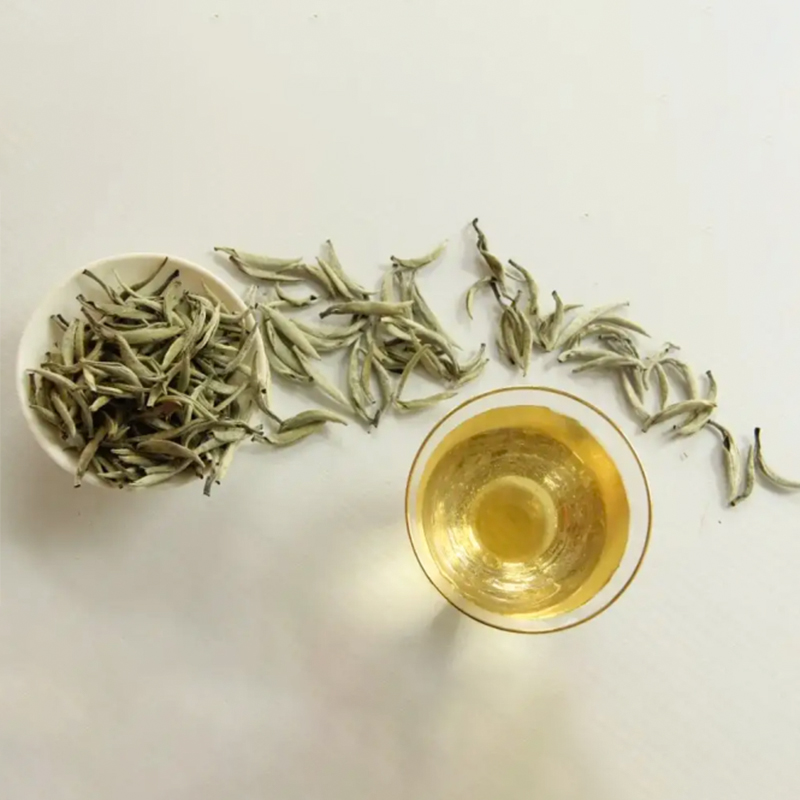
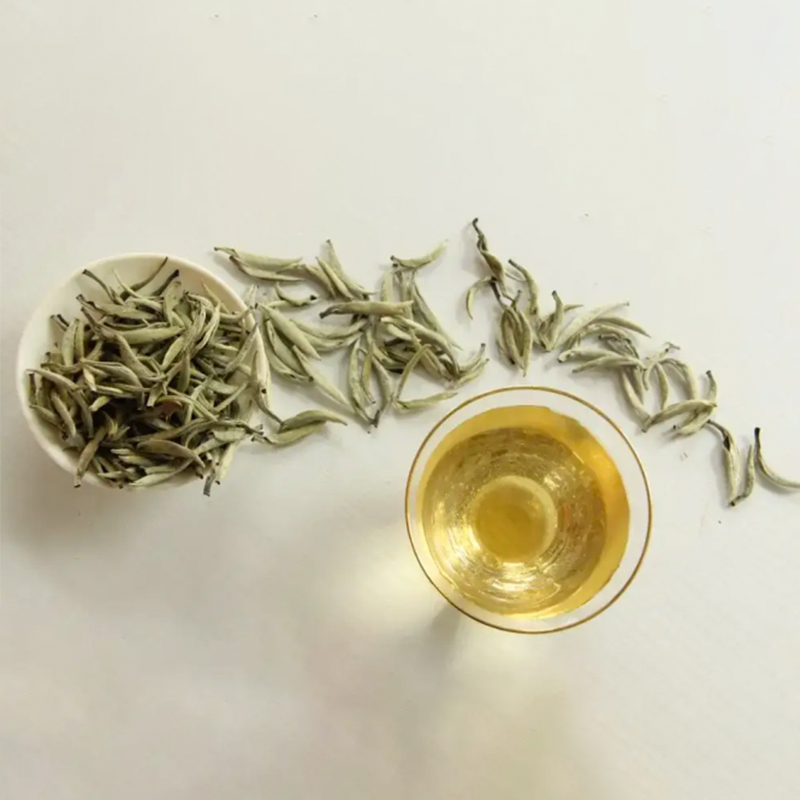 Versatile White Tea Collection for Bulk BuyersExplore our white tea line, featuring Silver Needle, White Peony, and more. Ideal for those seeking consistent quality across multiple containers, with options to suit various flavor preferences and bulk requirements.View Product →
What to Look for When Buying Organic White Tea in Bulk
Bulk white tea buyers should check five things before signing a contract: the organic certificate, the moisture content, the leaf appearance, the packaging, and the supplier's ability to deliver the same quality across multiple containers.
- Organic certificate: Ask for the current valid certificate and cross-check the farm name with the exporting company. Many so-called organic white tea lots are just conventional tea sold with a marketing label.
- Moisture content: The target moisture range for long-term white tea storage should be 6 to 8 percent. Anything above 9 percent will create mold and shorten the shelf life.
- Leaf appearance: In Silver Needle, the buds should be even, plump, and covered with fine down. A mix of broken leaves and stems indicates a lower grade.
- Packaging: White tea should arrive in food-grade, moisture-barrier packaging, ideally with a liner bag protected by a rigid carton. This prevents the tea from absorbing odors and humidity.
- Supplier transparency: The best suppliers can provide a product sample, a production report, and a clear grading rubric before you place an order. If they cannot, that is a warning sign.
A good bulk supplier will also let you inspect a pre-shipment sample from the actual production lot, not just a lab sample. The same principles of freshness and packaging apply across categories, as we explain in our guide on sourcing Chinese tea.
Brewing and Handling Organic White Tea
Brewing organic white tea is simpler than people think, but the water temperature makes or breaks the experience.
- Heat the water to 80-85 degrees C. Boiling water at 100 degrees C will scald the delicate buds and turn the infusion bitter.
- Add 2 grams of leaves per 200 ml of water. For Silver Needle, use only the buds; for White Peony, do not break the leaves.
- Steep for 2 to 3 minutes. The first steep should be short, then add 30 seconds for each subsequent steep.
- Reuse the leaves 3 to 4 times. Unlike black tea, white tea releases flavor gradually across multiple steepings.
White tea needs a glass pot with a wide mouth. That way, the leaves have room to move and you can watch the buds open like a flower.
Frequently Asked Questions
How much does organic white tea cost per kilogram?
Organic white tea prices vary significantly by grade. Silver Needle can be five to eight times the price of Shou Mei, and the cost also depends on organic certification, harvest season, and packaging. In the current China export market, bulk Shou Mei is often much closer to conventional green tea pricing than to Silver Needle.
What is the difference between organic white tea and regular white tea?
Regular white tea is cultivated with synthetic pesticides and fertilizers. Organic white tea is grown under certified organic standards, which restrict those inputs. The taste difference is subtle at first, but the environmental impact and residue-free status make it more attractive for premium retail and health-conscious consumer segments.
Can organic white tea be stored for a long time?
Unlike green tea, which should be consumed within 12 months, white tea can improve with age if kept in a dry, dark, and airtight environment. Moisture content below 8 percent is critical. Some commercial buyers store Shou Mei for up to three years because it develops a deeper, more mellow flavor.
What minimum order quantity is typical for organic white tea from a Chinese exporter?
Most Chinese tea exporters require a minimum of 100 to 200 kg per order, with 20-foot and 40-foot containers being the standard shipping units. A 40-foot container normally holds 10 to 12 tons of packed white tea, which is where the best per-kilogram price kicks in. At Baoda Tea, we can scale from sample orders up to full containers.
 We sincerely welcome customers from all over the world to visit us and seek common
development and create brilliant future.
We sincerely welcome customers from all over the world to visit us and seek common
development and create brilliant future.
Contact BAODA
 Our Phone
+86-15386682887
+86-13857173531
 E-mail
[email protected]
[email protected]
[email protected]
 Our Address
Room 1601, Building 2, New Town Times Square, 189 Fengqi East Road, Hangzhou, Zhejiang Province, China.
Inquiry Us Now
Copyright © Hangzhou Baoda Tea Co., Ltd. All Rights Reserved
Wholesale China Premium Green Tea Company
