

 English
  Français
 Chunmee 9366 Green Tea: Key Material Characteristics and Application Requirements
If you have ever cupped a dozen Chunmee samples side by side, you already know the truth about grading: the invoice number barely tells the story. Chunmee 9366, Chunmee 9371 and Chunmee 9380 can look like close relatives in a carton photograph, yet they brew noticeably different cups, settle at different price points and suit different end markets. For importers supplying North and West Africa or Southern Europe, understanding what 9366 is made of, and where it belongs, decides whether a container turns over quickly or gathers dust in a warehouse.
What Chunmee 9366 Is and Where Its Number Comes From
Chunmee 9366 is a standardized export grade of Chinese pan-fired green tea, named after the long, curved, eyebrow-like shape of its finished leaf and traded as a strong, economical bulk tea for daily drinking and blending.
The numbering traces back to China's export system, where codes such as 4011, 41022, 9366, 9371 and 9380 distinguished leaf size, plucking standard and processing style rather than ranking quality on a single ladder. Within any one number, suppliers add suffixes from AAA up to Diamond to signal finer sorting. In trade practice, 9366 shows a longer, somewhat more open strip than the tighter 9371, and buyers reach for it when cup strength and unit cost matter more than needle-like refinement.
Most 9366 is refined in Anhui, Jiangxi and Zhejiang provinces, where long-established processing lines set the benchmark for strip work and firing. For background on the category as a whole, this overview of Chun Mee organic green tea origins and flavor profile makes a useful companion read.
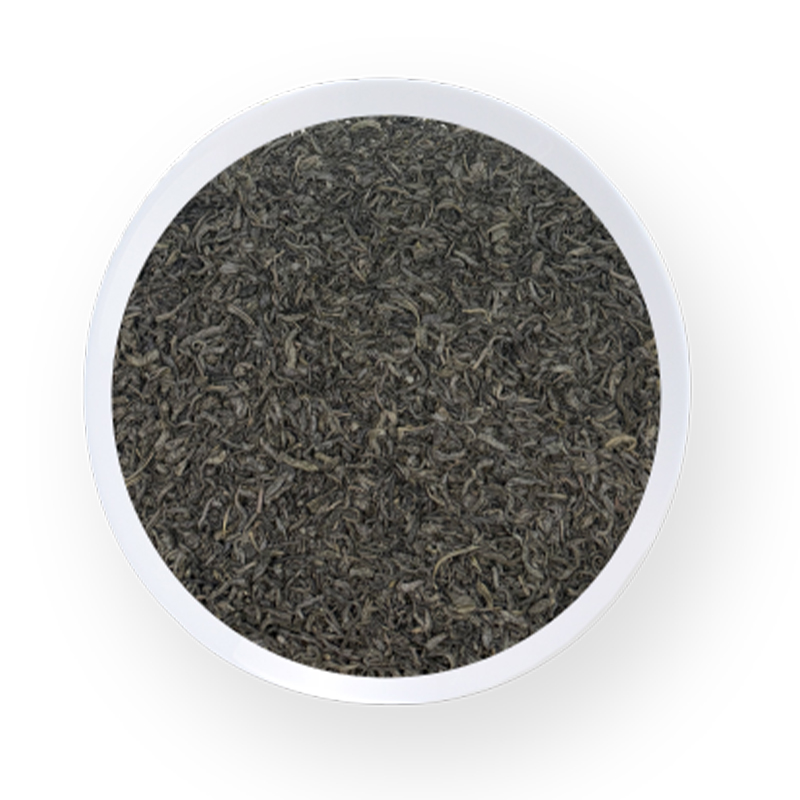
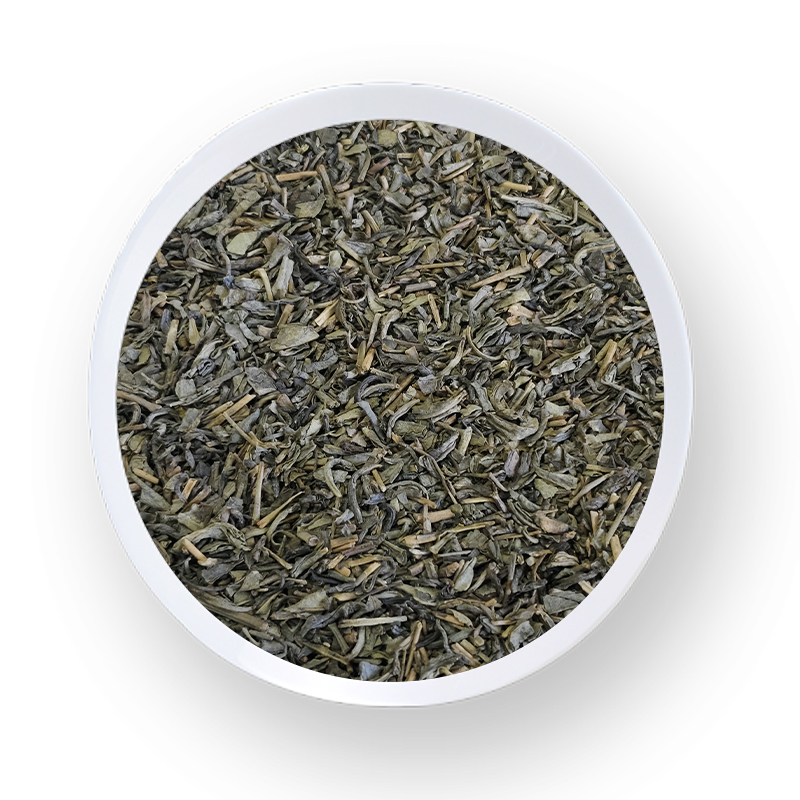 Chunmee 9366 Green Tea for Export BlendsA commercial-grade Zhen Mei green tea with tight, eyebrow-shaped dark leaves and a rich, refreshing cup. Widely shipped to North Africa, West Africa and Central Asia, it suits mint tea blends and price-driven programs.View Product →
The Material Characteristics That Decide Whether 9366 Fits
Four measurable attributes define 9366 in trade: leaf morphology, dry color, cup strength and moisture at shipment. Get these four right and the grade does its job in your program; miss one and the problem usually surfaces only after the container sails.
Leaf morphology and dry appearance
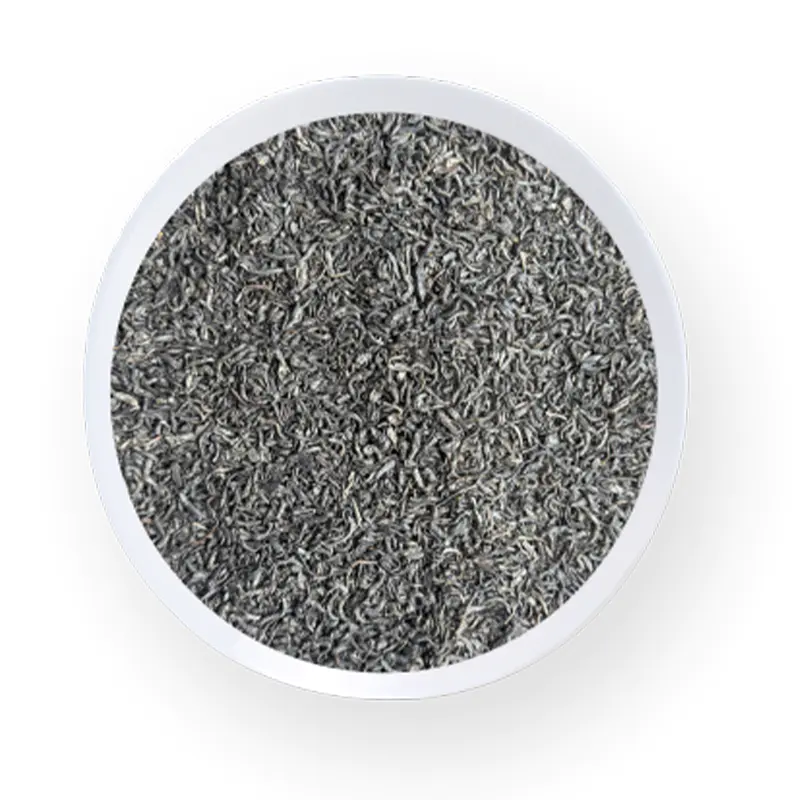
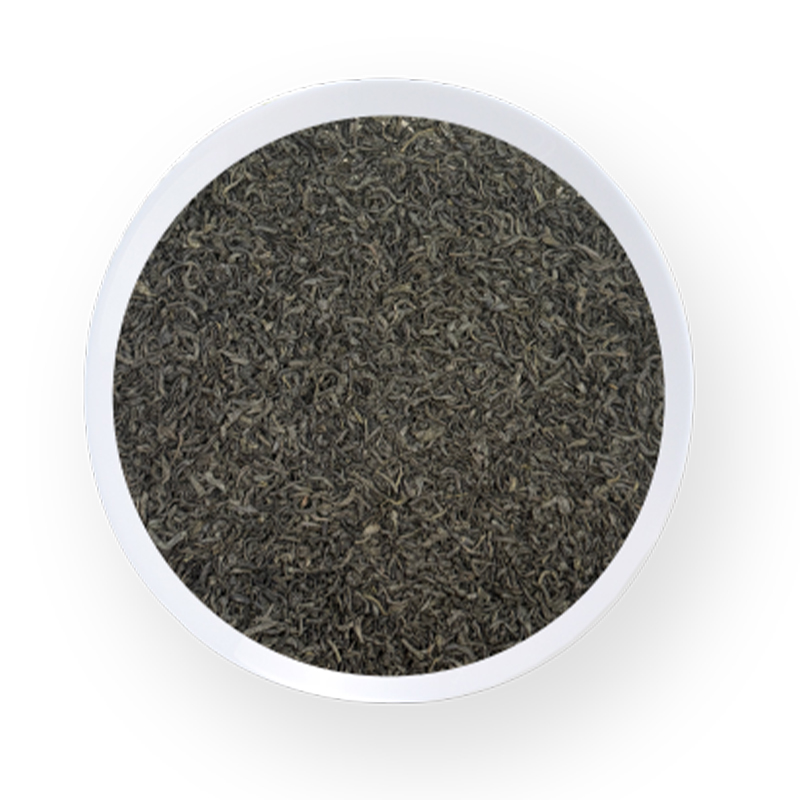
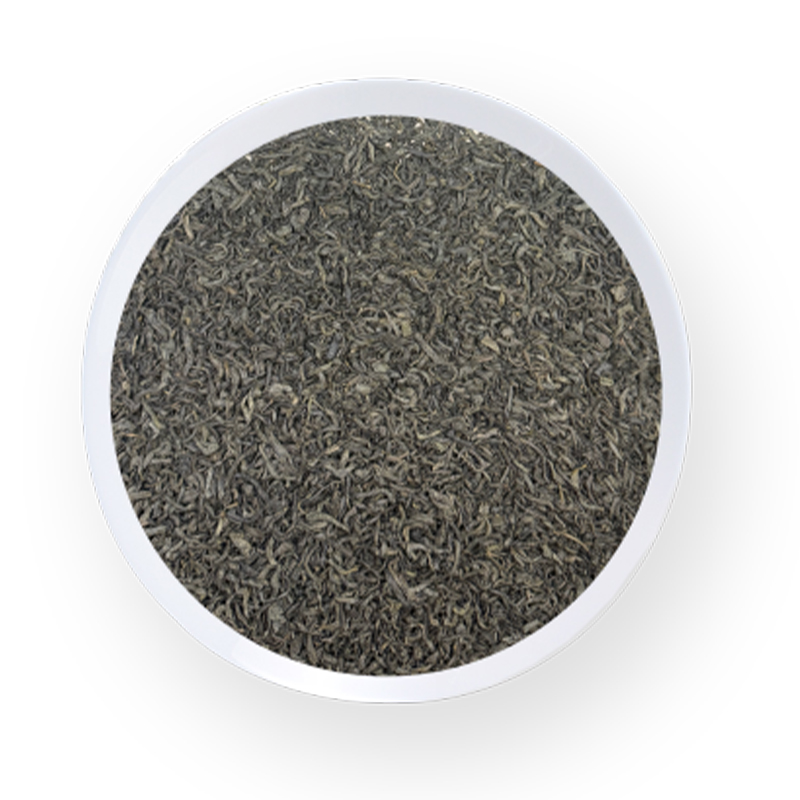
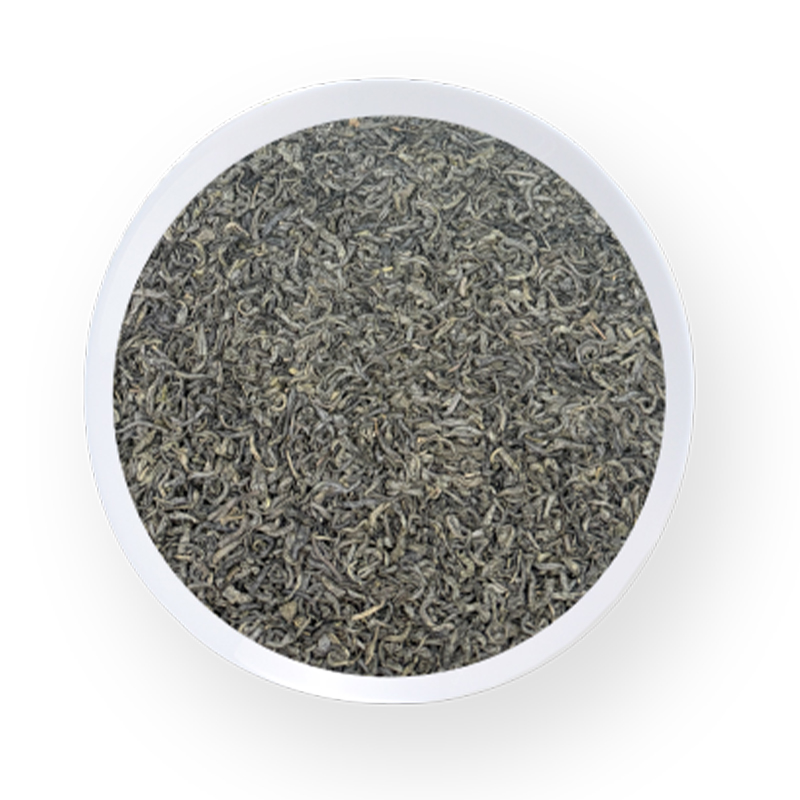
Expect long, well-twisted, semi-curled strips with a grayish-green color and a light frost-like bloom from slow roasting. Compared with premium tight grades, 9366 tolerates a broader and slightly looser strip. What separates a strong lot from a weak one is uniformity: even strip length, a low share of broken leaf, and virtually no stem or dust after sieving.
Liquor, aroma and taste
The liquor runs from yellow-green to golden orange. The aroma is roasted and high-fired, with a faint smoky edge that many African markets read as strength rather than defect. In the cup, 9366 is strong, brisk and cleanly astringent, which is exactly why blenders building mint-tea programs keep it as a workhorse base.
Physical and shipment specifications
- Moisture at packing, commonly held at or below 6.5 to 7.0 percent, so the leaf survives long ocean transit without mustiness.
- Sieve-graded leaf with a controlled broken-leaf fraction and near-zero foreign matter.
- Color developed through firing alone, with no additives permitted in export lots.
9366 Versus 9371 and 9380: Choosing by Market Role
In the export trade these three numbers are not better-or-worse ranks. They are different tools, and the right choice follows the market you sell into and the price point you must hit.
| Attribute | Chunmee 9366 | Chunmee 9371 | Chunmee 9380 |
| Leaf style | Long, semi-curled, moderately tight strip | Smaller, tighter, more refined strip | Broader, looser, more open leaf |
| Cup character | Strong, brisk, roasted edge | Smoother and rounder body | Milder, softer, less persistent |
| Best-fit role | Strength-led blends and mint tea | Tighter retail quality specifications | Economy programs bought at volume |
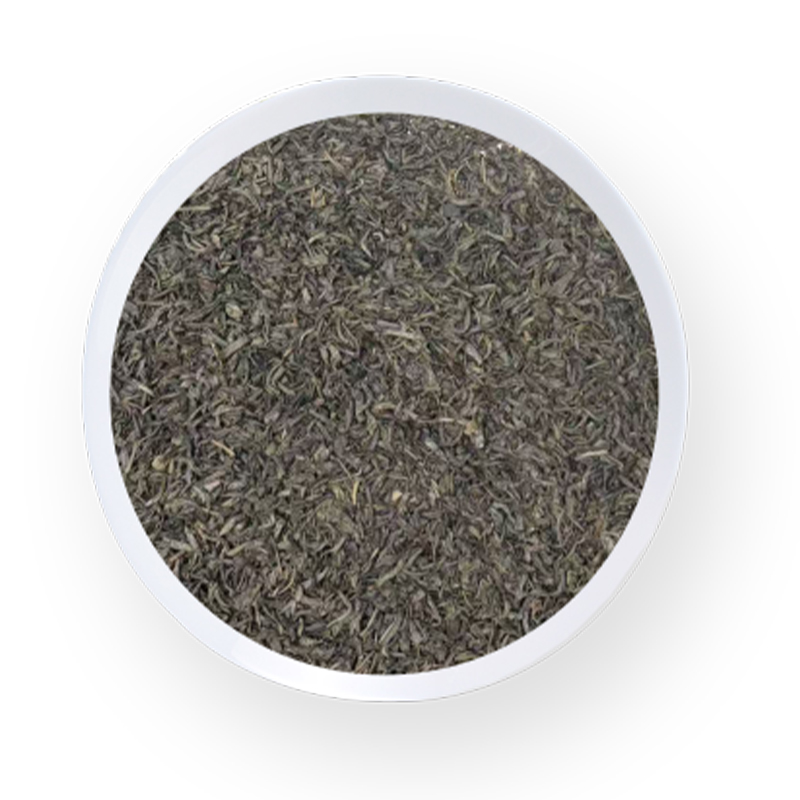 Chunmee 9371 Premium Export Green TeaA higher-grade Chunmee with evenly curled, glossy leaves and an earthy, nutty cup with light smokiness. A staple for Moroccan and Algerian mint tea blends, offered in sub-grades like AAA and AA.View Product →
 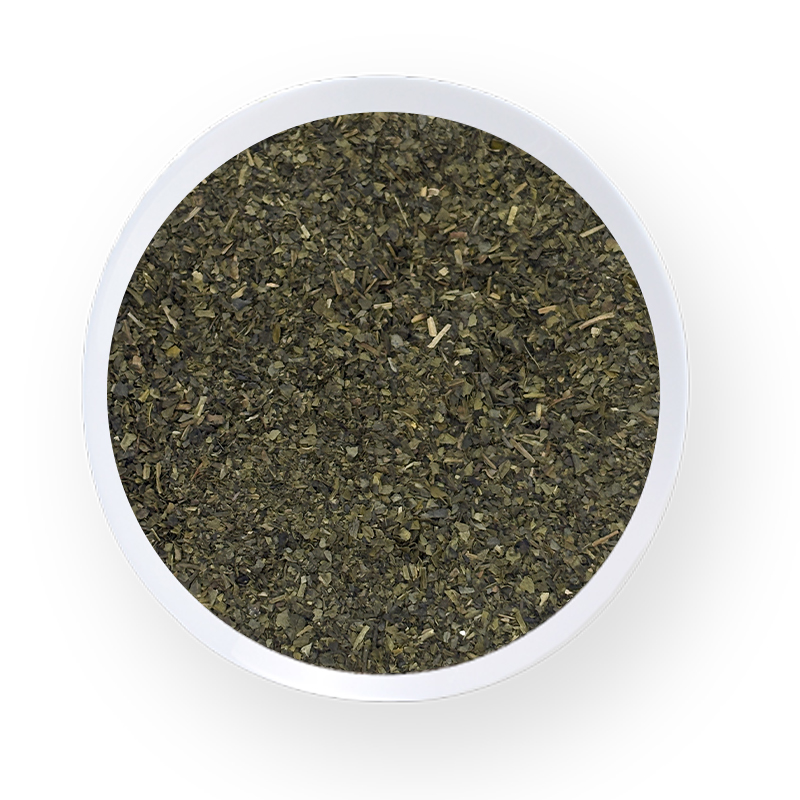 Chunmee 9380 Bold Pan-Fired Green TeaPan-fired in Anhui and Jiangxi from spring one-bud-one-leaf shoots, Chunmee 9380 delivers a bold, invigorating cup with a bright golden-green liquor, fitting buyers needing a distinct grade alongside 9366 and 9371.View Product →
These descriptions reflect how traders line up samples in practice. The final verdict always comes from cupping the actual lot you will receive, not from the number printed on the carton. Two factories can both ship an honest 9366 and still differ visibly in strip and firing.
Never buy a tea number on faith. Buy the leaf in front of you, because the number only tells you which drawer the sample came from.
Application Requirements: Where 9366 Performs Best
Chunmee 9366 earns its place in programs that need a strong, stable and economical green tea: Moroccan-style mint tea, blended daily-drinking packs and private-label bulk lines. It is less convincing as a delicate, solo connoisseur cup, and buyers should position it accordingly.
Brewing and extraction parameters
| Preparation | Leaf dose | Water | Extraction |
| Moroccan-style mint tea | 12-15 g per liter | Boiling | Long simmer or steep with fresh spearmint and sugar |
| Straight cup | 3 g per 200 ml | 90-95°C | 2-3 minutes, two to three infusions |
| Blending base | Per recipe | 95-100°C | Strong extraction for a dark, persistent liquor |
- Water below 85°C leaves 9366 flat, while a full boil pulls out its complete roasted strength.
- In mint tea the leaf is traditionally cooked with spearmint and generous sugar; the grade's briskness keeps the drink from turning syrupy.
- European drinkers usually prefer the straight-cup parameters with a slightly shorter steep.
Packing, storage and compliance
Standard export packing is a foil-lined carton of 25 to 30 kg net, palletized and stored cool, dry and odor-free below 25°C. For European programs, plan residue testing against EU limits before shipment; for African destinations, confirm local import requirements early in the negotiation. A fuller walkthrough of handling steps is available in this guide to storing China green tea correctly.
A Six-Point Procurement Checklist for 9366 Buyers
A clean 9366 transaction comes down to six checks that experienced importers run before wiring a deposit. The list looks simple; skipping any single point is where quality claims are born.
Integrated producers such as Hangzhou Baoda Tea Co., Ltd., which operates a 40,000 square meter plant in Huangshan, Anhui, with roughly 10,000 tonnes of annual capacity, can usually close points three to five in-house, which shortens negotiation and keeps successive lots consistent.
Frequently Asked Questions
What does the number 9366 actually mean?
It is a legacy export code that identifies one specific Chunmee leaf style, covering strip shape, size and firing. It is not a quality rank on its own; suppliers refine quality further with sorting suffixes such as AAA or Diamond.
Is Chunmee 9366 good for Moroccan-style mint tea?
Yes. Its strong, roasted, brisk cup stands up to fresh mint and heavy sugar, which is precisely why North African blenders favor strength-led Chunmee grades as their base tea.
What moisture level should Chunmee 9366 be shipped at?
At or below roughly 6.5 to 7.0 percent. Lower moisture protects aroma and prevents mold across 25 to 35 days of ocean transit and onward warehouse storage.
How does 9366 differ from Chunmee 41022?
41022 is sold in tight, needle-fine grades from AAA up to Diamond and targets refined retail quality, while 9366 offers longer strips and a strength-first cup at a friendlier unit cost.
Ready to compare 9366 against your current base tea? Request a sample set, cup them side by side, and lock your spec before the next contract.
 We sincerely welcome customers from all over the world to visit us and seek common
development and create brilliant future.
We sincerely welcome customers from all over the world to visit us and seek common
development and create brilliant future.
Contact BAODA
 Our Phone
+86-15386682887
+86-13857173531
 E-mail
[email protected]
[email protected]
[email protected]
 Our Address
Room 1601, Building 2, New Town Times Square, 189 Fengqi East Road, Hangzhou, Zhejiang Province, China.
Inquiry Us Now
Copyright © Hangzhou Baoda Tea Co., Ltd. All Rights Reserved
Wholesale China Premium Green Tea Company
