

 English
 Français
Chunmee Tea Storage: Key Factors That Affect Green Tea Quality Stability
A carton of Chunmee 41022 that leaves Huangshan in July and is opened the following March rarely cups the same as it did at the factory gate. Between those two dates sit weeks on a container deck, humidity swings at transshipment ports and months on a warehouse pallet.
Quality stability is not one setting. It is the combined effect of leaf moisture, temperature, oxygen, light and packing barrier, each of which can be measured, logged and written into a purchase contract. The targets below are the ones an exporter and an importer can both verify.
Quality Stability Rests on Four Measurable Variables
Chunmee quality stability is governed by four measurable variables: leaf moisture content, storage temperature, oxygen exposure and light. Odor contamination, compression and pest activity sit behind them as secondary risks.
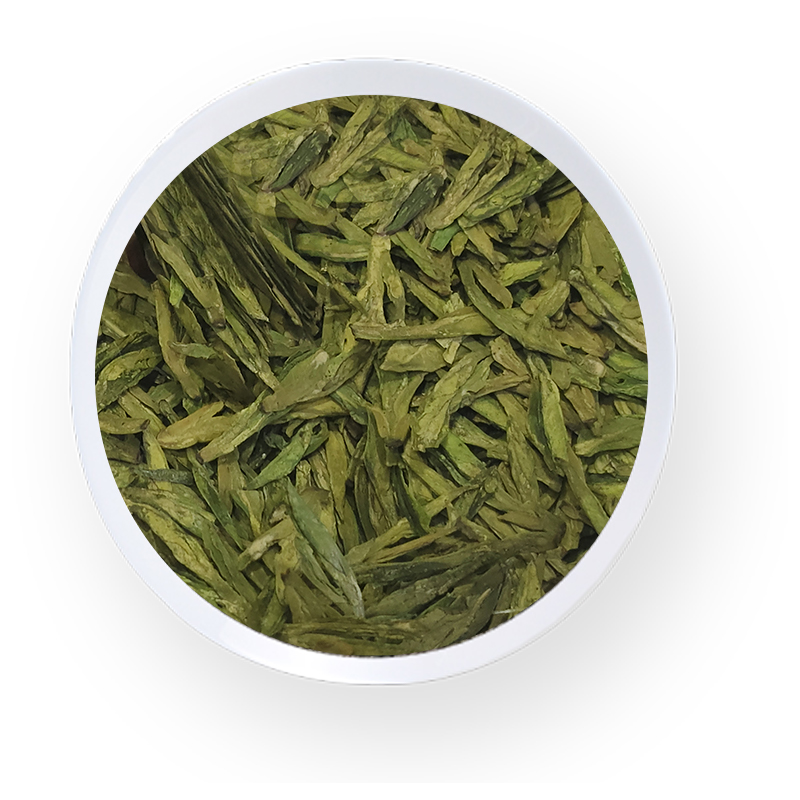
Chunmee, sometimes written Chun Mei and translated as precious eyebrows, is a pan-fired Chinese green tea twisted into a curved, eyebrow-shaped leaf. It is traded by number, and 41022 is the specification most buyers name first.
Because the leaf is unfermented, the catechins, chlorophyll and ascorbic acid that create its chestnut aroma and yellow-green liquor stay chemically reactive after firing. Li et al., in a 2024 hyperspectral imaging study of green tea in storage, measured a time-dependent decline in catechin and caffeine content rather than a flat profile (PMC11280024). The decline tracks the variables below.
- Moisture gain: the leaf re-absorbs water and hydrolysis accelerates
- Heat: reaction rates rise with every degree above the storage baseline
- Oxygen: catechins oxidise into darker, flatter-tasting compounds
- Light: chlorophyll photo-degrades and the liquor turns yellow-brown
- Odor: leaf lipids adsorb volatiles from fuel, paint or spices
- Compression: stacking pressure breaks the twisted leaf into dust
Each item has a control point, and the sections that follow take them in order of weight.
Moisture Content Sets the Ceiling for Every Other Factor
Leaf moisture is the dominant variable. GB/T 14456.1-2017 caps green tea at 7.0% moisture, and a lot packed at 6.0% resists hydrolysis and catechin oxidation longer than the same lot at 7.5%, because water is the medium both reactions need.
Chunmee is hygroscopic. The dry, twisted leaf takes up vapour through carton seams and through a polyethylene liner, which is a weak moisture barrier on its own. Past roughly 7%, water activity approaches 0.5, the range where moulds and the reactions behind a dull, stewed liquor gain room to work. Vitamin C loss and chlorophyll breakdown follow the same curve.
7.0% is a legal ceiling, not a storage target. For lots that must survive six months of transit and warehousing, a packing figure of 5.5–6.5% leaves headroom for slow uptake inside the carton.
The same tea number hides a wide spread. Chunmee 41022 runs from AAA to Diamond, and finer pickings carry more young leaf surface per gram, so they take up moisture faster than coarse grades.
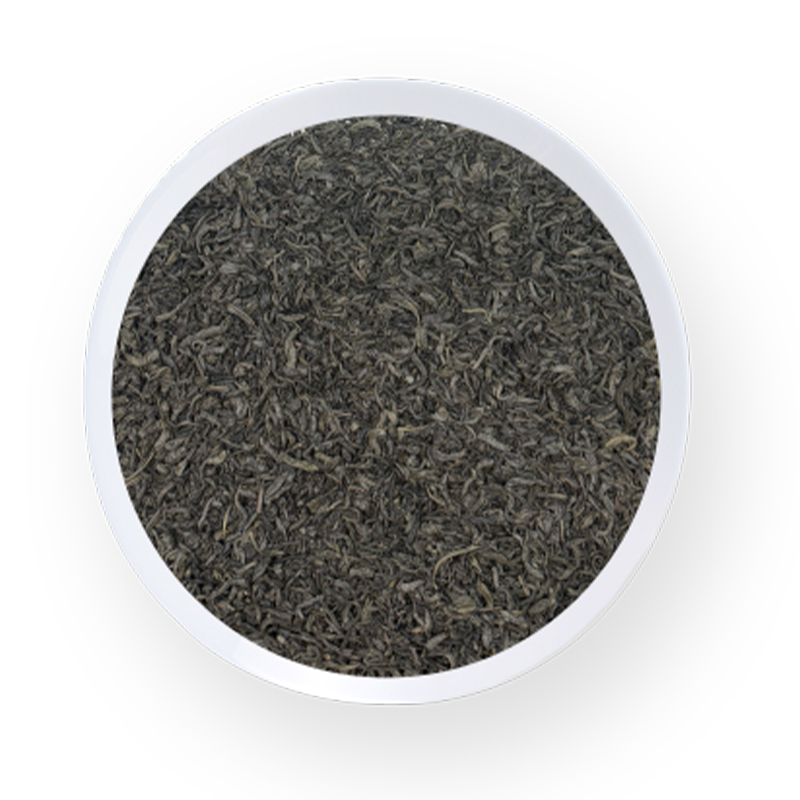 Wholesale Private Label Chunmee 41022 AAAA Green TeaEconomy-grade Chunmee 41022 AAAA with controlled particle size and moisture, suited for tea-bag filling, blends, and cost-sensitive food-service brewing.View Product →
Verification: ISO 1573 loss-in-mass testing at 103 °C on a sample drawn at packing and again at loading. A handheld moisture meter is acceptable for screening, but the oven method is what a contract dispute rests on.
Temperature: A 10 °C Rise Roughly Doubles the Rate of Loss
Hold Chunmee at 25 °C or below in ambient warehousing, and at 0–5 °C for lots stored longer than six months. The reactions behind aroma loss follow a Q10 of roughly two, so each 10 °C rise doubles their rate.
Q10 is a rule of thumb from reaction kinetics rather than a tea-specific constant, but the direction is documented. A 2024 study in Beverages (MDPI, volume 10, issue 2, article 35) reported that storage temperature changes the soluble sugar content of green tea, and soluble sugars feed the sweet, chestnut note that defines a good Chunmee cup.
- Set a cold store at 0–5 °C with drift of no more than 2 °C; beyond twelve months, minus 18 °C is the safer option.
- Never open a cold carton straight from the store. Let it stand sealed until it reaches room temperature, or condensation will form on the leaf and undo the drying step.
Oxygen, Barrier Packaging and Headspace Control
Pack export Chunmee with headspace oxygen below 2%: an aluminium foil ply, a nitrogen flush and, where target shelf life exceeds twelve months, an oxygen absorber.
A polyethylene liner is not a barrier. PE passes oxygen and water vapour at the thicknesses used in tea cartons, and the foil ply is what slows both. Nitrogen flushing removes oxygen already inside the carton; a vacuum brick removes most of the headspace volume with it and reduces the space the leaf has to move in during transport. Vacuum-packed green tea suits premium grades that must hold a twelve-month window across two handovers.
| Packing format | Barrier construction | Headspace oxygen | Typical use |
| 20 kg multiwall carton | Kraft, foil ply, PE liner | Below 2% with nitrogen flush | Container lots, 6 to 12 months |
| Vacuum brick, 5 to 10 kg | Foil laminate, evacuated | Below 1% | Premium grades, long transit |
| Kraft bag with PE liner | PE only | Ambient air | Short inland movement only |
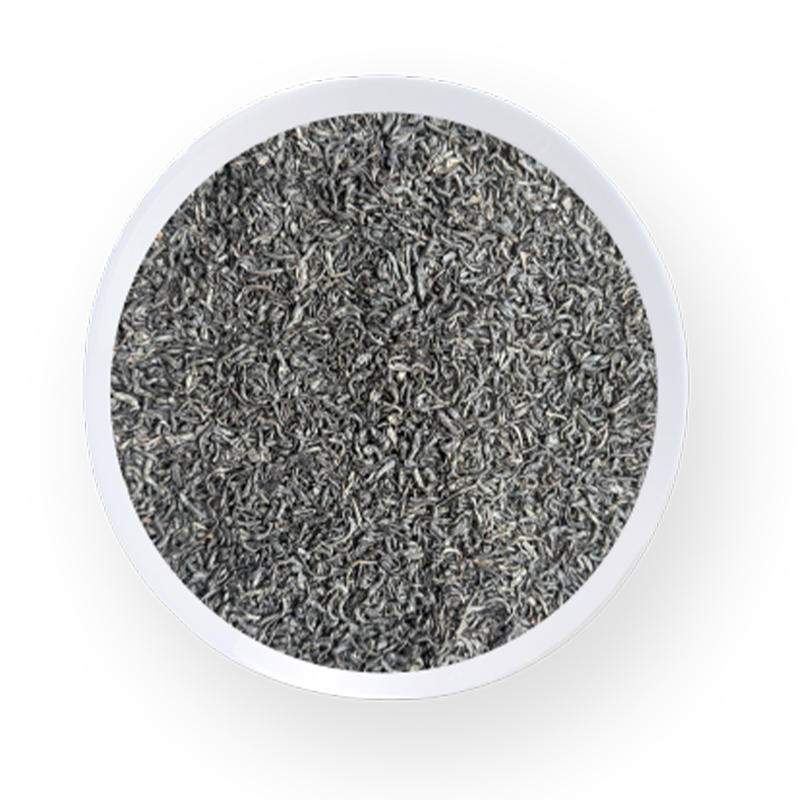 Chunmee 41022 Diamond Private Label Green TeaPremium 41022 Diamond grade with electrostatic dust removal for clearer liquor; suited to tea-bag manufacturing, instant-tea feedstock, and private-label blends.View Product →
Light, Odor and Warehouse Discipline
Store cartons in zero light, at relative humidity of 50% or below at 25 °C, and at least one bay away from fuel, paint, solvents and spices.
Light acts fastest of the secondary factors. Chlorophyll absorbs visible and UV energy and degrades to pheophytin, which is why a light-struck green tea pours a brownish cup. Foil-lined cartons solve this at pack level; clear jars undo it on the shelf. Odor is irreversible: leaf lipids and the porous structure adsorb volatiles, and no re-processing removes them.
Stable storage
- Cartons on pallets, 10 to 15 cm off the floor
- Stacks no higher than eight carton layers
- 50 cm clearance from walls and ceiling
- FIFO rotation by packing date
- Logger recording temperature every 15 minutes
Risk storage
- Cartons in direct contact with concrete
- Stacks above ten layers, lower cartons crushed
- Shared bay with solvents or diesel
- Skylights or open doors facing the pallets
- No written record of transit temperature
Storage Targets at a Glance
A buyer can write each limit into a specification sheet and request the matching record at loading. Leaf moisture is the only value here backed by a national standard; the rest are trade targets.
| Factor | Target | Consequence if missed | How to verify |
| Leaf moisture | Packed at 5.5 to 6.5%, under the 7.0% ceiling | Mould, dull liquor, faster catechin loss | ISO 1573 oven test per lot |
| Relative humidity | 50% or below at 25 °C | Vapour uptake through seams and liners | Calibrated hygrometer log |
| Temperature | 25 °C or below; 0–5 °C beyond six months | Chlorophyll loss, flattened aroma | Logger download per shipment |
| Headspace oxygen | Below 2% with nitrogen flush | Catechin oxidation, browning | Headspace oxygen analyser |
| Light | Opaque foil barrier, no direct exposure | Photo-degradation, brown cup colour | Visual check of liner integrity |
| Odor | Segregated bay, no solvents or fuel | Irreversible taint | Warehouse segregation audit |
| Compression | Eight layers maximum on pallets | Breakage, dust, grade drop | Loading photo record |
Transit Is the Weakest Link in the Chain
Ocean transit is the highest-risk stage. A dry container on a tropical trade lane can hold air above 50 °C for days, and no warehouse setting protects a carton after it leaves the yard.
- Stow cartons away from the container roof and away from the engine-end bulkhead, where heat concentrates.
- Add desiccant sachets sized to the cargo volume, and record the quantity on the loading sheet.
- For Diamond and six-A grades on long routes, book a reefer at 5 °C instead of accepting a dry container.
Ask for the loading record: container number, stow position, desiccant count, ambient temperature at loading and the moisture re-test result. Those five items describe a lot's condition better than a certificate alone.
Shelf Life, Monitoring and Lot Release
Sealed Chunmee in foil-lined cartons holds grade for 12 to 18 months at 25 °C or below and up to 24 months at 0–5 °C. Past those windows the change is detectable in the cup, not only on paper.
- Moisture test per lot, at packing and again at loading
- Sensory panel on liquor colour, aroma and chestnut note at 0, 6 and 12 months
- Temperature and humidity logger download per shipment
- Packaging integrity check for seam leaks and foil creases
Grade shifts the curve. Finer Chunmee numbers show more surface area and more young leaf tissue, so their aroma fades sooner than coarse grades; an 18-month requirement has to be matched to grade and storage specification together.
 Chunmee 4011 Zhen Mei Export Green TeaSpring-flush 4011 Zhen Mei with wide particle distribution, positioned for African and Middle Eastern markets and tea-bag, instant-tea, and food-service use.View Product →
Contract-Stage Questions Buyers Ask
How long can Chunmee be stored before quality drops?
Foil-lined cartons held at 25 °C or below typically hold grade for 12 to 18 months, and cold storage at 0–5 °C extends that towards 24 months. Beyond those windows, sensory change becomes detectable in the cup, so a 24-month contract clause should be paired with a cold-chain specification.
Does cold storage remove the need for barrier packaging?
No. Cold slows reaction kinetics but does not stop oxidation by the oxygen already sealed in the carton. A headspace oxygen target below 2%, achieved with a foil ply and a nitrogen flush, remains necessary at any storage temperature.
What moisture figure should a purchase contract specify?
Write a packing target of 5.5 to 6.5% measured by ISO 1573 at 103 °C, which keeps the lot under the 7.0% ceiling set by GB/T 14456.1-2017 and leaves headroom for uptake during transit.
Which single record best predicts condition on arrival?
The loading moisture re-test. If only one document can be requested, ask for that figure plus the logger download; moisture above 7.0% at loading outweighs any temperature record, because water drives both mould risk and catechin loss.
 We sincerely welcome customers from all over the world to visit us and seek common
development and create brilliant future.
Contact BAODA
 Our Phone
+86-15386682887
+86-13857173531
 E-mail
[email protected]
[email protected]
[email protected]
 Our Address
Room 1601, Building 2, New Town Times Square, 189 Fengqi East Road, Hangzhou, Zhejiang Province, China.
Inquiry Us Now
Copyright © Hangzhou Baoda Tea Co., Ltd. All Rights Reserved
Wholesale China Premium Green Tea Company
