

 English
  Français
 How to Choose Chinese Jasmine Green Tea for Flavor Quality, Aroma Grade and Wholesale Supply
Sourcing Chinese jasmine green tea for wholesale, retail, or hospitality supply comes down to understanding how grade, scenting method, and processing quality interact to shape the cup a customer eventually tastes. The category spans everything from everyday loose leaf blends to hand-rolled jasmine tea pearls reserved for premium gift packaging, and the gap in aroma, leaf quality, and shelf life between those tiers is significant. This guide breaks down the tea types available, where each fits in the market, the quality markers worth checking before purchase, and how the traditional scenting process shapes the finished product buyers receive.
Types of Chinese Jasmine Green Tea
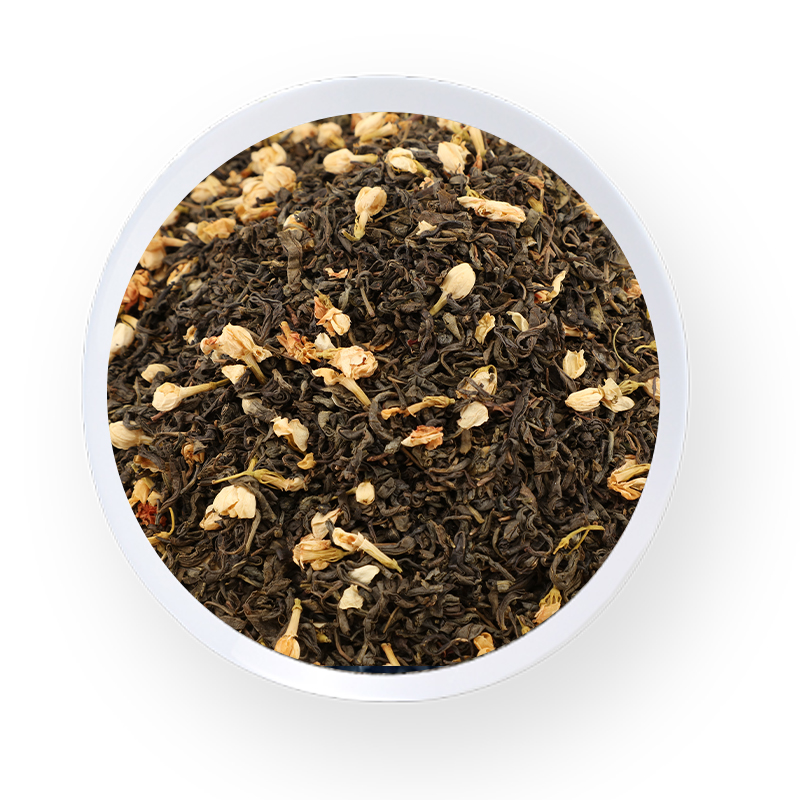
Chinese jasmine green tea is produced across a range of grades and formats, and understanding these distinctions is the starting point for any sourcing decision. At the base of the category sits standard jasmine scented green tea, made by layering green tea leaf with fresh jasmine blossoms so the leaf absorbs the flower's fragrance over repeated scenting cycles. This everyday grade suits high-volume retail packaging and food service supply where consistent flavor at an accessible price point matters more than visual presentation.
Moving up in quality, loose leaf jasmine tea made from whole or lightly broken leaf offers a fuller aroma and a longer, more layered infusion compared to cut or fannings-grade material. Because the leaf structure stays largely intact, loose leaf formats also tend to hold their scent longer in storage, which matters for distributors managing multi-month inventory cycles.
Loose Leaf Jasmine Tea
- Whole or lightly broken leaf structure
- Fuller, longer-lasting infusion
- Preferred by cafes and specialty tea houses
- Slower to absorb scent, more scenting cycles needed
Jasmine Tea Pearls
- Hand-rolled young leaf and buds
- Slow-release infusion across multiple steeps
- Strong visual presentation for gift packaging
- Commands premium positioning at retail
At the top of the category, premium jasmine tea grade products, including hand-rolled jasmine tea pearls, are made from young leaf and unopened buds that are rolled before scenting. The tightly rolled shape releases its flavor gradually across multiple infusions, and the labor-intensive rolling process is a major reason this grade commands a higher price point. For buyers building a gift tea box line or premium retail SKU, tea pearls offer a visual and sensory story that bulk-format tea cannot match. Flavored green tea with jasmine, where natural jasmine extract or additional botanicals are blended in alongside traditional scenting, occupies a separate niche aimed at buyers seeking a bolder, more consistent flavor profile across production batches.
Applications and Market Uses of Chinese Jasmine Green Tea
Chinese jasmine green tea serves distinct roles depending on the market channel it is destined for, and matching the right grade to the right channel is central to protecting margin and brand positioning. In tea retail packaging, mid-grade loose leaf or bagged jasmine tea is formulated for consistency and shelf stability, since retail buyers prioritize a repeatable flavor experience across every batch a consumer purchases.
Jasmine green tea is defined by a scenting process in which green tea leaf is repeatedly layered with fresh jasmine blossoms, allowing the leaf to naturally absorb the flower's fragrance over several cycles rather than through added flavoring.
HoReCa tea supply, covering hotels, restaurants, and cafes, tends to favor loose leaf jasmine tea for its presentation value and the ability to brew multiple infusions from the same leaf, which supports the perceived value guests associate with a tea service. Distributors supplying this channel typically prioritize aroma consistency and packaging that preserves freshness across the frequent handling a food service environment involves.
Tea import wholesale buyers operate at a different scale entirely, sourcing in bulk formats where consistent grading documentation, moisture control, and container-level quality assurance matter more than individual batch presentation. For this channel, working with a supplier able to provide clear grade specifications and consistent lot-to-lot quality is often more valuable than sourcing the single highest aroma grade available.
Consistent mid-grade blends formulated for repeatable flavor
Loose leaf formats valued for presentation and multiple infusions
Bulk formats prioritizing grading consistency and documentation
Premium pearls and high-aroma grades for visual presentation
The health beverage industry has also expanded demand for jasmine green tea as a base ingredient in ready-to-drink formats and functional beverage blends, where its recognizable flavor profile and pairing versatility with other botanicals make it a common starting point for new product development. Meanwhile, the gift tea box market continues to reward visual presentation, favoring hand-rolled pearls or high-aroma whole leaf grades packaged to highlight the tea's appearance as much as its flavor. E-commerce tea sellers frequently source across several of these grades simultaneously, using entry-level formats for volume listings and premium pearls for higher-margin gift and subscription offerings.
Positioning the same base tea across multiple channels at once is common practice among experienced distributors, since a single scenting batch can often be split into a bulk wholesale allocation, a mid-tier retail line, and a smaller premium-packaged run without compromising any individual channel's requirements. What matters most is transparency between buyer and supplier about which grade is being allocated to which use, since a gift box positioned around a premium aroma story will not hold up commercially if the underlying leaf is actually mid-grade material sourced for volume retail.
Key Quality Properties Buyers Should Evaluate
Not all jasmine green tea sold under the same name delivers the same cup quality, and buyers who understand the underlying quality markers are better positioned to source consistently. Four properties deserve particular attention: aroma intensity, leaf grade, caffeine level, and moisture content.
Tea aroma intensity is the most immediately noticeable quality signal and the one most directly tied to the scenting process. Tea scented through multiple layering cycles with fresh jasmine blossoms develops a deeper, more rounded fragrance than tea scented only once or finished with added flavoring. Buyers evaluating aroma should assess both the dry leaf scent and the aroma released during infusion, since a strong dry leaf smell does not always translate into an equally strong wet aroma.
Leaf grade quality reflects the size, uniformity, and condition of the tea leaf itself, independent of scenting. Whole leaf and bud-heavy material generally indicates a more careful harvest and processing standard, while broken leaf or dust-grade material, though still usable in bagged formats, tends to infuse faster and lose freshness sooner. Visual uniformity in color and leaf size across a sample batch is a practical, low-cost way to assess processing consistency before committing to a larger order.
| Quality Marker | What Buyers Should Check | Why It Matters |
| Aroma Intensity | Dry leaf scent and wet infusion aroma | Reflects depth of the scenting process |
| Leaf Grade | Leaf size, uniformity, bud content | Indicates harvest and processing care |
| Caffeine Level | Leaf maturity and processing method | Affects positioning for caffeine-sensitive buyers |
| Moisture Content | Dryness at packaging and storage conditions | Determines shelf stability and aroma retention |
Caffeine level green tea content varies with leaf maturity and processing method, and buyers positioning products for caffeine-sensitive consumers should request this information directly from suppliers rather than assuming a uniform level across all jasmine tea grades. Younger leaf and bud-heavy material generally carries a different caffeine profile than mature leaf, which can factor into how a product is marketed.
Moisture content tea storage is a quality factor that becomes apparent only after purchase if it is not checked upfront. Tea that is not sufficiently dried before packaging is prone to faster aroma loss and, in poorly controlled conditions, spoilage risk during long-distance shipping or extended warehouse storage. Requesting moisture content specifications and confirming appropriate packaging, such as sealed foil-lined bags with minimal air exposure, protects product quality across the full distribution chain.
Finally, natural scenting process verification separates traditional jasmine tea from lower-cost alternatives finished with synthetic flavoring. Naturally scented tea achieves its fragrance through direct, repeated contact with fresh jasmine blossoms, while artificially flavored tea relies on added aromatic compounds to simulate a similar scent profile, typically at a lower production cost but with a flatter, less layered aroma.
Processing and Production Considerations
Understanding how Chinese jasmine green tea is made helps buyers interpret quality claims and ask more informed questions during sourcing. Production begins with green tea leaf that has already been picked, withered, and fixed to halt oxidation, since jasmine scenting is applied to finished green tea base leaf rather than raw material.
The jasmine flower layering stage is where the tea scenting process actually takes place. Fresh jasmine blossoms, harvested and processed on the same day to preserve their fragrance, are layered directly with the dried green tea leaf in controlled conditions. As the blossoms release fragrance overnight, the tea leaf absorbs it, and the spent flowers are then removed before the process is repeated, often across several cycles, to build a deeper and more consistent aroma than a single scenting pass could achieve.
Green tea drying method choices, whether pan-firing or other heat-based fixing techniques, influence the base leaf's flavor foundation before scenting even begins, and tea leaf oxidation control during this initial fixing stage is what preserves the green tea's characteristic fresh, grassy notes rather than allowing the leaf to develop the darker flavor profile associated with oxidized teas. After each scenting cycle, the leaf must be redried to remove the moisture introduced by the fresh blossoms, since leaving excess moisture in the leaf would compromise both shelf stability and flavor integrity.
For buyers evaluating suppliers, understanding this multi-stage, multi-cycle process explains why higher scenting-cycle counts and fresh, same-day blossom sourcing correlate directly with the aroma intensity and overall quality tier discussed earlier in this guide. Suppliers who are transparent about scenting cycle counts, blossom sourcing timing, and drying methods are generally easier to build a long-term sourcing relationship with, since these details can be verified in a sample batch before a larger purchase order is committed.
FAQ
What is Chinese jasmine green tea?
It is green tea that has been scented through repeated contact with fresh jasmine blossoms, resulting in a fragrant tea that combines the fresh character of green tea with the floral aroma absorbed during the scenting process.
How is jasmine green tea made?
Green tea leaf is processed and dried first, then layered with fresh jasmine blossoms in a controlled scenting environment, with the flowers removed and the process often repeated across multiple cycles before the finished tea is dried and packaged.
Is jasmine green tea healthy?
Jasmine green tea is generally considered part of a balanced diet, similar to other green teas, though buyers and sellers should avoid making specific health claims and instead reference general dietary guidance from qualified sources.
Does jasmine green tea contain caffeine?
Yes, jasmine green tea contains caffeine since it is made from green tea leaf, though the exact level varies with leaf maturity and processing method and should be confirmed directly with the supplier for accurate labeling.
What is the difference between green tea and jasmine tea?
Jasmine tea is a scented variety of green tea rather than a separate tea type, meaning the base leaf is the same green tea used elsewhere, with the jasmine scenting process added as an additional production step to develop its distinctive aroma.
How to store jasmine green tea properly?
Jasmine green tea should be kept in a sealed, airtight container away from light, heat, and moisture, since exposure to air and humidity accelerates aroma loss and can compromise the quality of the leaf over time.
Final Thoughts
Sourcing Chinese jasmine green tea successfully comes down to balancing aroma quality, leaf grade, and production consistency against the needs of the specific market channel being supplied. Buyers who evaluate scenting method, moisture control, and leaf grade alongside a supplier's ability to document these factors consistently are better positioned to build a reliable, differentiated product line rather than competing purely on price.
 We sincerely welcome customers from all over the world to visit us and seek common
development and create brilliant future.
We sincerely welcome customers from all over the world to visit us and seek common
development and create brilliant future.
Contact BAODA
 Our Phone
+86-15386682887
+86-13857173531
 E-mail
[email protected]
[email protected]
[email protected]
 Our Address
Room 1601, Building 2, New Town Times Square, 189 Fengqi East Road, Hangzhou, Zhejiang Province, China.
Inquiry Us Now
Copyright © Hangzhou Baoda Tea Co., Ltd. All Rights Reserved
Wholesale China Premium Green Tea Company
