

 English
  Français
 Chinese Green Tea Import Guide: Key Considerations for First-Time Importers
China exports roughly 300,000 tonnes of green tea every year, more than any other producing country by a wide margin. For a first-time importer, that scale sounds reassuring: steady supply, competitive pricing, and an export system that has served international buyers for over a century. But the same market that ships specialty boxes of Longjing and Maofeng also ships thousands of containers of bulk Chunmee and Gunpowder, where grade labels differ from factory to factory and a single lot can vary in moisture, leaf size, and firing quality. The difference between a smooth import and an expensive lesson usually comes down to how carefully the buyer verifies what is inside the container. The best importers treat this as a series of checks, not a single transaction.
Regulatory Compliance Comes First
Before you request a single sample, confirm what your destination market requires. The paperwork is unglamorous, but it filters out more failed shipments than any other step in the process.
For the United States, every foreign facility that produces food for import must register with the FDA, and each shipment needs prior notice submitted before it reaches the border. For the European Union, importers must be registered with their national food authority, and every lot of tea must comply with EU maximum residue levels for pesticides. Several EU member states apply increased border checks on Chinese tea, sampling for residues that are not always covered by Chinese domestic quality reports. For North and West African markets, health certificates and, in some cases, phytosanitary certificates are the norm, and requirements often follow the framework of the former colonial trading partner, so EU-style documentation is a practical benchmark to prepare in advance.
The lesson: map the regulatory route first, and build the cost of compliance into your price early. Check whether one certification can cover multiple destinations before you pay twice.
Nail Down the Grade and Specification
Chinese green tea exports are sold by grade name more than by origin story. Two families dominate bulk trade: Chunmee, the twisted eyebrow-shaped leaf, and Gunpowder, the rolled pellet. Understanding how their grade ladders work prevents most of the common buying mistakes.
Chunmee: reading the numbers and the letters
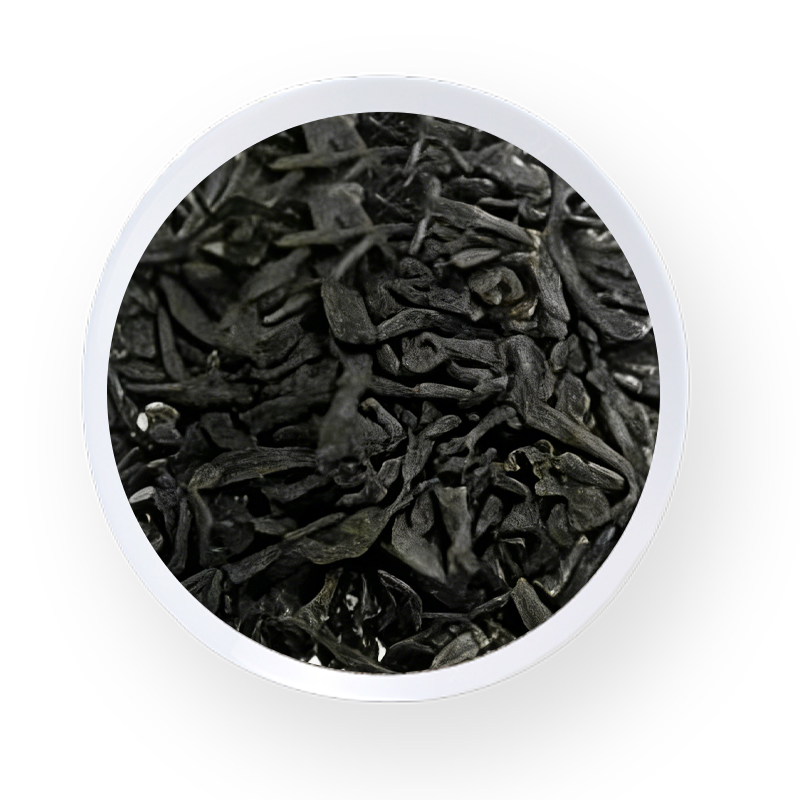
Chunmee grades are identified by numerical codes that trace back to traditional export specifications, with 4011, 41022, 9366, 9371, and 9380 among the most common. The 41022 series occupies a central position in the market: it is a widely specified base for quality-competitive orders, and factories offer the same code in multiple appearance levels. Those levels are expressed as repeated As, from AAA up to AAAAAAAA, plus a Diamond tier. The letter count signals visual uniformity: the tightness of the twist, the proportion of broken leaf, and the surface color. It is not a government certification, and two factories' AAAA may differ slightly, which is why sealed production samples matter more than the label alone. Buyers who need a dependable mid-to-high grade often use Chunmee 41022 AAAA as a balanced reference point.
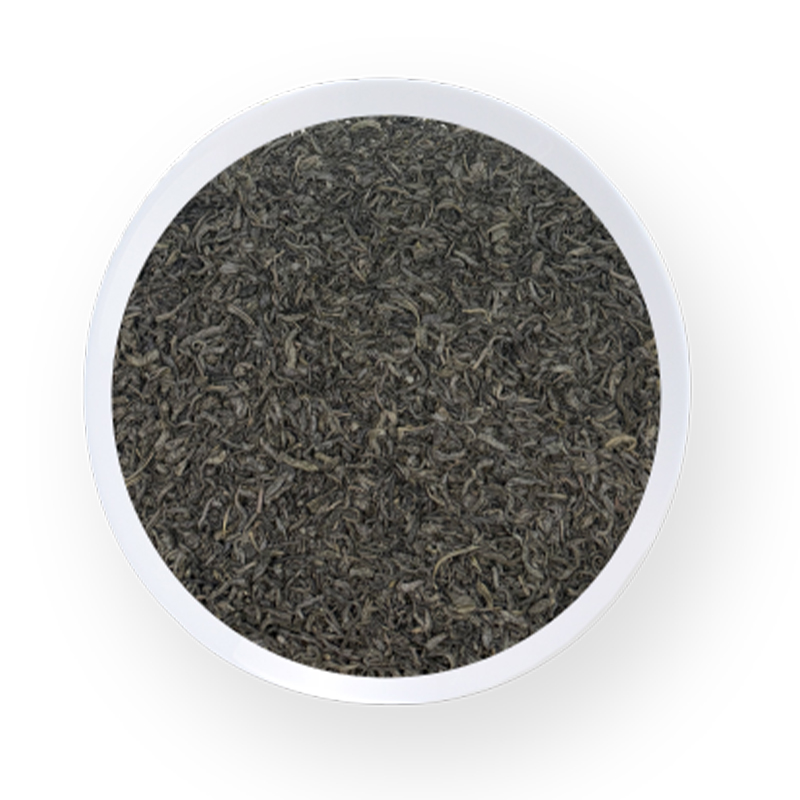 Wholesale Chunmee 41022 AAAA Suppliers, CompanyHangzhou Baoda Tea Co., Ltd. Is China Wholesale Private Label Chunmee 41022 AAAA Suppliers, Company, 4A·Material: Higher proportion of ma...View Product →
Gunpowder: pellet size, uniformity, and the 3505 series
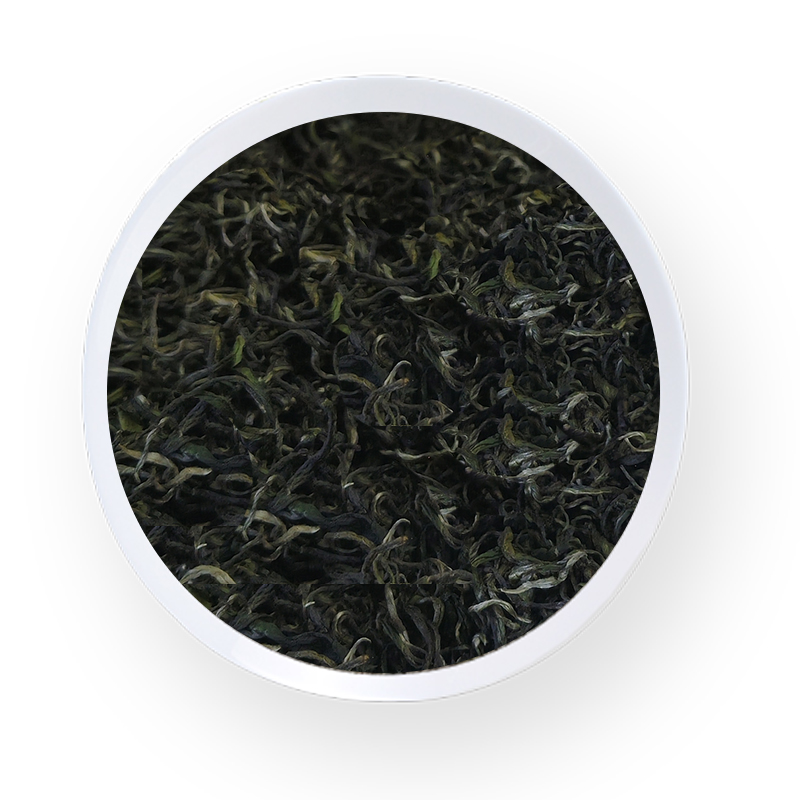
Gunpowder tea is rolled into small glossy pellets that unfold during brewing. The dominant export code is 3505, offered in A, AA, AAA, Diamond, and Gros Grain levels. The higher the letter, the more selective the rolling: pellets become rounder, more even, and more uniform in color, with less dust and broken leaf in the lot. AAA is the workhorse grade in many European and North African retail programs, while lower grades feed mint-tea blends and bagged products. Premium tiers add visual appeal but also price. A solid mid-tier specification to benchmark is Gunpowder 3505 AAA, which is commonly ordered for retail packing.
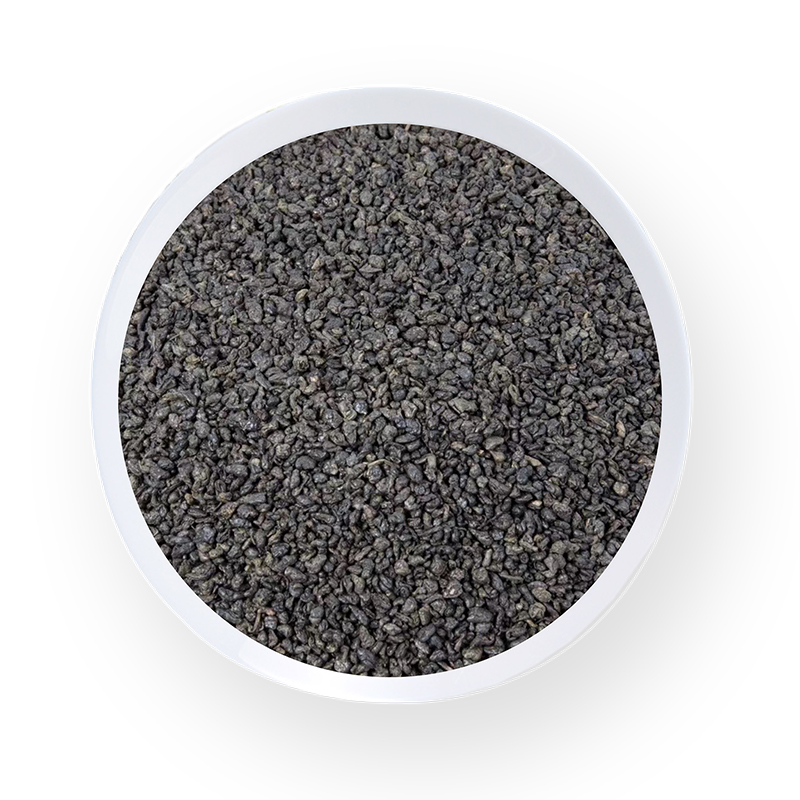 Wholesale Gunpowder 3505 AAA Suppliers, CompanyHangzhou Baoda Tea Co., Ltd. Is China Wholesale Private Label Gunpowder 3505 AAA Suppliers, Company, Gunpowder 3505 AAA represents the hi...View Product →
Beyond the bulk market: specialty green teas
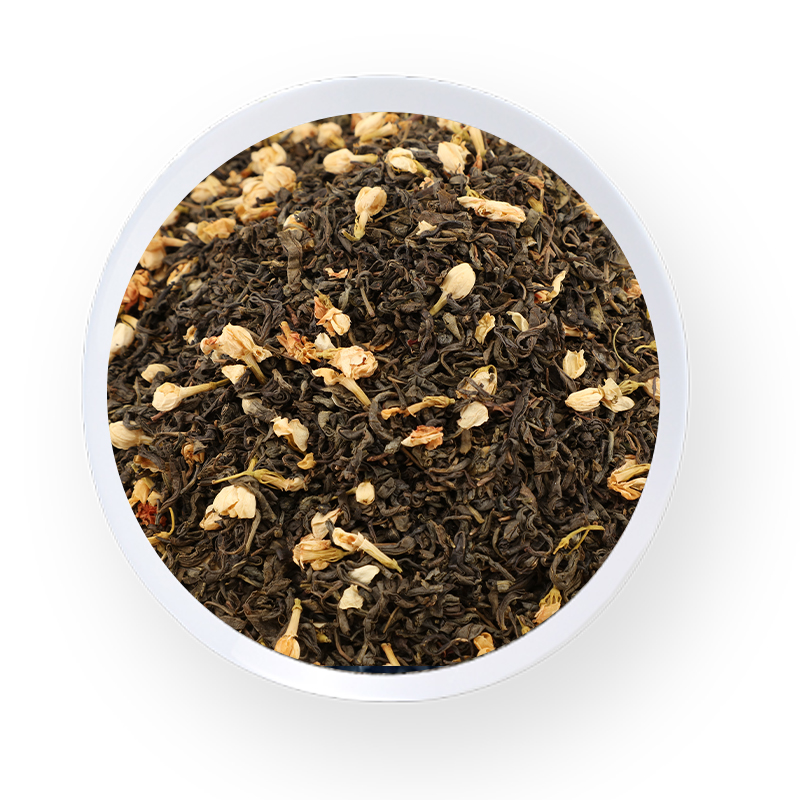
Not all imports are commodity containers. Specialty categories such as Longjing, Maofeng, and jasmine tea carry higher margins but also narrower seasonality and more fragile supply. If your customers include food and beverage producers, you may also look at matcha powder, which behaves more like a food ingredient than a leaf tea. For matcha, particle size, color, and the absence of off-notes matter more than leaf appearance; for Longjing, the harvest date and leaf shape drive the value. Keep specialty products in a separate procurement plan rather than mixing their quality parameters into a bulk order.
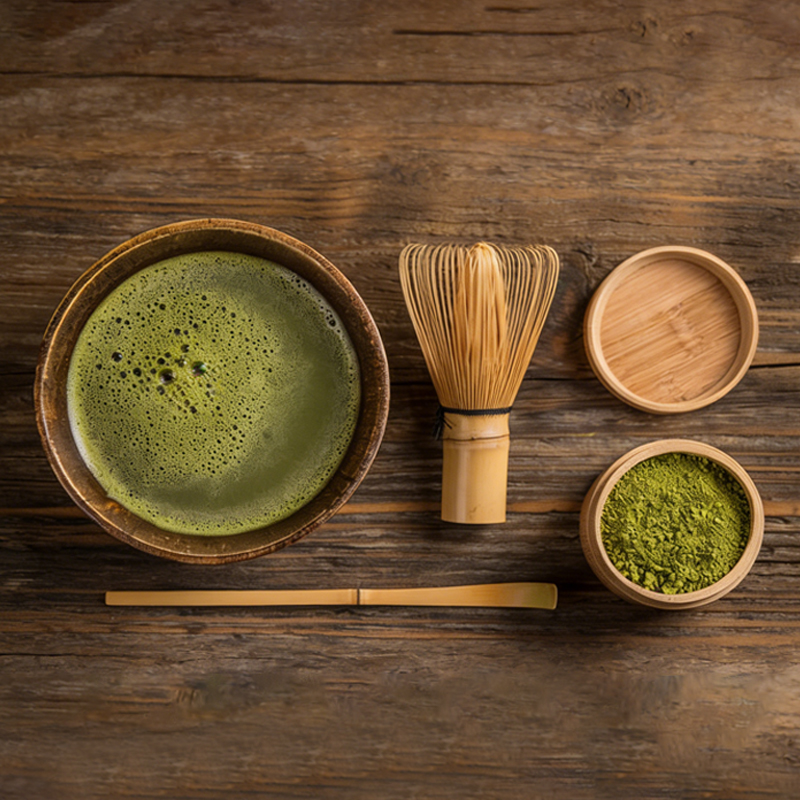 Matcha Powder Wholesale, Pure Matcha Green Tea Powder CompanyWe Are China Pure Matcha Green Tea Powder Company, Suppliers, Hangzhou Baoda Tea Co., Ltd. Wholesale Private Label Organic Matcha Powder ...View Product →
Evaluate the Supplier Beyond the Brochure
Factory, trader, or something in between
The Chinese green tea supply chain includes factories that process raw leaf in the producing provinces and trading companies that consolidate tea from multiple factories. Both channels can deliver good quality, but the risk profile differs. A factory can show you the production line, identify the exact batch, and adjust processing variables such as firing temperature or sorting intensity. A trader may offer a broader catalog and easier mixed-container shipping, but physical control is one step removed, and the trader's margin sits on top of the factory price. Ask directly whether the supplier is the manufacturer. If yes, request a map location, factory photos, and permission for a video tour or audit. Genuine factories share this readily. If the answer mentions cooperating factories, ask for names and verify them through export documents.
Certifications and traceability
Serious exporters hold at least an export food business registration issued by China Customs and generally add ISO 22000 or HACCP certification to prove their quality system. For organic tea, check the certificate against the issuing body and confirm that it covers the province of the specific lot, because organic claims are tied to the origin of the raw leaf. On traceability, the practical question is simple: can the supplier tell you which tea garden or raw leaf region produced the batch in your proposal? The better factories keep lot codes and processing records that follow each batch from plucking to packing. When you compare candidates, evaluate how the supplier manages freshness and packaging; the article on freshness, packaging, and supplier selection lists checks that apply to any green tea purchase.
Build Quality Testing Into Your Plan
Appearance and price are easy to compare; chemistry is not. A written specification protects both sides, and the parameters below appear in most Chinese green tea export contracts.
| Parameter | Typical contract level | Why it matters |
|---|---|---|
| Moisture content | 5.0% to 7.0% | Above this range, tea loses freshness quickly and may develop mold or off-odors. |
| Total ash | 7.0% maximum | Elevated ash can signal poor sorting or inclusion of non-leaf material. |
| Water extract | 34% minimum | Indicates the soluble solids available for brewing strength and body. |
| Crude fiber | 16% maximum | Higher fiber suggests coarse plucking, older leaf, or added stem material. |
| Pesticide residues | Meet destination MRLs | The decisive compliance gate; limits vary by country, not by supplier preference. |
These levels are trade practice, not legal limits. For pesticide residues and heavy metals, obtain the current MRL list from the competent authority in your destination country and build the corresponding testing into your contract. Use an independent inspection company such as SGS or Eurofins, or a national laboratory that your market accepts. The testing cost is a fraction of a single rejected container, so treat third-party inspection as insurance, not a luxury.
If you are still learning to screen lots quickly, five practical tips for telling the quality of China green tea explains the visual, aroma, and cup-test methods professionals apply before samples reach a laboratory.
Packaging, Labeling, and Logistics
Green tea is a storable product only when moisture is kept out. The decisions made at the packing line usually determine whether the tea arrives as good as it left.
- Bulk packaging: expect multi-layer kraft paper bags with a food-grade foil or aluminum liner, usually 25 kg net. The inner liner is the critical moisture barrier; if the supplier substitutes plain paper, reject the offer or adjust the specification.
- Retail-ready packaging: if you order printed pouches, boxes, or sachets, ask for food-contact material declarations from the packaging supplier and confirm that inks and adhesives meet your market's rules.
- Labeling: most markets require country of origin, manufacturer or importer details, net weight, and lot numbers. EU-bound goods must name the food business operator responsible in the EU; US-bound goods need the FDA prior notice reference and an origin statement.
- Container loading: use a dedicated, food-grade container. Position desiccant along the container floor and confirm that cartons or bags are palletized and wrapped to prevent condensation during the ocean crossing.
- Incoterms: FOB and CIF/CNF are both common in green tea trade. FOB gives you control over the freight forwarder and inspection timing; CIF/CNF transfers more logistics responsibility to the seller. Choose based on which side is more experienced in shipping from Chinese ports.
After discharge, the clock on freshness keeps running. Green tea stored at high temperatures or in humid conditions can lose most of its aroma within weeks. The guide on how China green tea should be stored to maintain its quality describes the temperature, airtightness, and shelf-life considerations that protect your investment.
Importing Chinese green tea becomes straightforward when you treat verification as part of the purchase price. Map the regulatory route first, define the grade in writing, audit the supplier's manufacturing capability, put the chemistry on paper, and control the moisture chain from the factory floor to your warehouse. Each step is manageable on its own; together they shift the risk out of the container and into the price where it belongs. If you are comparing quotes, ask each candidate for a production sample that matches the exact grade under discussion, and do not accept vague answers about what the grade label means.
 We sincerely welcome customers from all over the world to visit us and seek common
development and create brilliant future.
We sincerely welcome customers from all over the world to visit us and seek common
development and create brilliant future.
Contact BAODA
 Our Phone
+86-15386682887
+86-13857173531
 E-mail
[email protected]
[email protected]
[email protected]
 Our Address
Room 1601, Building 2, New Town Times Square, 189 Fengqi East Road, Hangzhou, Zhejiang Province, China.
Inquiry Us Now
Copyright © Hangzhou Baoda Tea Co., Ltd. All Rights Reserved
Wholesale China Premium Green Tea Company
